
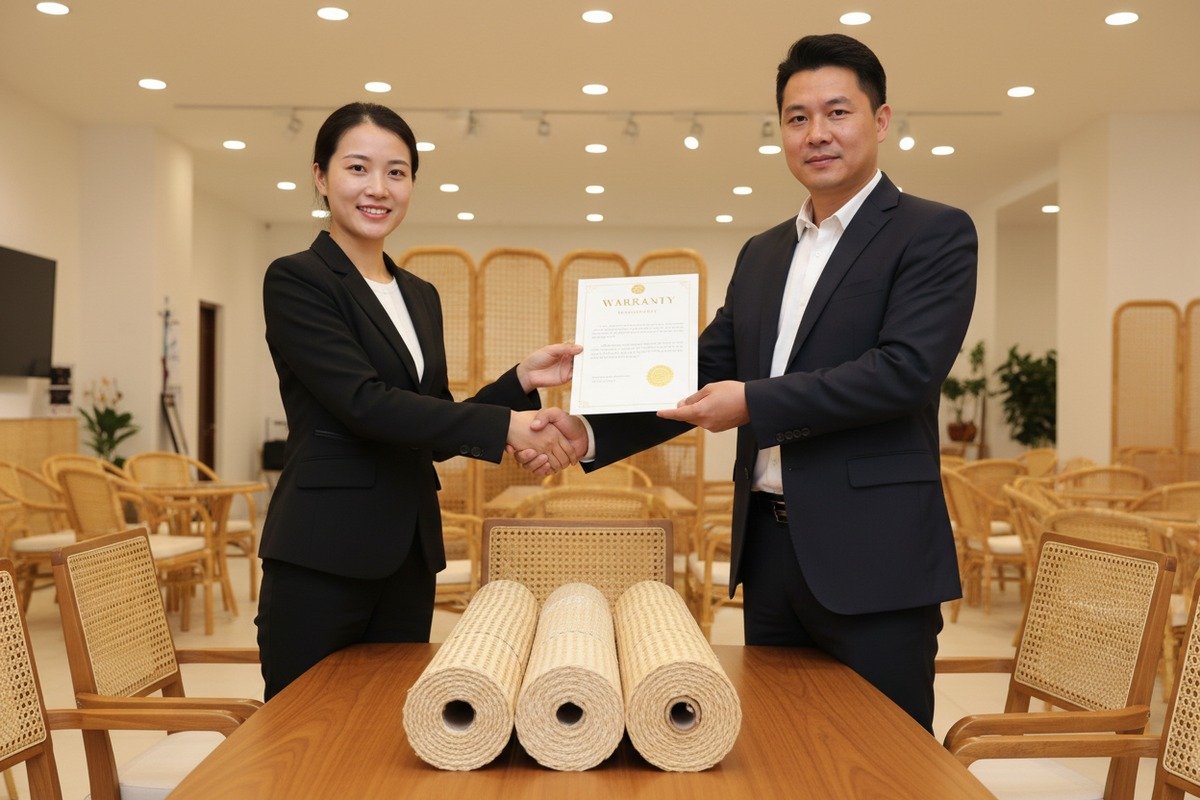
Running three factories and an Indonesian rattan processing facility 1 has taught our team one clear lesson: the sale never ends at shipment. Bulk buyers worry about color mismatches between batches, transit damage to fragile natural rolls, and storage problems that ruin inventory Root cause analysis 2. These pain points cost real money. The after-sales service 3 a supplier offers can make or break a long-term partnership.
Rattan cane webbing suppliers typically provide after-sales services including product warranties of 2–5 years, defect replacements or refunds, transit damage claims support, expert storage and maintenance guidance, technical consulting, and batch-matching guarantees for re-orders to ensure color and quality consistency across shipments.
Below, we break down the most important after-sales services you should expect and how to hold your supplier accountable humidity control 4. Each section answers a real question our wholesale buyers ask us every week.
How can I resolve quality issues if the rattan cane webbing doesn't meet my specifications?
When our quality control team 5 inspects outgoing containers, we catch over 95% of issues before they leave the warehouse. But no system is perfect. Sometimes a roll arrives and the weave density, strand thickness, or color tone does not match the approved sample Golden sample library 6. That gap between expectation and reality is stressful, especially with a production deadline looming.
If your rattan cane webbing fails to meet agreed specifications, reputable suppliers will investigate the claim with photo or video evidence, then offer a replacement shipment, partial refund, or credit toward your next order—usually within a defined warranty period of 1 to 5 years.
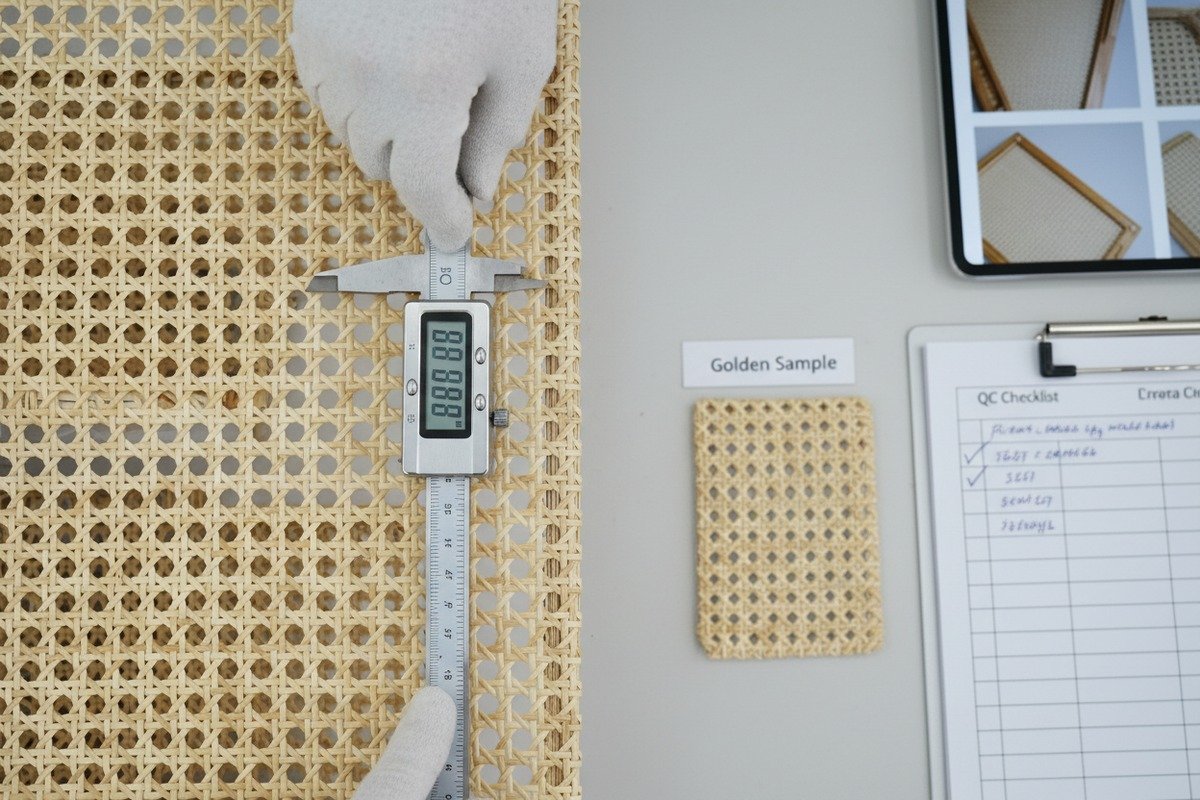
Step-by-Step Resolution Process
Most professional suppliers follow a structured complaint process. Here is the typical workflow we use at our Foshan headquarters when a buyer raises a quality concern.
- Submit evidence. The buyer sends clear photos or a short video showing the defect. Include roll numbers, batch codes, and invoice details.
- Internal review. Our QC team compares the complaint against retained production samples. We keep reference pieces from every batch for at least 12 months.
- Root cause analysis. We determine whether the issue is a raw material problem, a weaving defect, or damage that happened after production.
- Resolution offer. Depending on the findings, we propose a replacement, a credit, or a partial refund.
- Timeline confirmation. Most resolutions are communicated within 3–8 business hours. Physical replacements ship within 7–15 days.
What Counts as a Valid Quality Claim?
Not every complaint qualifies. Natural rattan has inherent organic variation. Minor color shifts between strands are normal. But structural defects and spec deviations are always valid.
| Claim Type | Valid? | Typical Resolution |
|---|---|---|
| Weave pattern does not match approved sample | Yes | Full replacement or refund |
| Strand thickness deviates more than 10% from spec | Yes | Partial replacement or credit |
| Minor color variation between individual strands | No | Normal for natural rattan |
| Roll width is 2 cm narrower than ordered | Yes | Replacement rolls shipped |
| Slight texture difference from digital photo | No | Inherent to natural material |
| Mold or mildew present on arrival | Yes | Full replacement plus investigation |
How Warranty Length Varies by Supplier
Warranty coverage differs widely. Some factories offer only a 90-day window. Others extend 2–5 years. A small number of artisan sellers on platforms like Etsy even advertise lifetime satisfaction guarantees. In our experience exporting to over 15 countries, a 2-year warranty on manufacturing defects is the industry standard for B2B bulk orders. Anything shorter should raise a red flag.
Always request the warranty terms in writing before placing your order. A verbal promise has no teeth when you are sitting on 500 defective rolls in a warehouse overseas.
Tips for Preventing Quality Disputes
Prevention is cheaper than resolution. Ask your supplier for pre-production samples. Approve a golden sample and have both sides keep a copy. Specify acceptable tolerances in your purchase contract—strand width, mesh opening size, color range, and roll dimensions. When we prepare shipments for our buyers in the Netherlands or Australia, we include batch QC reports with photos in every container. This paper trail protects both sides.
What support will I receive if my rattan rolls are damaged during international transit?
Shipping natural rattan across oceans is not simple. Our logistics team has loaded containers bound for the USA, Turkey, the Maldives, and dozens of other destinations. Even with careful packing, rough handling at ports, humidity swings inside containers, and unexpected delays can cause damage. Buyers deserve clear answers about who pays and what happens next.
If rattan rolls are damaged during international transit, suppliers typically assist with insurance claims documentation, provide photographic evidence from their end, and offer replacement rolls or credits. Many suppliers also use reinforced packaging and moisture barriers to minimize transit damage risk.
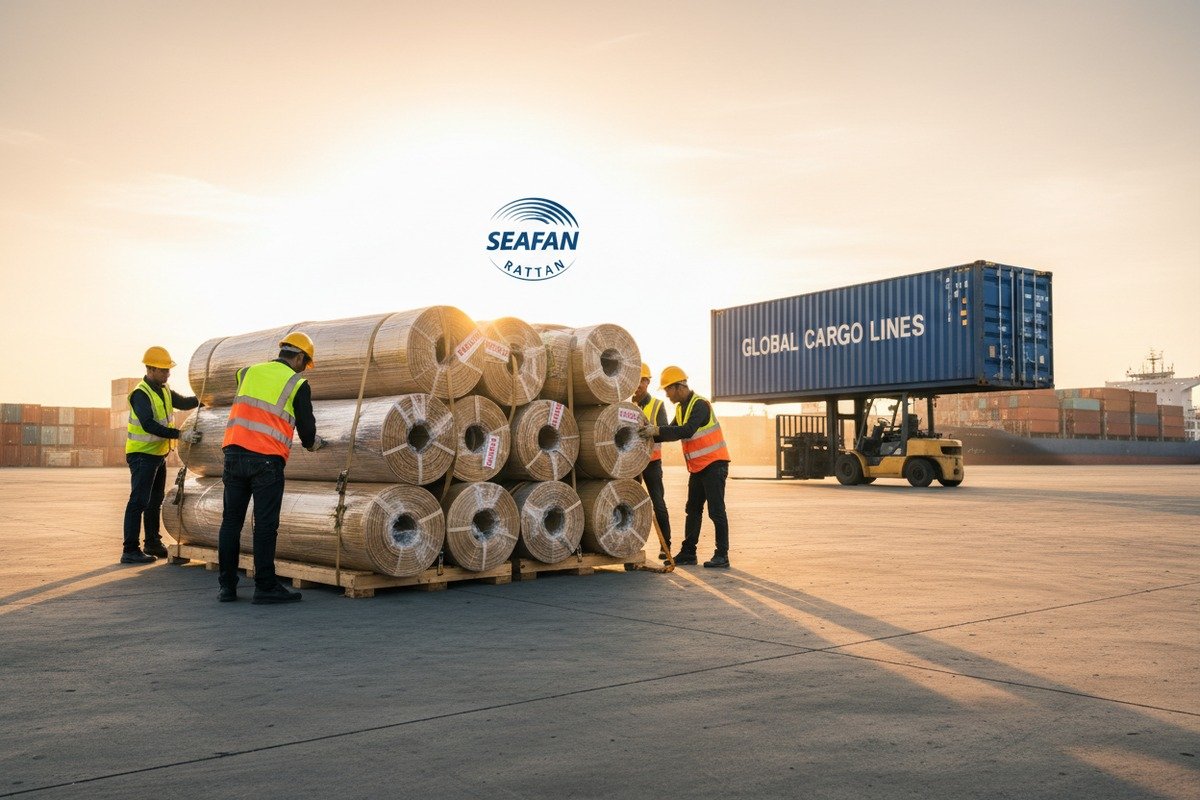
Who Bears the Risk?
This depends on the Incoterm 7 used in your contract. Under FOB terms, risk transfers to the buyer once goods are loaded onto the vessel. Under CIF or DDP, the supplier carries risk longer. Regardless of the term, a good supplier will still help you resolve transit damage because they want your next order.
Our Packaging Standards
At our factories, we developed a multi-layer packaging system 8 specifically because transit damage was the number one complaint we heard from new clients who switched from other suppliers. Here is what we do:
- Inner wrap: Each roll is wrapped in moisture-resistant plastic film.
- Cardboard tube core: Rolls are wound around rigid tubes to prevent crushing.
- Outer carton or wooden crate: For full-container loads, we palletize and strap everything.
- Silica gel packets: Added inside sealed wrapping to control humidity.
- Corner protectors: Foam or cardboard guards on roll edges.
How to File a Transit Damage Claim
| Step | Action | Who Is Responsible |
|---|---|---|
| 1 | Inspect goods at delivery, note damage on the Bill of Lading | Buyer |
| 2 | Photograph all damaged rolls with packaging visible | Buyer |
| 3 | Notify supplier within 48 hours with photos and documents | Buyer |
| 4 | Supplier provides original packing photos and weight records | Supplier |
| 5 | File claim with shipping insurance provider | Buyer or Supplier (per Incoterm) |
| 6 | Supplier ships replacement rolls for confirmed damage | Supplier |
Real-World Scenario
One of our long-term clients in Spain received a 20-foot container of natural hexagonal radio weave. Seven rolls on the outer edge had water stains from a leaking container seal. The buyer sent us photos within 24 hours. We cross-checked our loading photos, confirmed the rolls were dry at departure, and helped the buyer file an insurance claim. We also shipped seven replacement rolls on the next available booking at no extra charge. The entire process took 12 days from complaint to replacement delivery.
This kind of support is what separates a transactional supplier from a real partner. When evaluating suppliers, ask directly: "What happens if my goods arrive damaged?" If the answer is vague, move on.
Can I get expert guidance on the best way to store and maintain my bulk rattan inventory?
We have seen warehouses in hot, humid climates where beautiful rattan webbing turned moldy within weeks. We have also seen dry, cold storage rooms where natural cane became brittle and cracked. Proper storage is not optional—it is essential to protect your investment. Many buyers, especially those new to rattan, do not realize how much environment matters.
Yes, professional rattan suppliers provide detailed storage and maintenance guidance covering temperature, humidity control, UV protection, and pest prevention. This typically includes written care instructions, consultation calls, and sometimes on-site recommendations tailored to your warehouse conditions and climate zone.
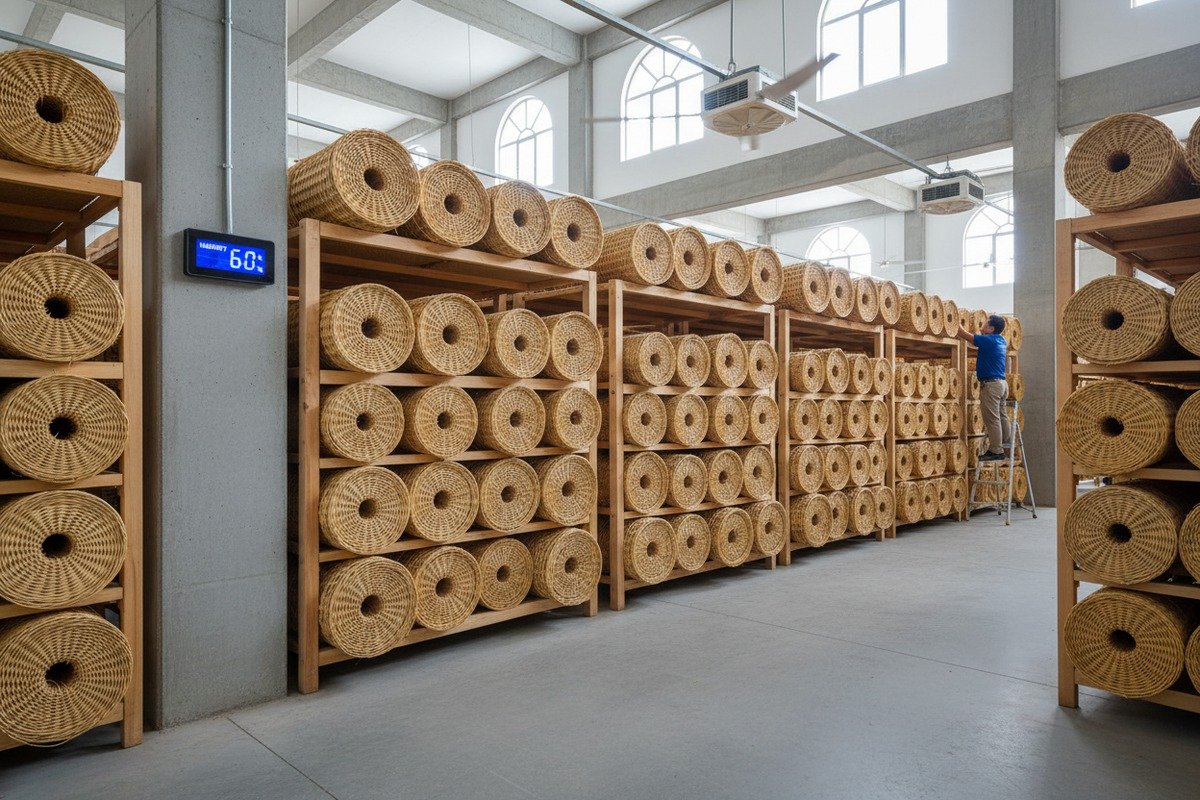
Storage Best Practices for Natural Rattan Cane Webbing
Natural rattan is a plant fiber 9. It breathes. It absorbs moisture. It reacts to temperature. Here are the rules our team shares with every wholesale client.
- Keep humidity between 40%–60%. Below 30%, rattan dries out and cracks. Above 70%, mold risk increases sharply.
- Store in a ventilated, covered space. Never leave rattan rolls in direct sunlight or rain.
- Elevate rolls off the floor. Use pallets or shelving to allow air circulation underneath.
- Avoid stacking too high. Three layers maximum to prevent crushing the lower rolls.
- Rotate stock. Use older inventory first. Natural rattan can yellow or darken over time.
Natural vs. Synthetic: Different Maintenance Needs
Our product range includes natural rattan webbing, bleached cane webbing, and synthetic PE or plastic rattan matting. Each type has unique care requirements.
| Factor | Natural Rattan | Bleached Rattan | Synthetic (PE/Plastic) |
|---|---|---|---|
| Humidity sensitivity | High | Very high | Low |
| UV resistance | Low | Low | Moderate to high |
| Mold risk | Moderate | High (bleaching removes natural oils) | Very low |
| Cleaning method | Damp cloth, mild soap | Damp cloth only, no harsh chemicals | Water hose, all-purpose cleaner |
| Recommended storage humidity | 40–60% | 40–55% | No strict requirement |
| Lifespan with proper care | 5–15 years | 3–10 years | 10–20 years |
Maintenance Kits and Resources
Some suppliers now offer proprietary care kits that include natural cleaning agents, beeswax-based sealants, and minor repair patches for small tears or breaks. At our company, we provide a digital care guide in PDF format with every shipment. It covers cleaning frequency, sealant application schedules, and seasonal inspection checklists.
For clients who operate in extreme climates—like our buyers in Saudi Arabia or Russia—we schedule a short consultation call to discuss specific adjustments. For example, in very dry desert environments, we recommend a light misting of rolls every two weeks during storage and the application of a thin oil finish before the webbing goes into production.
When to Choose Synthetic Over Natural
If your end product will be used outdoors—patio furniture, poolside screens, resort installations—synthetic rattan matting with a chevron wave or basketweave pattern is the smarter choice. It handles rain, UV, and temperature swings far better than natural cane. Our synthetic range mimics the organic look of natural fibers while offering 10–20 years of outdoor durability. We guide buyers toward the right material before the sale, and we continue that guidance after delivery when questions about installation and care arise.
How do you guarantee that my future re-orders will match the quality and color of my current batch?
Batch consistency is probably the most common concern we hear from purchasing managers. One of our clients in Thailand—a furniture material wholesaler—told us he lost a contract because his second order of radio weave looked noticeably darker than the first. His end customer rejected the entire shipment. That single experience made batch matching his top priority. We understand why. Inconsistency kills trust downstream.
Suppliers guarantee re-order consistency through retained batch samples, standardized raw material sourcing, controlled processing parameters, and pre-shipment sample approvals. Advanced suppliers also assign dedicated account managers who track your order history and color references to ensure every new batch aligns with your approved standard.
Why Batch Variation Happens
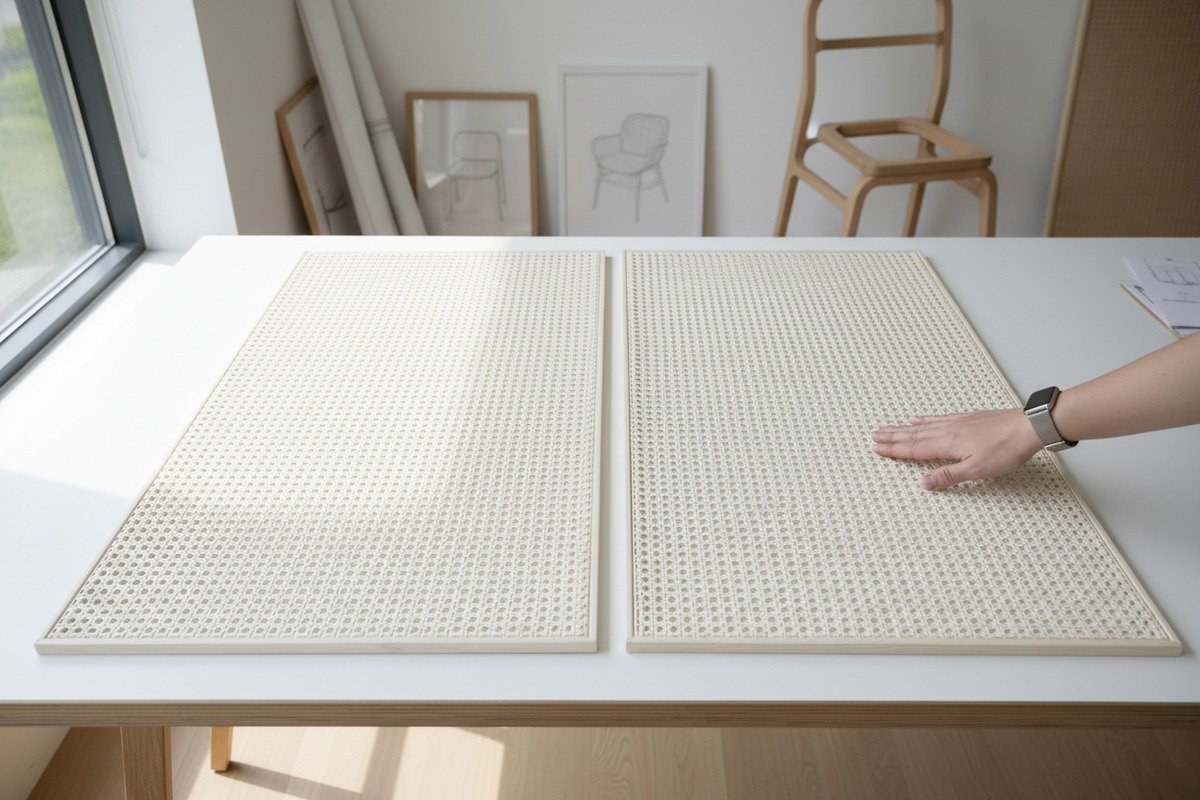
Natural rattan comes from plants. Growing conditions—rainfall, soil, sun exposure—change from season to season and region to region. Even cane harvested from the same plantation can show color shifts between dry season and wet season. Bleached rattan adds another variable: chemical processing times affect the final whiteness.
These are real challenges. But they are manageable with proper systems.
Our Batch Matching System
At our Indonesian processing facility, we built a color-grading system that sorts raw rattan into five tonal categories before it enters the weaving line. Here is how we keep things consistent for re-orders:
- Golden sample library. We store a physical sample swatch from every batch we produce. Each swatch is tagged with the order number, date, raw material lot, and processing parameters.
- Raw material pre-selection. When a re-order comes in, we pull cane from the same tonal grade used for the original batch.
- Test weave. Before full production, we weave a 1-meter test piece and photograph it alongside the retained sample under standardized lighting.
- Buyer approval. We send the comparison photos to the client for sign-off before we proceed.
- Processing lock. Boiling time, drying temperature, and any bleaching or staining durations are recorded and replicated exactly.
What to Ask Your Supplier
Not all suppliers have these systems in place. Before committing to a long-term relationship, ask these questions:
- Do you keep physical reference samples from past orders?
- Can you source raw material from the same grade and origin?
- Will you send a pre-production sample for my approval before a re-order?
- Do you have a dedicated contact person who knows my order history?
- What is your acceptable tolerance for color deviation between batches?
If the answers are vague or evasive, that is a warning sign.
The Role of Custom Follow-Ups
Many B2B suppliers—especially those serving OEM and ODM clients 10—offer custom follow-up services. This means they track your specifications over time: weave pattern, strand count, mesh opening size, roll width (40 cm, 60 cm, 90 cm, or 120 cm), roll length (15 m or 30 m), and color grade. When you place a repeat order, the system pulls your profile and replicates it. This is not a luxury feature. For bulk buyers ordering thousands of meters per quarter, it is a necessity.
We have invested in a digital order tracking system that logs every specification and customer preference. Our account managers in Foshan can pull up any client's full purchase history in seconds. This speeds up re-orders and virtually eliminates the "wrong spec" problem.
Free Samples for Verification
Most professional suppliers offer free samples for re-order validation. We send 2–3 sample pieces from the new production batch via express courier before the full order ships. This adds a few days to the timeline but eliminates surprises. In our experience, clients who use this service have a near-zero complaint rate on batch consistency.
Conclusion
After-sales service is not a bonus feature. It is the foundation of a reliable rattan supply chain. Choose suppliers who back their products with clear warranties, transparent damage policies, expert guidance, and proven batch consistency systems.
Footnotes
1. Describes the journey of rattan from harvest to processing. ↩︎
2. Provides a comprehensive definition and principles of RCA. ↩︎
3. Replaced with a comprehensive educational article on after-sales service. ↩︎
4. Explains optimal humidity levels for storing various materials. ↩︎
5. Defines quality control and its role in manufacturing. ↩︎
6. Defines a golden sample as a master reference for quality. ↩︎
7. Official source for international commercial terms in trade. ↩︎
8. Replaced with a guide from a reputable shipping company that discusses protective packaging, including double boxing for fragile items. ↩︎
9. Replaced with a Wikipedia article on natural fibers, specifically linking to the plant fibers section, offering a broad and authoritative overview. ↩︎
10. Differentiates between OEM and ODM manufacturing models. ↩︎

 English
  Español de México
  العربية
  Deutsch
  Français
  Русский