

Over the years, our production teams in Foshan and Indonesia have fielded one question more than any other from purchasing managers: how do I get the best price without sacrificing quality? It is a fair concern. Rattan cane webbing 1 prices vary wildly depending on where you buy, how much you order, and whether you commit long-term. The gap between retail pricing and factory-direct wholesale can be staggering—sometimes 40% or more. That frustration drives many buyers to overpay simply because they do not know the right levers to pull.
The best discounts for long-term rattan cane webbing procurement come from committing to annual volume contracts with direct manufacturers, consolidating shipments into full container loads, and negotiating tiered pricing based on minimum order quantities. These strategies can reduce total costs by 20–40% compared to spot purchasing.
In this guide, we break down four proven strategies to help you lock in the lowest possible price for rattan cane webbing while keeping quality exactly where it needs to be. Each section tackles a specific question that purchasing managers ask us every week.
How can I secure the best volume discounts for my annual rattan cane webbing orders?
Scheduling production runs across our three factories has taught us something valuable: buyers who plan ahead always pay less. The biggest cost driver in rattan webbing is not the raw material—it is the inefficiency of small, unpredictable orders that disrupt production flow and inflate per-unit costs.
To secure the best volume discounts, commit to annual purchase volumes with a direct manufacturer, agree on quarterly or monthly delivery schedules, and meet or exceed standard wholesale MOQs of 50+ rolls per order. This approach typically unlocks 15–30% savings over ad-hoc purchasing.
Why Volume Matters More Than You Think
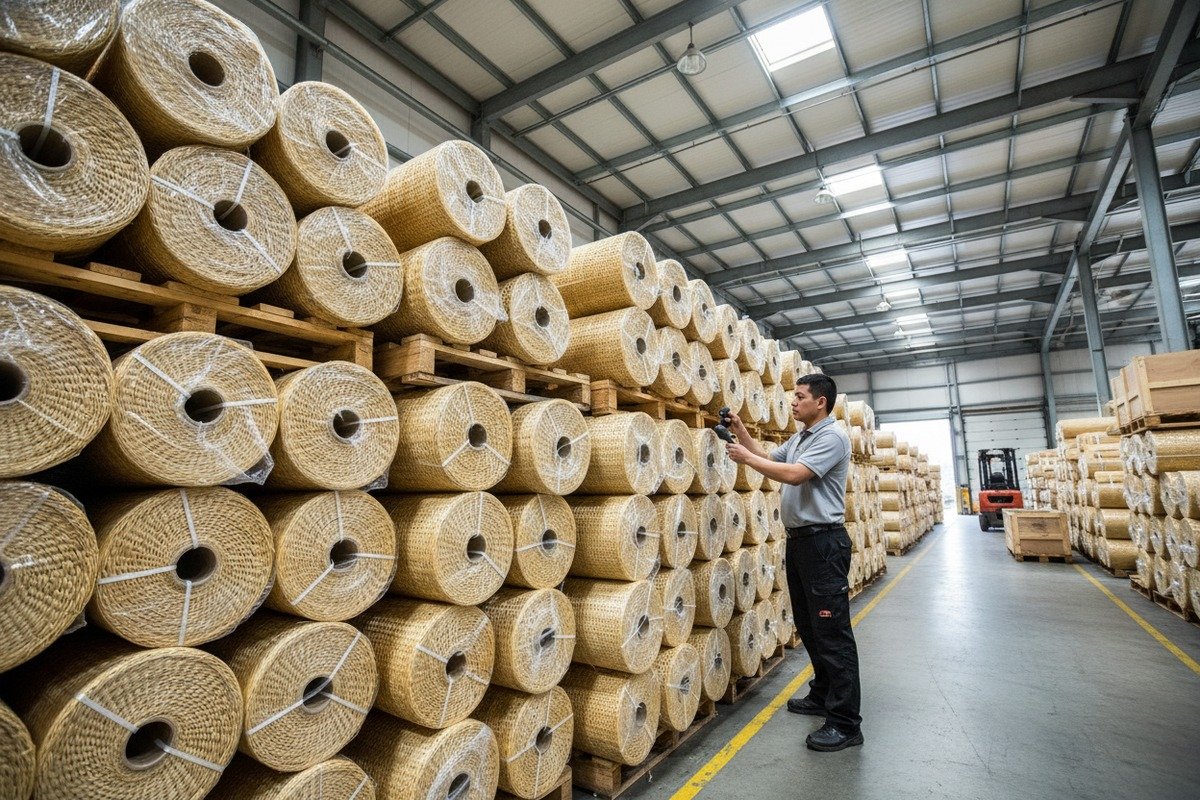
Every rattan cane webbing order involves fixed costs. These include machine setup, quality inspection 2, packaging preparation, and export documentation. When you order 10 rolls, those fixed costs get spread across 10 units. When you order 500 rolls, the cost per unit drops dramatically.
Our factory data shows a clear pattern. Buyers ordering fewer than 50 rolls pay a premium. Buyers ordering 200+ rolls per shipment see meaningful price breaks. And buyers who commit to 1,000+ rolls annually get our best rates because we can plan production months in advance.
Typical Volume Discount Tiers
| Annual Volume (Rolls) | Estimated Discount vs. Retail | Typical Price Range (USD/Roll) |
|---|---|---|
| 1–49 | 0–5% | $120–$185 |
| 50–199 | 10–15% | $95–$140 |
| 200–499 | 15–25% | $75–$115 |
| 500–1,000+ | 25–40% | $60–$90 |
These numbers reflect natural rattan cane webbing in standard widths (40–90 cm) and 15-meter roll lengths. Synthetic alternatives tend to cost 15–20% less across all tiers.
How to Structure Your Annual Order
The smartest approach is to estimate your total annual need, then break it into quarterly shipments. This gives the factory predictable workflow and gives you manageable inventory levels. Here is a simple framework:
- Calculate your total annual consumption in rolls.
- Add a 10% buffer for waste, damage, and unexpected orders.
- Divide the total into 3–4 shipments spread evenly across the year.
- Present this plan to your supplier and ask for annual contract pricing.
When we see a buyer come to us with a clear annual plan, we know they are serious. That changes the conversation. We can allocate production capacity, pre-source raw rattan 3 from our Indonesian facility, and pass on the savings from that efficiency.
Do Not Overlook Payment Terms
Volume discounts are not just about the price per roll. Payment terms matter too. Buyers who can pay 40% upfront with the balance on delivery often negotiate better rates than those requiring net-60 or letter of credit terms 4. Cash flow is king in manufacturing, and suppliers reward buyers who make it easier.
What specific price breaks should I expect when signing a long-term supply contract?
When we sit down with a new client to discuss contract pricing, the first thing we lay out is a transparent tiered structure. Too many buyers enter negotiations without knowing what is realistic, and that puts them at a disadvantage. Knowing the benchmarks helps you push for the right number.
When signing a long-term supply contract for rattan cane webbing, expect 10–15% off standard wholesale prices for one-year agreements, 15–25% for two-year contracts, and additional 5–10% savings through locked pricing that protects against seasonal raw material fluctuations.

Contract Length and Its Impact on Pricing
The length of your commitment directly affects how aggressively a supplier can price your orders. A one-year contract gives the factory moderate planning confidence. A two-year contract allows them to invest in dedicated production capacity and secure raw materials at lower rates from rattan farms in Kalimantan or Sulawesi.
Here is what we typically see across the industry:
| Contract Length | Expected Discount vs. Spot Wholesale | Price Lock Benefit |
|---|---|---|
| No contract (spot orders) | 0% (baseline) | None—prices fluctuate |
| 1-year agreement | 10–15% | Semi-annual price review |
| 2-year agreement | 15–25% | Annual price review |
| 3-year agreement | 20–30% | Fixed price with annual adjustment cap |
What Should Be in the Contract
A good long-term supply contract 6 covers more than just price. Here are the essential elements:
- Agreed annual volume with a tolerance range (e.g., ±15%)
- Delivery schedule with lead time commitments
- Quality specifications including grade, weave pattern, width, and finish
- Price adjustment mechanism tied to raw material indices or capped at a percentage
- Penalty clauses for late delivery or quality failures
- Payment terms including deposit, balance, and accepted methods (T/T, L/C)
Price Lock: Your Secret Weapon
Raw rattan prices fluctuate with harvest seasons, weather patterns, and demand from competing industries. In 2023, we saw raw rattan costs spike 12% during a poor harvest season in Indonesia. Buyers without contracts paid higher prices immediately. Buyers with locked contracts were protected.
A price lock does not mean the price never changes. It means changes are predictable and capped. Most suppliers agree to a maximum annual adjustment of 3–5%, giving you budget certainty that spot buyers simply do not have.
Negotiation Tips That Actually Work
From our side of the table, here is what moves the needle:
- Come with data. Show your historical purchase volumes and future projections.
- Offer something in return. Faster payment terms, higher MOQs, or accepting off-peak delivery windows all give the supplier reasons to cut your price.
- Ask for samples before signing. This shows you care about quality, which builds trust.
- Do not squeeze too hard. A supplier making zero margin will cut corners on quality or disappear entirely.
The best contracts are ones where both sides profit. That is how you get a supplier who answers your calls at midnight when something goes wrong.
How do I maintain Grade A quality standards while negotiating for lower procurement costs?
Quality concerns keep our clients up at night. We hear it constantly from purchasing managers like Ranoo in Thailand: "I need the best price, but if the quality drops, my customers disappear." That tension between cost and quality is real. But in our experience running rattan processing lines for over a decade, it is also manageable.
To maintain Grade A quality while reducing costs, specify detailed quality standards in your purchase contract, require pre-shipment inspection reports, build relationships with manufacturers who own their own rattan processing facilities, and avoid chasing the absolute lowest price—which almost always signals compromised material.
What Defines Grade A Rattan Cane Webbing
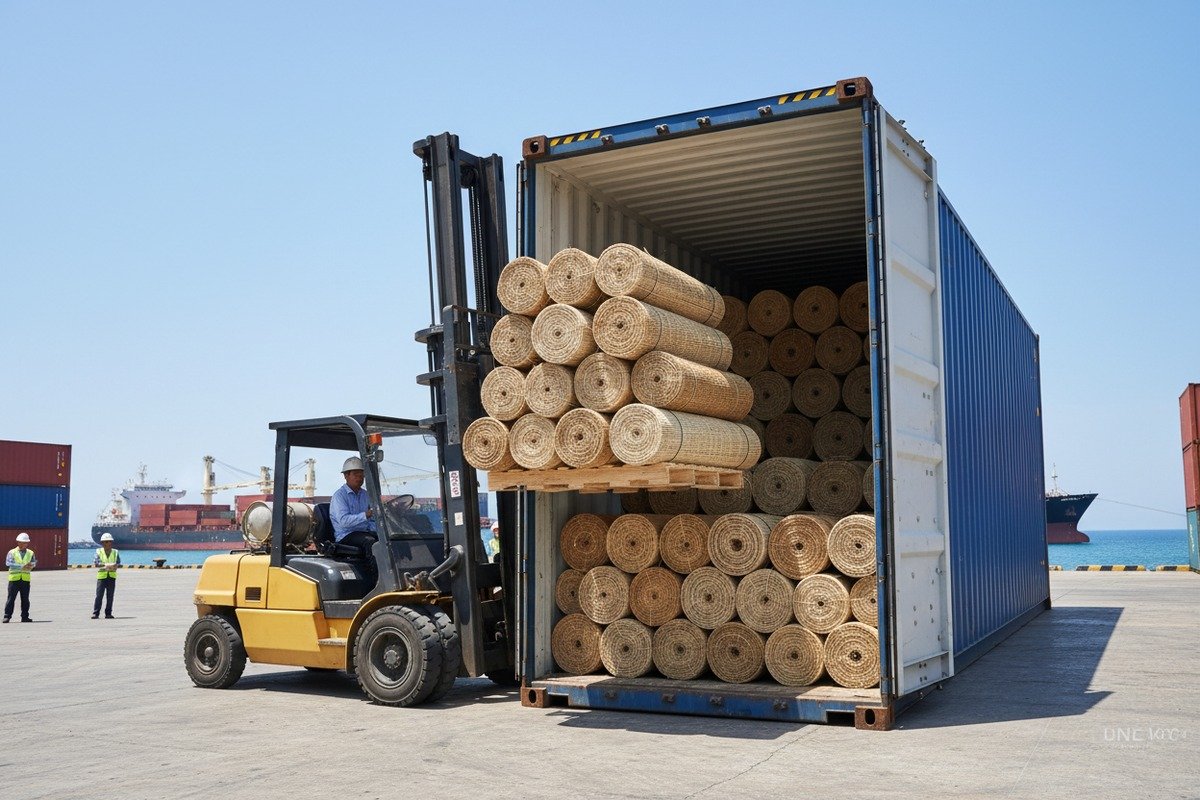
Not all rattan webbing is equal. Grade A material has specific characteristics that separate it from lower grades. Understanding these helps you write better specifications and catch problems early.
| Quality Factor | Grade A Standard | Lower Grade Indicators |
|---|---|---|
| Strand uniformity | Even thickness, consistent color | Irregular strands, color blotches |
| Weave tightness | Uniform spacing, no gaps | Loose weave, visible gaps |
| Surface finish | Smooth, no splinters | Rough texture, visible splinters |
| Flexibility | Bends without cracking | Cracks or breaks when flexed |
| Moisture content 7 | 8–12% (properly dried) | Over 15% (risk of mold) |
| Color consistency | Natural even tone across roll | Dark spots, discoloration |
Where Quality Problems Actually Come From
Most quality issues do not come from the weaving process. They come from raw material selection and drying. At our Indonesian processing facility, we sort raw rattan poles by diameter, age, and moisture content before they ever reach the splitting machines. This sorting step is what separates Grade A output from everything else.
When a supplier offers you an unusually low price, ask yourself: where are they cutting costs? Usually, it is in raw material selection. They use younger rattan that has not fully hardened. They skip the sorting step. They dry the material too quickly, which causes brittleness. The finished webbing looks fine on the surface but fails within months of use.
How to Protect Quality in Your Contract
Write your quality expectations into the contract. Be specific. Do not just say "Grade A." Define what that means in measurable terms:
- Strand diameter tolerance: ±0.3 mm
- Moisture content at delivery: 8–12%
- Color: natural, unbleached, within an approved sample range
- Weave pattern: hexagonal open mesh, 12 mm spacing
- Defect rate: less than 2% per shipment
Then require third-party inspection 8 or your own quality check before shipment. Most reputable suppliers welcome this. It protects both sides.
The Real Cost of Poor Quality
Saving 10% on procurement means nothing if 15% of the material is unusable. Returns, rework, and lost customer trust cost far more than paying a fair price for Grade A webbing. One of our Dutch clients learned this the hard way after switching to a cheaper supplier. Within six months, they came back because the defect rate was eating into their margins worse than the higher unit price ever did.
The sweet spot is working with a supplier who controls the entire chain—from raw rattan sourcing to processing to weaving. That vertical integration is where consistent quality lives. It is also where the real cost savings hide, because there are no middleman markups at each stage.
Can I reduce my total landed cost by consolidating my rattan material shipments from one supplier?
Shipping costs are the hidden killer in international rattan procurement. We have seen cases where a buyer got a great unit price but then spent so much on fragmented shipments that their total landed cost 9 was higher than buying locally. When our logistics team runs the numbers, consolidation almost always wins.
Yes, consolidating rattan material shipments from a single full-category supplier can reduce your total landed cost by 15–25%. Full container loads (FCL) cut per-unit freight costs dramatically, and working with one supplier eliminates duplicate customs paperwork, inspection fees, and coordination overhead.
Understanding Total Landed Cost
Total landed cost is not just the price on the invoice. It includes every expense from the factory floor to your warehouse door. Here is what most buyers forget to account for:
- Product unit cost
- Inland freight to port
- Export customs clearance
- Ocean freight (FCL vs. LCL 10)
- Import duties and tariffs
- Customs brokerage fees
- Inland delivery from port to warehouse
- Insurance
- Inspection fees
- Banking fees for L/C or wire transfers
When you split your orders across three or four suppliers, you pay many of these costs three or four times. Consolidation collapses those duplicate expenses into a single transaction.
FCL vs. LCL: The Numbers Speak
The difference between a full container load and less-than-container load shipping is massive. LCL shipments share container space with other shippers, and you pay for handling, consolidation, and deconsolidation fees on top of the freight rate.
Here is a simplified comparison for a shipment from Foshan, China to Los Angeles, USA:
| Cost Component | LCL (5 CBM) | FCL 20' Container (~28 CBM) |
|---|---|---|
| Ocean freight | $350–$500 | $1,200–$1,800 |
| Per-CBM freight cost | $70–$100 | $43–$64 |
| Handling/consolidation fees | $150–$250 | $0 |
| Customs entries | 1 per supplier | 1 total |
| Lead time | 35–45 days | 25–35 days |
| Damage risk | Higher (multiple handling) | Lower (sealed container) |
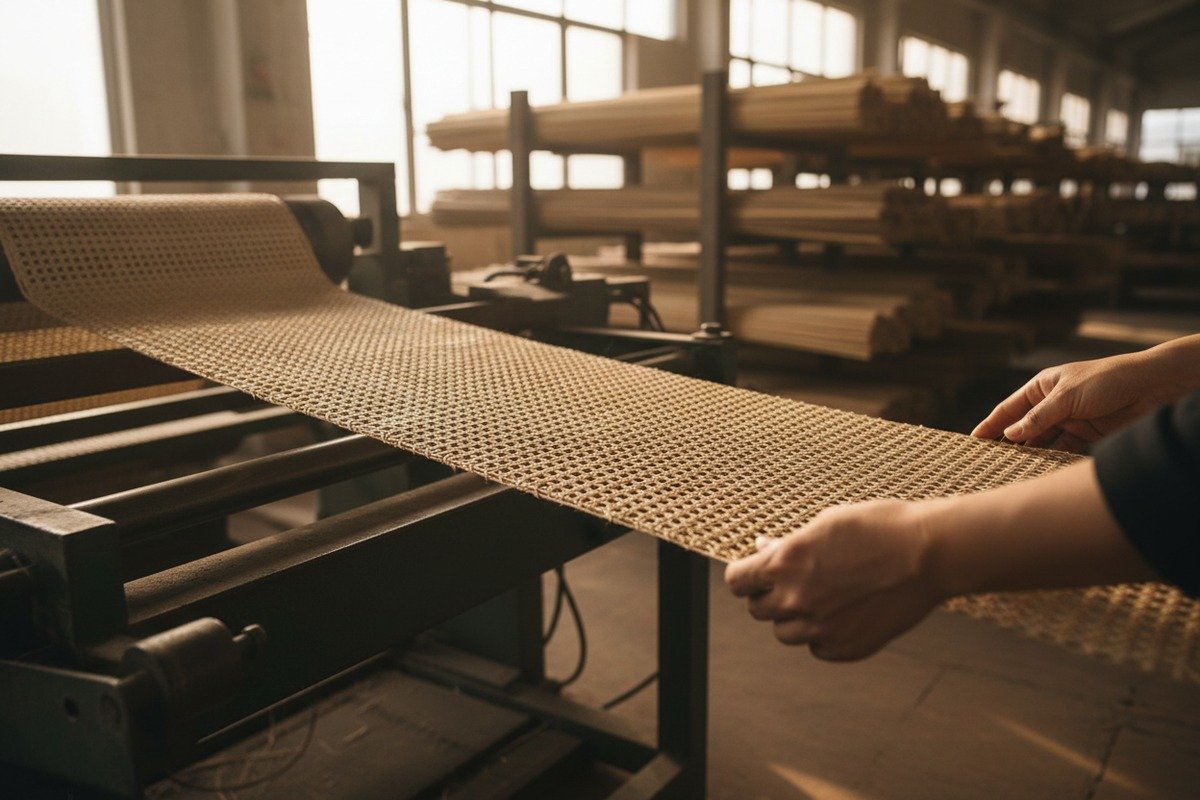
A full container of rattan webbing typically holds 400–600 rolls depending on width and roll diameter. If your annual volume supports even two FCL shipments per year, you are already ahead.
The One-Stop Supplier Advantage
Working with a single supplier who covers multiple rattan product categories—cane webbing, rattan poles, woven panels, synthetic alternatives—means you can fill containers with mixed products. Instead of ordering 200 rolls of webbing from one supplier and 100 bundles of rattan poles from another, you combine everything into one shipment from one factory.
This is exactly what our Foshan operation is built for. With over 30 partner factories and our own production facilities, we can fill a container with five different product types under one commercial invoice. One set of export documents. One customs entry at destination. One inspection. The savings add up fast.
Reducing Coordination Overhead
There is a hidden cost that never shows up on any invoice: your time. Managing three supplier relationships means three sets of negotiations, three quality checks, three shipping schedules, and three potential problems to solve. Every additional supplier multiplies your administrative burden.
One purchasing manager we work with in Australia estimated that consolidating from four rattan suppliers to one saved her team roughly 15 hours per month in coordination work. At her loaded labor cost, that was worth more than the freight savings.
Packaging and Damage Prevention
Consolidated shipments from a single supplier also mean consistent packaging. We know exactly how our rolls stack, how they need to be wrapped, and how to brace them inside a container to prevent crushing. When you mix products from different suppliers in a shared container, packaging standards vary and damage rates climb. We have seen buyers lose 5–8% of their shipment value to transit damage from poorly packed LCL loads.
Conclusion
Long-term rattan cane webbing procurement rewards planning, commitment, and smart supplier relationships. By locking in annual volumes, signing structured contracts, insisting on measurable quality standards, and consolidating shipments through a one-stop supplier, you can cut your total costs by 20–40% while maintaining the Grade A material your customers demand.
Footnotes
1. Defines rattan cane webbing as a woven material from rattan palm’s outer bark. ↩︎
2. Explains quality inspection as examining products against predefined standards. ↩︎
3. Replaced HTTP 403 link with an article explaining rattan as a raw material. ↩︎
4. Explains letters of credit as a contractual commitment for secure international payments. ↩︎
5. Details the various documents required for international export shipments. ↩︎
6. Discusses benefits of long-term contracts, including price stability and stronger relationships. ↩︎
7. Defines moisture content in wood and acceptable levels for various applications. ↩︎
8. Replaced HTTP 404 link with an authoritative explanation of third-party inspection and its benefits. ↩︎
9. Defines total landed cost as the complete cost of a product from origin to destination. ↩︎
10. Explains FCL (full container load) and LCL (less than container load) in freight shipping. ↩︎

 English
  Español de México
  العربية
  Deutsch
  Français
  Русский