
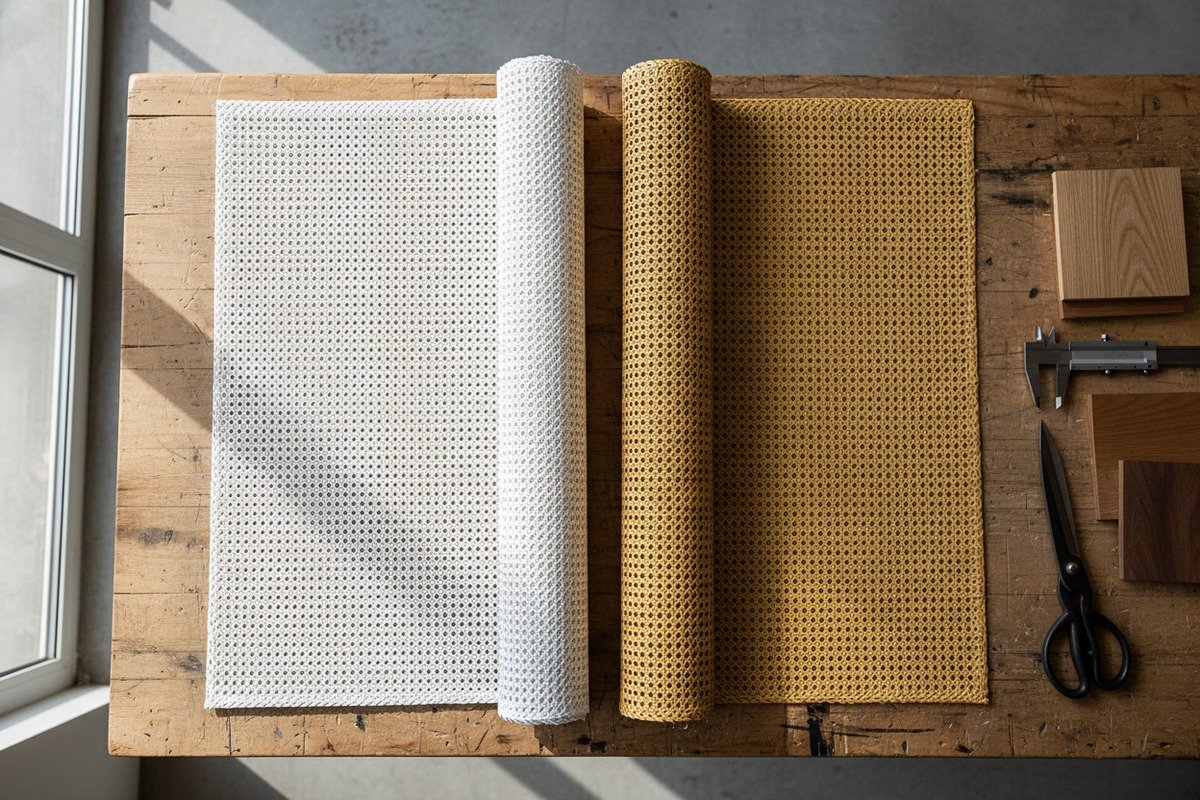
Choosing between bleached white and bleached yellow rattan cane webbing 1 trips up even experienced buyers. Many of our wholesale clients have placed orders expecting one shade and received another — leading to mismatched furniture panels and costly delays.
Bleached white rattan cane webbing undergoes intensive processing to achieve a pure, paper-white finish ideal for modern and Scandinavian designs. Bleached yellow rattan retains a warmer, straw-like tone closer to its natural state, suits traditional and bohemian styles, and typically requires less chemical treatment.
Both options have clear strengths and trade-offs Scandinavian designs 2. This guide breaks down the key differences in design fit, durability, pricing, and color consistency so you can make the right call for your next bulk order.
How do I choose between bleached white and bleached yellow rattan for my furniture designs?
When we ship rattan cane webbing to furniture factories across Europe and the Middle East, the most common question we hear is about color selection bohemian styles 3. The wrong shade can clash with a finished piece and ruin an entire production run.
Choose bleached white rattan for modern, minimalist, or coastal furniture designs that pair with light wood and white finishes. Choose bleached yellow for warm, rustic, or bohemian styles that complement natural wood tones. Your target market and end-use environment should guide the decision.
Understanding the Visual Difference
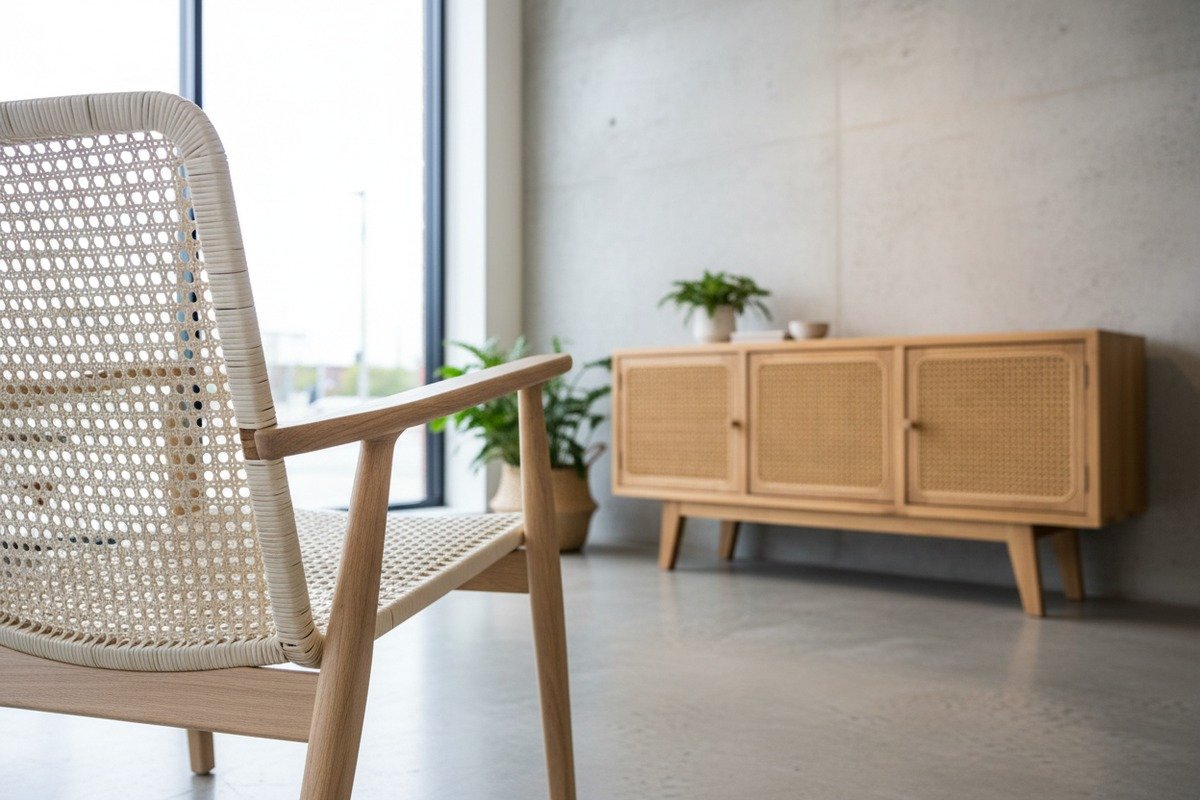
Bleached white rattan has a clean, near-paper-white appearance lignin and natural oils 4. It looks crisp. It feels contemporary. The color works well with painted furniture, pale oak, birch, and ash. Many of our European clients — especially those in the Netherlands and Spain — prefer this shade for Scandinavian-style chairs and cabinet inserts.
Bleached yellow rattan keeps a warm, straw-gold tone. It feels organic and earthy. This shade pairs naturally with walnut, teak, cherry, and other medium-to-dark woods. Our buyers in Southeast Asia and the Middle East tend to lean toward this option because it blends with traditional furniture aesthetics.
Design Context Matters
The furniture's final setting plays a big role. A bright, airy café in Melbourne needs a different rattan shade than a boutique hotel lobby in Dubai. Here is a quick reference:
| Design Style | Recommended Rattan | Why It Works |
|---|---|---|
| Scandinavian / Nordic | Bleached White | Matches light wood, clean lines, and neutral palettes |
| Bohemian / Boho-Chic | Bleached Yellow | Complements warm textures, layered fabrics, and earthy tones |
| Coastal / Hamptons | Bleached White | Pairs with white paint, linen, and sea-inspired colors |
| Mid-Century Modern | Bleached Yellow | Matches walnut and teak furniture frames common in this style |
| Minimalist / Contemporary | Bleached White | Provides a neutral canvas that does not compete with simple forms |
| Rustic / Farmhouse | Bleached Yellow | Enhances the warm, handmade feel of rustic interiors |
The Dyeing Factor
One detail many buyers overlook is downstream coloring. If you plan to stain or dye your rattan webbing after purchase, bleached white is the better starting point. It acts as a neutral canvas. Colors absorb more evenly and appear truer because there is no underlying yellow pigment to shift the final shade. We have seen clients attempt to dye bleached yellow rattan a soft grey, only to end up with an olive-green tone they did not want.
Regional Preferences We Have Observed
From our export records, North American and Australian buyers lean about 60/40 toward bleached white. European buyers split roughly 50/50. Middle Eastern and South Asian markets favor bleached yellow at about 70/30. These are not hard rules, but they reflect real ordering patterns across our client base.
The best approach is to request sample swatches before placing a bulk order. We always recommend this step, especially for new clients. A physical sample tells you more in five seconds than any product description can.
Does the bleaching process affect the strength and durability of my rattan cane webbing?
Our quality control team in Indonesia tests every production batch for tensile strength 5, flexibility, and resistance to cracking. This matters because the bleaching process does interact with the rattan's natural fiber structure, and buyers deserve honest answers about what that means.
All bleaching reduces rattan's natural strength slightly compared to unbleached material. However, properly processed bleached rattan — whether white or yellow — retains more than enough structural integrity for standard furniture applications. The key factor is bleaching method and duration, not the final color itself.
How Bleaching Works on Rattan Fibers
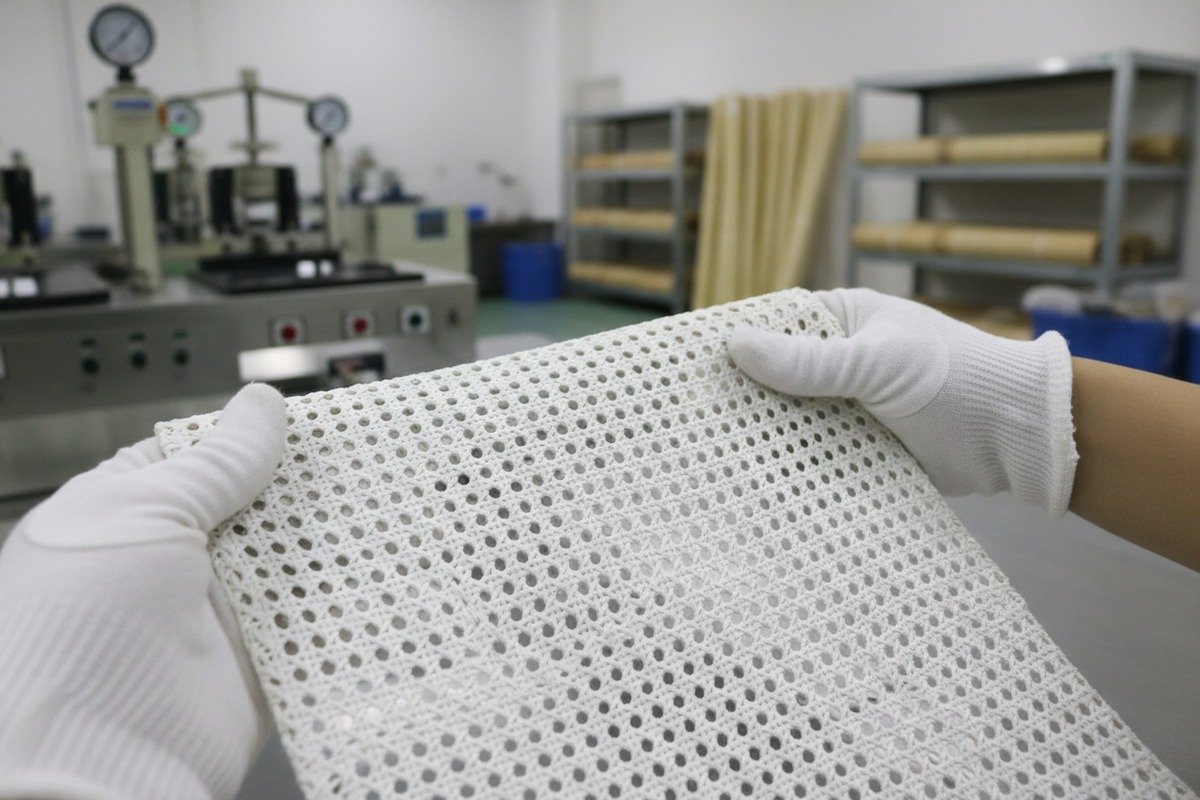
Rattan is a natural palm fiber 6. Its outer skin contains lignin and natural oils that give it strength and flexibility. Bleaching uses chemical agents — typically hydrogen peroxide 7 or sodium-based solutions — to strip away color pigments. This process also removes some of the protective oils from the fiber surface.
The more aggressive the bleaching, the more oils and lignin are stripped away. This is why the distinction between fully bleached (white) and semi-bleached (yellow) matters for durability.
Comparing Durability by Bleach Level
| Factor | Bleached White (Fully Bleached) | Bleached Yellow (Semi-Bleached) | Unbleached (Natural) |
|---|---|---|---|
| Tensile Strength | Slightly reduced | Minimally reduced | Baseline (strongest) |
| Flexibility | Good | Very Good | Excellent |
| UV Resistance 8 | Low — needs sealant | Moderate | Higher natural resistance |
| Susceptibility to Yellowing Over Time | High | Moderate | Low |
| Recommended Sealant | UV-resistant clear coat | Optional clear coat | Linseed oil 9 sufficient |
| Expected Lifespan (Indoor Use) | 8–15 years with care | 10–20 years with care | 15–25 years with care |
The UV Problem
Both bleached variants will yellow over time if exposed to sunlight. This is especially noticeable with bleached white rattan. The pure white tone can shift to a pale cream or even a patchy yellow within months of direct UV exposure. We always advise our clients to apply a UV-resistant sealant if the furniture will sit near windows or in sunlit rooms.
Bleached yellow rattan handles UV exposure slightly better because its starting tone is already warm. The shift is less dramatic and often blends into the material's natural look.
Does Bleaching Cause Cracking?
Over-bleached rattan can become brittle. This happens when the chemical treatment goes too far or when the drying phase is rushed. At our processing facility, we control soak times carefully and use a two-stage air-drying process to prevent this. Properly bleached rattan — whether white or yellow — should not crack under normal indoor use.
For outdoor applications, we generally steer clients toward synthetic rattan alternatives or, at minimum, recommend a heavy-duty polyurethane coating 10 over bleached natural rattan. The combination of UV exposure, humidity swings, and temperature changes makes outdoor use risky for any bleached natural material.
Maintenance Tips for Longevity
Keep bleached rattan away from direct sunlight when possible. Dust it regularly with a soft brush. Clean it with a damp cloth — never soaking wet. Apply linseed oil once or twice a year to restore moisture to the fibers. Avoid harsh chemical cleaners. These simple steps add years to your rattan webbing's life regardless of color.
Which color option offers the most competitive pricing for my wholesale business?
Pricing conversations come up in nearly every initial call with our wholesale clients. Whether you are a furniture material distributor in Thailand or a procurement manager for a factory in Turkey, your margin depends on the cost per square meter of raw material. We track production costs closely across our three factories.
Bleached yellow rattan cane webbing is generally 10–20% less expensive than bleached white because it requires less intensive chemical processing, shorter treatment times, and less rigorous sorting of raw materials. However, market demand, order volume, and pattern complexity also influence final wholesale pricing.
Why White Costs More
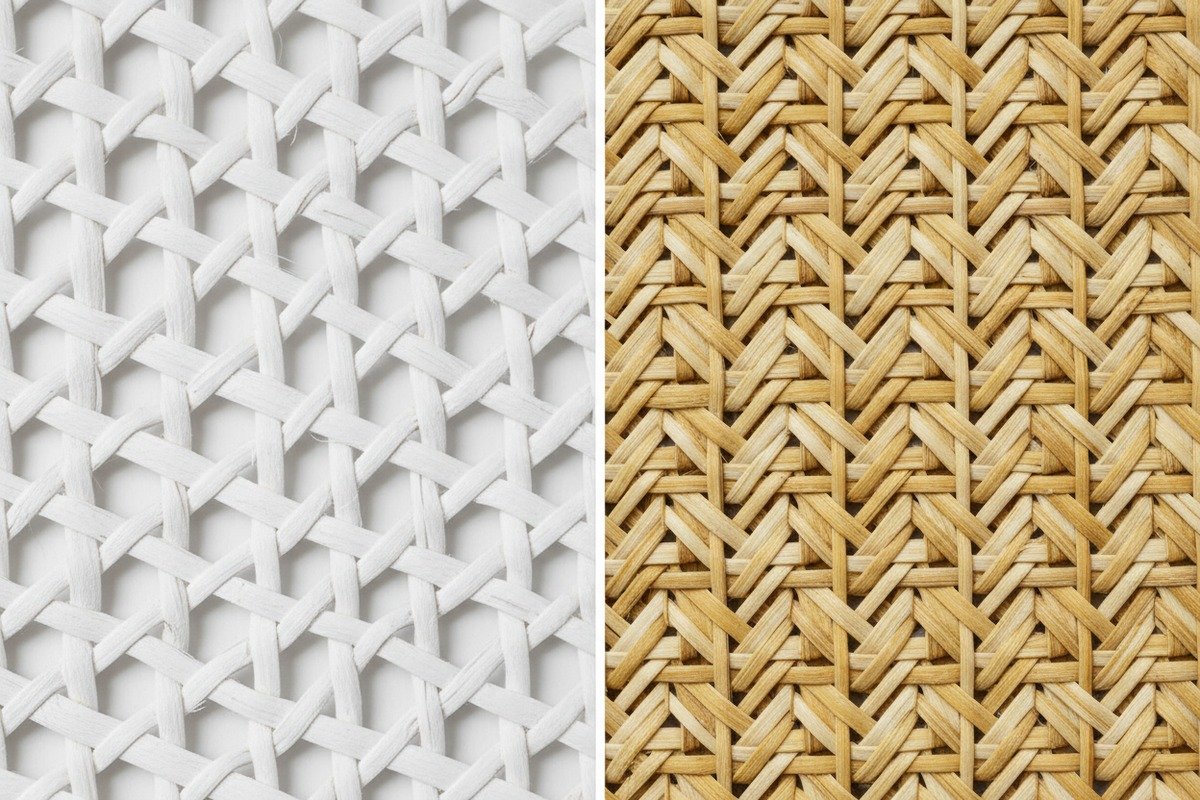
The production cost difference comes down to three main factors: chemical usage, processing time, and raw material grading.
To achieve a consistent white, manufacturers need higher-grade raw rattan with minimal natural color variation. Rattan with dark spots, uneven pigmentation, or heavy knots cannot reach a uniform white no matter how much bleaching you apply. This means the raw material pool is smaller and more expensive.
The bleaching process itself takes longer. Fully bleaching rattan to white requires extended soak times, sometimes multiple treatment cycles, and more chemical agents per kilogram of material. Each additional cycle adds labor, energy, and chemical costs.
Finally, quality control is stricter. Sorting and grading bleached white webbing for color uniformity takes more time than sorting bleached yellow. Rejects are higher. Those rejected pieces either get downgraded to a lower price tier or used for other applications, which affects overall yield.
Cost Breakdown Comparison
| Cost Factor | Bleached White | Bleached Yellow |
|---|---|---|
| Raw Material Grade Required | High (Grade A preferred) | Medium (Grade A or B) |
| Chemical Agent Volume | Higher | Lower |
| Number of Bleaching Cycles | 2–3 cycles typical | 1–2 cycles typical |
| Processing Time per Batch | 20–30% longer | Baseline |
| Reject Rate (Color Inconsistency) | 10–15% | 5–8% |
| Final Price Premium vs. Yellow | +10–20% | Baseline |
| Minimum Order Quantity Impact | Higher MOQs may reduce gap | Standard MOQs apply |
Volume Discounts and Negotiation
For large-volume orders — typically above 500 square meters — the price gap between white and yellow narrows. This is because we can dedicate a full production run to one color, which reduces changeover waste and improves efficiency. If your business moves enough volume, the cost difference may shrink to 5–10%.
We also offer blended orders. Some clients order 60% bleached yellow for their standard product line and 40% bleached white for their premium range. This approach lets you serve both market segments without overcommitting to the pricier option.
Hidden Costs to Consider
Do not forget downstream costs. If you choose bleached yellow and later need to paint or whitewash it to match a client's specification, you add labor and material costs on your end. Sometimes it is cheaper to buy bleached white upfront than to modify bleached yellow after the fact.
Also consider packaging. Bleached white rattan shows dirt, scuffs, and handling marks more easily than bleached yellow. This means it needs more protective packaging for shipping — another small cost that adds up across large orders. We use double-layer kraft paper wrapping for our white webbing shipments to prevent transit damage.
How can I ensure color consistency when ordering bleached rattan in bulk for my projects?
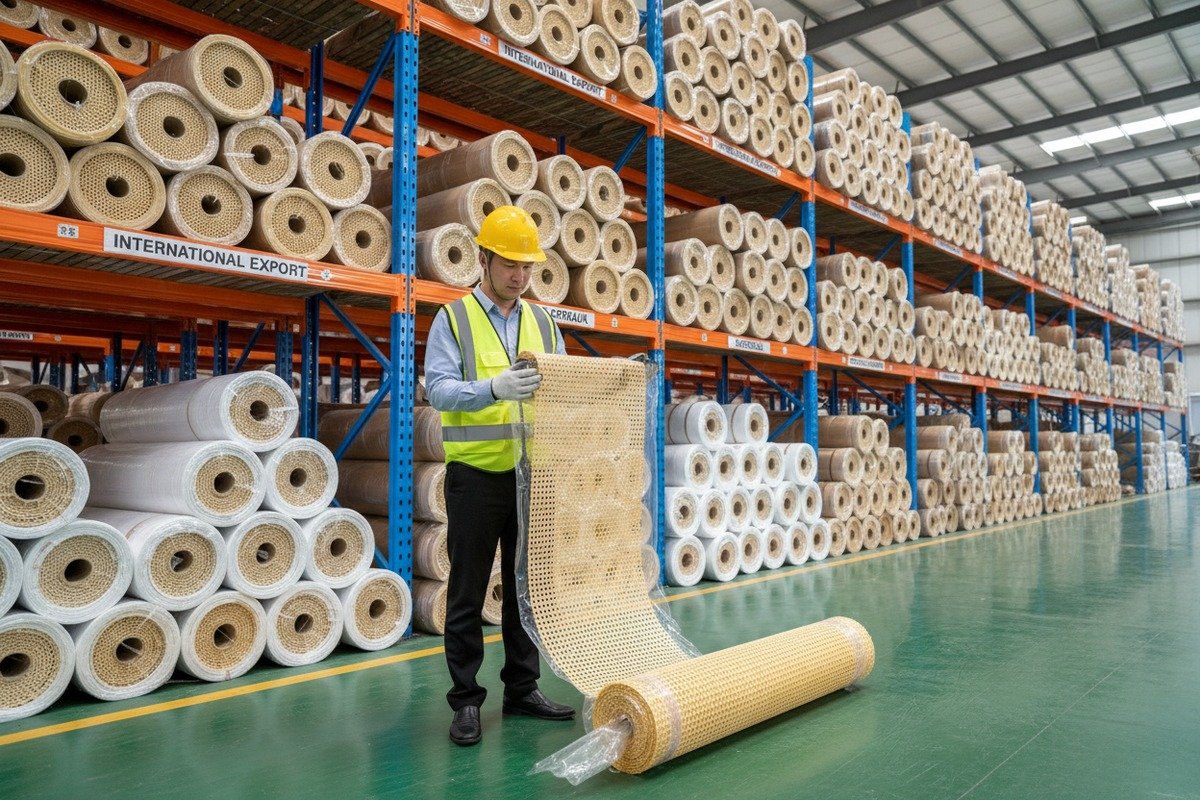
Color consistency is the single biggest pain point we hear from purchasing managers. One of our long-time clients in Australia once received two shipments of bleached white rattan from a previous supplier — same SKU, same specs on paper — and the color difference was visible from across the warehouse floor. That kind of inconsistency kills trust and wastes money.
Ensure color consistency by requesting pre-production samples from each batch, specifying acceptable color range tolerances in your purchase contract, working with suppliers who sort and grade raw materials before bleaching, and insisting on standardized bleaching protocols across production runs.
Why Color Variation Happens
Rattan is a natural material. Every cane grows differently. The age of the plant, the soil conditions, the harvest season, and even the specific species of rattan all affect the base color of the raw material. When you bleach a batch of rattan, these natural differences do not disappear — they simply become lighter versions of themselves.
A cane that started slightly darker will end up slightly less white after bleaching. A cane harvested in the wet season may absorb chemicals differently than one harvested in the dry season. These variations are unavoidable in natural materials. The question is how to manage them.
Our Approach to Consistency
At our processing facility in Indonesia, we use a four-step consistency protocol:
-
Pre-sort raw materials. Before any bleaching begins, our team sorts raw rattan by color, diameter, and density. Canes with similar characteristics go into the same bleaching batch.
-
Standardize chemical concentrations. We use calibrated mixtures of hydrogen peroxide-based bleaching agents. The concentration, temperature, and soak time are documented for each batch.
-
Controlled drying environment. After bleaching, rattan dries in covered, ventilated areas with consistent airflow. Uneven drying causes blotchy color.
-
Post-bleach grading. Every sheet of webbing is inspected and graded for color uniformity. Sheets that fall outside the acceptable range are separated and sold at a different tier.
What to Specify in Your Order
When placing a bulk order, do not rely on vague descriptions like "white" or "yellow." Instead, include these specifics in your purchase agreement:
- A physical reference sample or high-resolution photo taken under neutral lighting
- Acceptable color deviation range (e.g., ±1 shade on an agreed reference scale)
- Maximum percentage of off-spec material allowed per shipment (e.g., no more than 3%)
- Requirement for batch-matched shipments (all webbing in one order comes from the same bleaching batch)
Communication Saves Money
We always encourage clients to maintain an open WhatsApp or email channel with their account manager during production. If something looks off during bleaching, we can send photos for approval before weaving and shipping. This real-time feedback loop prevents surprises at the receiving dock.
For repeat orders, we keep retained samples from each previous shipment. This lets us match new production against the last delivery, ensuring continuity across your product line over months or even years.
Storage Affects Color Too
Even perfectly matched rattan can shift color after delivery if stored improperly. Keep your stock in a cool, dry, dark environment. Avoid stacking rolls near windows or under skylights. Humidity above 70% can cause mildew spots. Temperatures above 35°C can accelerate yellowing in bleached white material. Proper warehouse management is the last link in the consistency chain.
Conclusion
Bleached white and bleached yellow rattan cane webbing serve different design needs, carry different price points, and require different handling. Understanding these differences helps you order smarter, reduce waste, and deliver consistent quality to your customers.
Footnotes
1. Explains the material and its construction, providing a foundational understanding. ↩︎
2. Details the core principles and aesthetic characteristics of Scandinavian design. ↩︎
3. Provides a clear definition and characteristics of bohemian interior design style. ↩︎
4. Explains the composition and biological function of lignin in plant cell walls. ↩︎
5. Defines tensile strength as a key material property and its importance. ↩︎
6. Identifies rattan as a specific type of natural palm fiber and its origin. ↩︎
7. Describes hydrogen peroxide’s chemical properties and its common uses, including bleaching. ↩︎
8. Defines UV resistance as a material’s ability to withstand degradation from ultraviolet light. ↩︎
9. Provides information on linseed oil as a popular and effective wood finish. ↩︎
10. Details the composition, properties, and applications of polyurethane coatings in various industries. ↩︎


 English
  Español de México
  العربية
  Deutsch
  Français
  Русский