
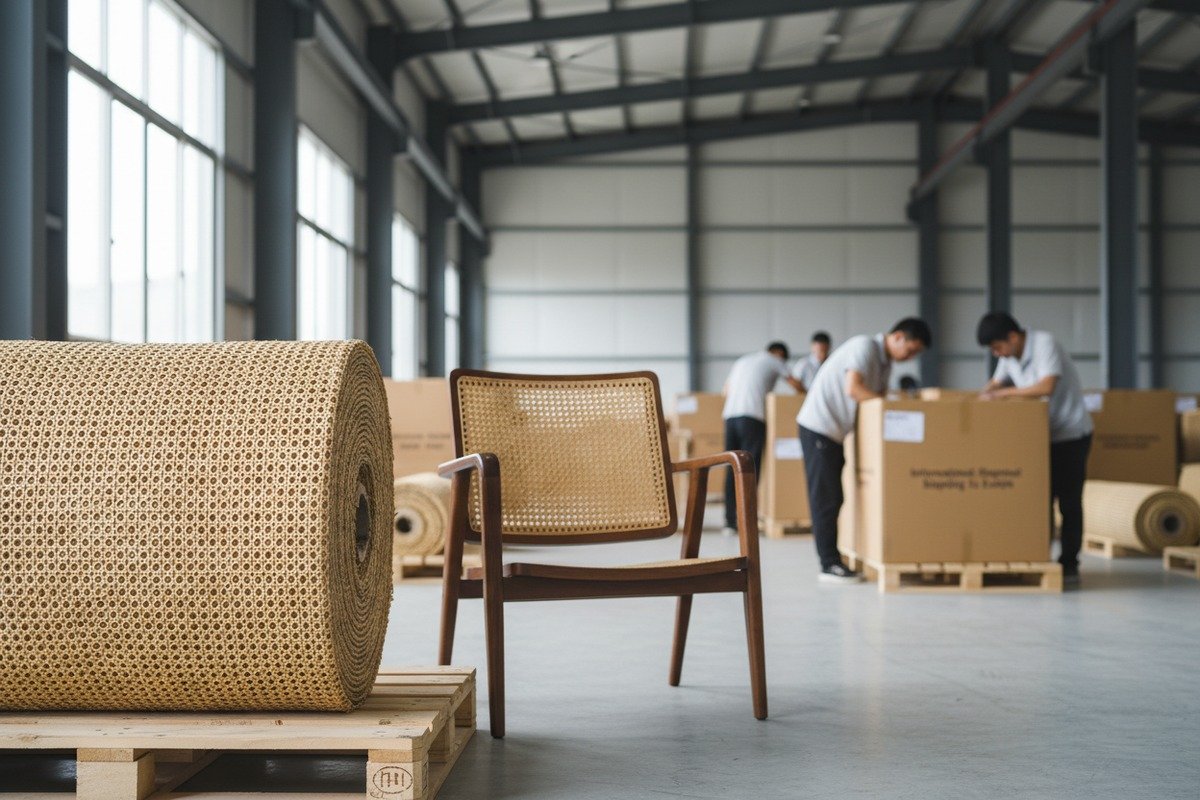
Every week at our Foshan warehouse, we ship containers of rattan cane webbing to furniture factories across Europe, the Middle East, and Southeast Asia PE, HDPE, and PVC 1. One question keeps coming up from purchasing managers: is rattan truly better for the environment than plastic alternatives? The answer matters more now than ever, because buyers, retailers, and end consumers are all pushing for greener materials.
Rattan cane webbing holds clear environmental advantages over plastic materials. It is a rapidly renewable, fully biodegradable, and low-carbon natural fiber. Unlike petrochemical-based plastics, rattan decomposes harmlessly, supports tropical forest ecosystems, and requires minimal energy to process from vine to finished webbing product.
Below, we break down four key areas where rattan outperforms plastic from an environmental standpoint LEED and WELL 2. Whether you are a furniture factory owner, a building material wholesaler, or a procurement manager, this guide will help you make an informed sourcing decision.
How does the biodegradability of natural rattan cane webbing compare to my plastic material options?
When our team in Indonesia harvests rattan vines by hand, we see firsthand how this plant returns to the earth naturally. Plastic webbing, on the other hand, sits in landfills for centuries. If biodegradability matters to your product line, the gap between these two materials is enormous.
Natural rattan cane webbing is 100% biodegradable and can decompose within months to a few years under normal conditions. Plastic materials like PE, HDPE, and PVC are non-biodegradable, persisting in the environment for 200 to 500 years and breaking down into harmful microplastics.
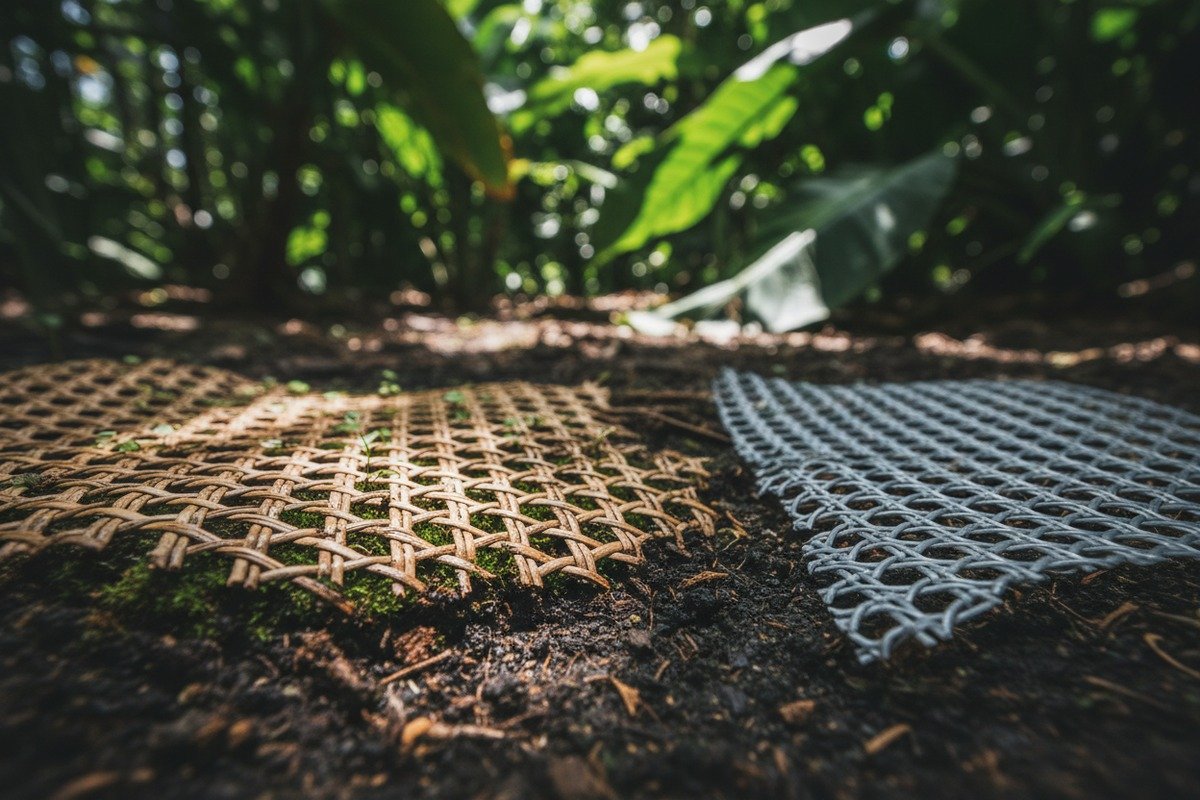
What Happens When Rattan Reaches End of Life?
Rattan is a plant fiber. When a piece of rattan webbing is discarded, microorganisms in soil break it down into organic matter. There are no toxic residues. No microplastics 3. No chemical leaching. In tropical climates, untreated rattan can decompose in as little as six months. In drier conditions, it may take a few years, but the outcome is the same: it returns to the earth.
We have seen old rattan cuttings at our Indonesian processing facility turn into compost within a single rainy season. That is something no plastic material can match.
What Happens When Plastic Webbing Reaches End of Life?
Plastic webbing made from PE, HDPE, or PVC does not biodegrade. It photodegrades 4, meaning sunlight breaks it into smaller and smaller fragments. These fragments become microplastics and nanoplastics 5 that contaminate soil, waterways, and marine ecosystems. Some plastic additives, like UV stabilizers and pigments, can leach toxic chemicals during this slow breakdown process.
While HDPE and PE are technically recyclable, the reality is that mixed or contaminated plastic webbing rarely enters recycling streams. Most ends up in landfills or, worse, in the natural environment.
Biodegradability Comparison Table
| Property | Natural Rattan Cane Webbing | PE / HDPE Plastic Webbing | PVC Plastic Webbing |
|---|---|---|---|
| Biodegradable | Yes, fully | No | No |
| Decomposition time | Months to a few years | 200–500 years | 400+ years |
| Microplastic risk | None | High | High |
| Toxic leaching | None | Possible (UV stabilizers) | Yes (plasticizers, phthalates) |
| Compostable | Yes | No | No |
| End-of-life options | Composting, biomass energy | Recycling (limited), landfill | Landfill (recycling is rare) |
Why This Matters for Your Business
If you sell furniture or building materials into the EU, Australia, or the US, your downstream customers are increasingly asking about end-of-life disposal. Rattan gives you a clean answer. It composts. Plastic does not. This is not a marginal difference. It is a fundamental one.
From our experience exporting to the Netherlands and Spain, we can confirm that European wholesalers now request material lifecycle data with every order. Rattan webbing makes that conversation simple.
Will switching to rattan help me reduce the carbon footprint of my furniture manufacturing process?
Our rattan processing facility in Indonesia runs on a fraction of the energy that a plastic extrusion plant requires. When we compare the carbon intensity of producing one roll of natural rattan webbing versus one roll of synthetic webbing, the difference is striking.
Switching to rattan cane webbing can significantly reduce the carbon footprint of your furniture manufacturing. Rattan production relies on manual harvesting and low-energy processing, while plastic webbing depends on fossil fuel extraction, petrochemical refining, and energy-intensive extrusion, all of which generate substantially higher greenhouse gas emissions.
How Rattan Production Stays Low-Carbon
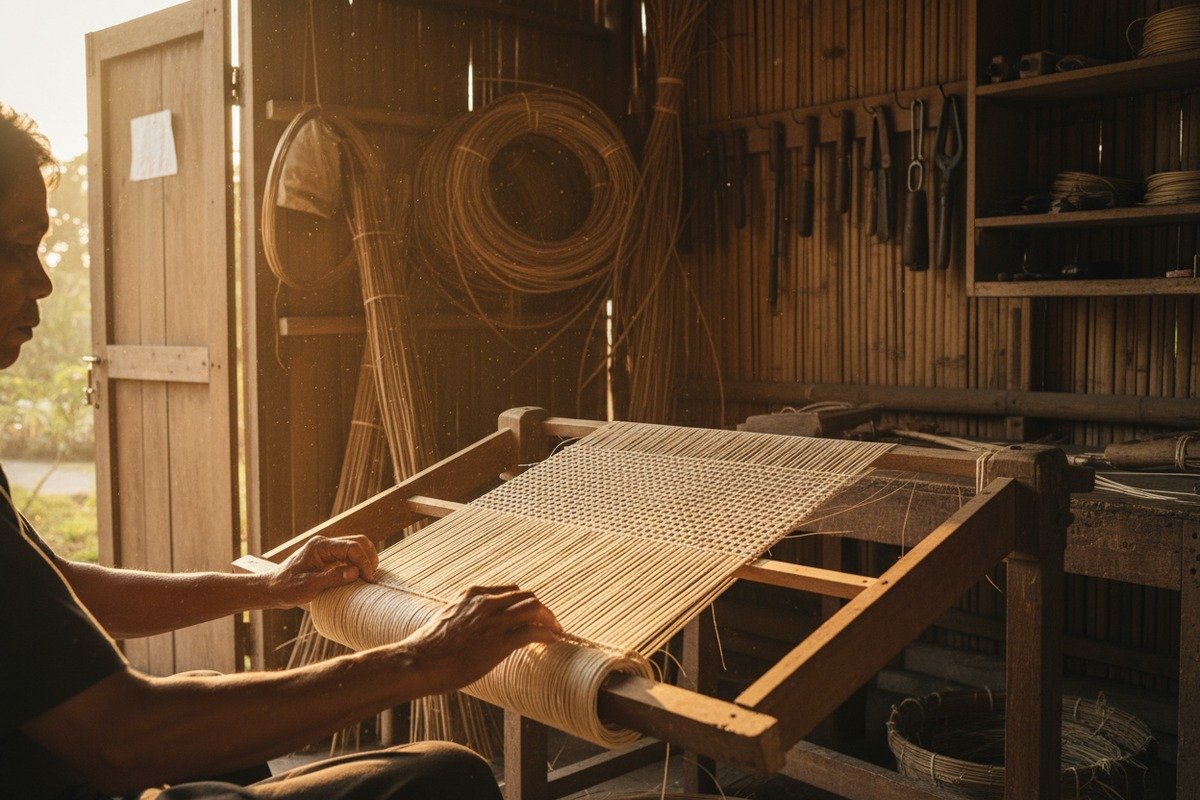
Rattan vines grow naturally in tropical rainforests. They do not need synthetic fertilizers, pesticides, or irrigation. Harvesting is done by hand. Workers cut mature vines, peel them, and sun-dry the strips. Weaving into webbing patterns—hexagonal open-mesh, square basketweave, or diamond motifs—is done manually or with simple machines.
At our Indonesian facility, the primary energy inputs are human labor and sunlight. There are no blast furnaces. No chemical reactors. No high-temperature extrusion lines. The carbon footprint of turning a rattan vine into a finished roll of cane webbing is, qualitatively, a fraction of what plastic requires.
How Plastic Webbing Manufacturing Drives Emissions
Producing PE, HDPE, or PVC webbing starts with crude oil extraction. That oil is refined into petrochemical feedstock 6, then polymerized into plastic resin pellets. Those pellets are melted at high temperatures and extruded through dies to form the webbing strands. Additives—UV inhibitors, colorants, flame retardants—are mixed in during this process.
Every stage burns energy. Every stage produces emissions. And the feedstock itself is a fossil fuel.
Carbon Footprint Comparison
| Stage | Rattan Cane Webbing | Plastic (PE/HDPE) Webbing |
|---|---|---|
| Raw material source | Renewable tropical vine | Crude oil / natural gas |
| Harvesting / extraction | Manual, zero fossil fuel | Drilling, pumping, refining |
| Processing energy | Low (sun-drying, hand peeling) | High (melting, extrusion at 150–250°C) |
| Chemical additives | None or minimal (natural oils) | UV stabilizers, pigments, plasticizers |
| Carbon sequestration 7 | Rattan absorbs CO₂ while growing | No carbon sequestration |
| Transport consideration | Shipped from Indonesia/China | Resin often shipped globally too |
The Carbon Sequestration Bonus
Here is something many buyers overlook. While a rattan vine grows, it absorbs carbon dioxide from the atmosphere. That carbon stays locked in the fiber even after it becomes furniture webbing. This means rattan is not just low-carbon to produce—it is actually a carbon sink during its growth phase.
Plastic, by contrast, releases stored carbon. The fossil fuels used to make it were underground for millions of years. Manufacturing plastic brings that ancient carbon into the atmosphere.
A Practical Note on Shipping
One fair critique is that rattan from Indonesia must be shipped internationally, and shipping does produce emissions. We acknowledge this. However, plastic resin pellets are also shipped globally. And the total lifecycle emissions of plastic—from oil well to factory to landfill—still far exceed those of rattan. Our shipments to the US, Australia, and Europe carry a transport footprint, but it is offset many times over by the low-impact production process.
Can I ensure a more sustainable supply chain by choosing renewable rattan over synthetic plastics?
Running three factories and managing over 30 partner facilities in Foshan has taught us that supply chain sustainability is about more than just the finished product. It is about where materials come from, how they are harvested, and who benefits along the way.
Yes, choosing renewable rattan over synthetic plastics creates a more sustainable supply chain. Rattan regenerates quickly after harvest, supports tropical forest conservation, and provides livelihoods for rural communities. Plastics depend on finite fossil fuels, volatile petrochemical markets, and energy-intensive industrial processes that carry higher environmental and social costs.

Rattan Is a Renewable Resource—Plastic Is Not
Rattan vines are climbing palms 8. When harvested correctly, the root system stays intact and new growth begins immediately. A well-managed rattan forest can produce sustainable yields indefinitely. This is fundamentally different from petroleum, which is a finite resource. Once oil is extracted and burned, it is gone.
Our own rattan processing facility in Indonesia sources from managed forests where harvesting follows rotational cycles. Vines are cut selectively. The forest canopy stays intact. Wildlife habitats are preserved.
Forest Conservation Through Economic Incentive
Here is a fact that many buyers find surprising: rattan cultivation actually incentivizes forest preservation. Rattan needs trees to climb. If you cut down the trees, you lose the rattan. This creates a direct economic reason for local communities to protect standing forests rather than clear them for agriculture.
This is the opposite dynamic from most commodity supply chains, where raw material production drives deforestation. With rattan, the forest is the factory.
Community Impact
At our Indonesian facility, rattan harvesting and initial processing employ dozens of local workers. These are rural communities with limited economic options. Rattan gives them income without requiring them to leave their land or destroy their environment. This social sustainability dimension is something plastic supply chains simply cannot offer.
The FSC Certification Question
Some buyers ask us about FSC-certified rattan. While FSC certification 9 for rattan is less common than for timber, the trend is growing. Certified sources verify that harvesting is done sustainably, without ecosystem damage. We recommend that procurement managers look for certifications or at minimum request documentation of harvesting practices from their suppliers.
Supply Chain Risk Comparison
| Factor | Rattan Supply Chain | Plastic Supply Chain |
|---|---|---|
| Raw material renewability | Fully renewable (regrows after harvest) | Non-renewable (fossil fuel based) |
| Price stability | Moderate (weather/harvest dependent) | Volatile (tied to oil markets) |
| Geopolitical risk | Low (multiple tropical source countries) | High (oil-producing regions) |
| Environmental compliance | Easier (natural, non-toxic) | Harder (chemical regulations, emissions) |
| Community benefit | High (rural employment, forest preservation) | Low (industrial, centralized) |
| Certification availability | Growing (FSC, fair trade) | Limited (recycled content labels) |
Addressing the Overharvesting Concern
Critics rightly point out that unsustainable rattan harvesting can damage ecosystems. This is a real risk. If vines are stripped too aggressively, forests suffer. The solution is responsible sourcing. Work with suppliers who can document their harvesting practices. Visit facilities if possible. We welcome factory audits from our B2B clients for exactly this reason.
The existence of overharvesting risk does not negate rattan's sustainability advantage. It means the advantage depends on sourcing discipline. The same is true of any natural material.
How do the eco-friendly properties of rattan help my brand meet the growing demand for green building materials?
Over the past three years, we have watched the conversation shift dramatically among our wholesale clients in the Netherlands, Australia, and the US. Green building certifications and eco-conscious consumers are driving real purchasing decisions now, not just marketing slogans.
Rattan cane webbing helps your brand meet green building demand through multiple eco-friendly properties: it is natural, VOC-free, biodegradable, and supports biophilic design principles. These qualities align with green building certifications like LEED and WELL, giving your products a competitive edge in a market that increasingly rewards environmental responsibility.

Indoor Air Quality: Rattan vs. Plastic
One of the most overlooked advantages of rattan cane webbing is indoor air quality. Natural rattan does not off-gas volatile organic compounds. VOC-free 10 It is a breathable, natural fiber that contributes to healthier indoor environments.
Plastic materials, especially PVC-based products, can release VOCs and other chemicals into interior spaces. For green building projects targeting WELL or LEED certification, material off-gassing is a critical evaluation criterion. Rattan passes this test effortlessly. Most plastics require careful documentation and testing.
Biophilic Design and Natural Aesthetics
Biophilic design—integrating natural elements into built environments—is one of the fastest-growing trends in commercial and residential architecture. Rattan's warm, earthy tones of light beige, straw yellow, and cream cannot be authentically replicated by plastic. The organic variations in natural cane strands, the matte fibrous texture, the visible handcraft—these qualities connect occupants to nature.
Our hexagonal open-mesh "radio weave," dense square basketweave, and diamond motif patterns all deliver this biophilic effect. Synthetic rattan can mimic the look at a distance, but it lacks the tactile authenticity that designers and end users value.
Meeting Certification Requirements
Green building certifications increasingly reward the use of natural, renewable, and low-emission materials. Here is how rattan aligns:
- LEED: Points available for rapidly renewable materials, low-emitting materials, and regional materials.
- WELL Building Standard: Credits for materials that support air quality and use of nature-based elements.
- Living Building Challenge: Requires materials that are non-toxic and sourced responsibly.
Rattan can contribute to credits in all three frameworks. Plastic webbing faces hurdles in each.
Brand Positioning in a Green Market
From our conversations with furniture material wholesalers across Europe and the Middle East, we know that end consumers are willing to pay a premium for verified sustainable materials. Market trends show certified rattan commanding 20–50% higher prices than synthetic alternatives. This premium reflects real demand, not just aspirational marketing.
If your brand can demonstrate FSC-sourced or responsibly harvested rattan in your product line, you gain a genuine differentiator. This is especially powerful in markets like the Netherlands, Germany, Australia, and the US, where green building regulations are tightening and consumer awareness is high.
Durability Considerations and Honest Trade-Offs
We believe in being transparent with our clients. Rattan cane webbing is best suited for indoor applications. Outdoors, untreated rattan may last only one to two years. Plastic webbing lasts five to ten years or more in outdoor settings.
This does not disqualify rattan from the sustainability conversation. It means the right material depends on the application. For indoor furniture, wall panels, cabinet doors, headboards, and interior partitions, rattan is the clear environmental winner. For outdoor furniture exposed to rain and UV, recycled HDPE may be the more practical sustainable choice.
The key is matching the material to the use case—and being honest with your customers about it.
Lifecycle Comparison for Green Building Applications
| Criterion | Natural Rattan Webbing | Synthetic Plastic Webbing |
|---|---|---|
| VOC emissions | Zero | Low to moderate (varies by type) |
| Biophilic design value | High (authentic natural material) | Low (imitation aesthetics) |
| LEED credit eligibility | Yes (renewable, low-emitting) | Limited |
| Indoor air quality impact | Positive (breathable, non-toxic) | Neutral to negative |
| Aesthetic warmth | Natural, unique variations | Uniform, synthetic appearance |
| Consumer willingness to pay premium | High (+20–50%) | Low |
| Best application | Indoor furniture, decor, partitions | Outdoor furniture, high-moisture areas |
Conclusion
Rattan cane webbing offers real, measurable environmental advantages over plastic in biodegradability, carbon footprint, supply chain sustainability, and green building alignment. Choose responsibly sourced rattan, match it to the right application, and your brand gains both ecological integrity and market competitiveness.
Footnotes
1. Provides a comprehensive overview of various plastic resins, including HDPE, LDPE (a type of PE), and PVC, detailing their properties and applications. ↩︎
2. Provides a comparative analysis of the LEED and WELL Building Standards, outlining their differences and similarities in sustainable and wellness-focused building design. ↩︎
3. Explains what microplastics are and their environmental impact. ↩︎
4. Defines photodegradation as plastic breakdown by sunlight. ↩︎
5. Defines nanoplastics and highlights their potential dangers due to small size. ↩︎
6. Defines raw materials derived from fossil fuels for chemical production. ↩︎
7. Explains the process of absorbing and storing atmospheric carbon dioxide. ↩︎
8. Identifies rattan as a type of climbing palm species. ↩︎
9. Explains the international standard for responsible forest management. ↩︎
10. Authoritative government source from the US EPA explaining volatile organic compounds (VOCs) and their impact on indoor air quality, supporting the concept of ‘VOC-free’ or ‘low-VOC’ products. ↩︎

 English
  Español de México
  العربية
  Deutsch
  Français
  Русский