
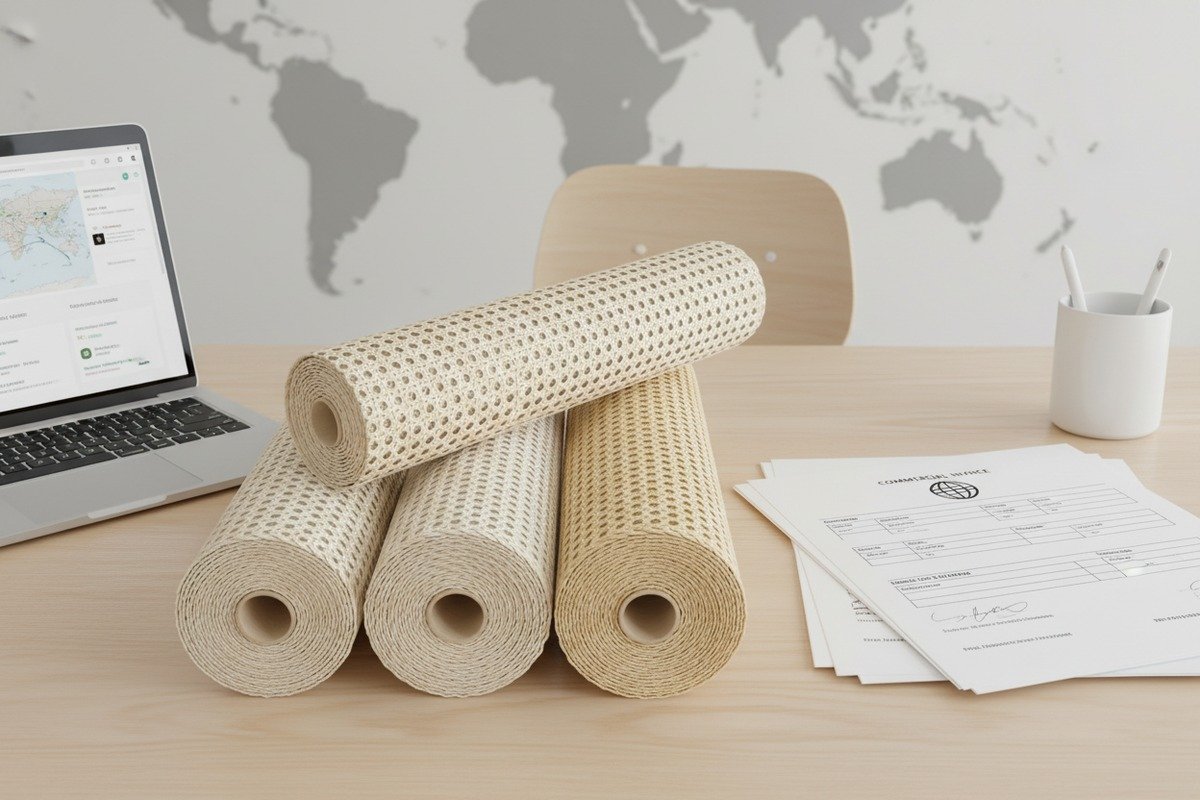
Every week, our sales team fields dozens of inquiries from buyers who feel overwhelmed by the rattan import process Bill of Lading 1. They worry about inconsistent quality, hidden customs fees, and damaged shipments arriving at port. These problems are real—and costly when you get them wrong.
To import rattan cane webbing successfully, you must verify product quality and grade, choose between natural and synthetic types, secure a reliable supplier, arrange proper packaging and shipping, obtain fumigation certificates for natural rattan, classify your goods under the correct HS code, and prepare all customs documentation including the Bill of Lading, Commercial Invoice, and Certificate of Origin.
Each of these steps has details that can trip up even experienced importers Certificate of Origin 2. Let me walk you through the full process, step by step, based on years of handling rattan exports to over a dozen countries.
How can I verify the quality and grade of rattan cane webbing before I import?
From our production lines in Indonesia and our processing facility in Foshan, we have seen firsthand how a single batch of poorly graded rattan can ruin a buyer's entire project RoHS 3. The problem starts when importers skip quality checks. The agitation grows when defective webbing arrives thousands of miles away Phytosanitary Certificate 4. The solution lies in a clear verification process before goods ever leave the factory.
You can verify rattan cane webbing quality by requesting product samples, checking the supplier's grade classifications (such as Grade AA or bleached), reviewing international certifications like SGS or RoHS, and hiring a third-party pre-shipment inspection service to confirm specifications before dispatch.
Understanding Rattan Grades
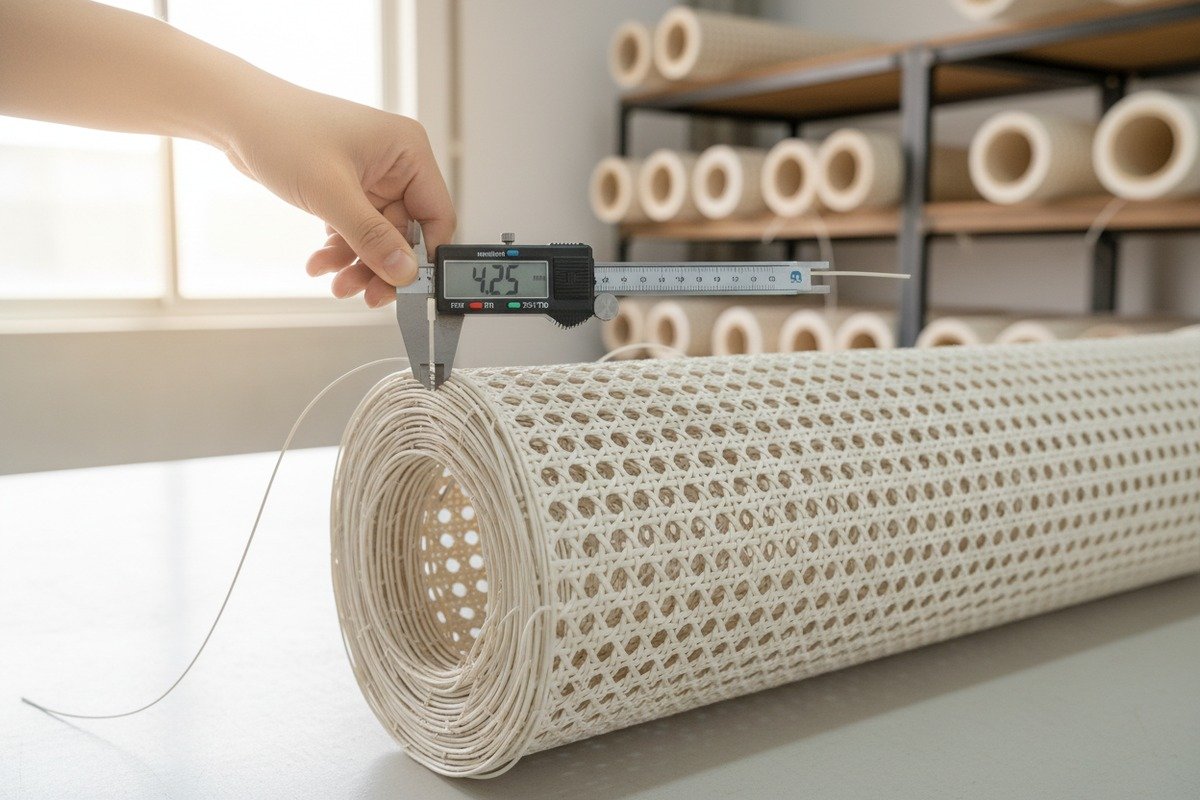
Not all rattan cane webbing 5 is equal. Grades reflect the uniformity of the strands, the consistency of the weave, and the overall finish. Grade AA rattan features tight, even weaving with minimal strand breakage. Bleached varieties undergo additional processing to achieve a lighter, more uniform color. Lower grades may have visible knots, uneven widths, or color inconsistencies.
When we process rattan at our Indonesian facility, we sort raw materials before weaving begins. Mature rattan palms—typically 5 to 7 years old—produce the strongest fibers. Younger palms yield thinner, weaker strands that break more easily during weaving.
Natural vs. Synthetic: Quality Differences
The quality checks you run depend on whether you are importing natural or synthetic rattan. Here is a quick comparison:
| Feature | Natural Rattan Webbing | Synthetic Rattan Webbing |
|---|---|---|
| Material | Organic cane fibers | Plastic (PE/PP) |
| Best Use | Indoor furniture, decor | Outdoor furniture, decoration |
| Color Palette | Light beige, straw yellow, cream | Beige, tan, light brown |
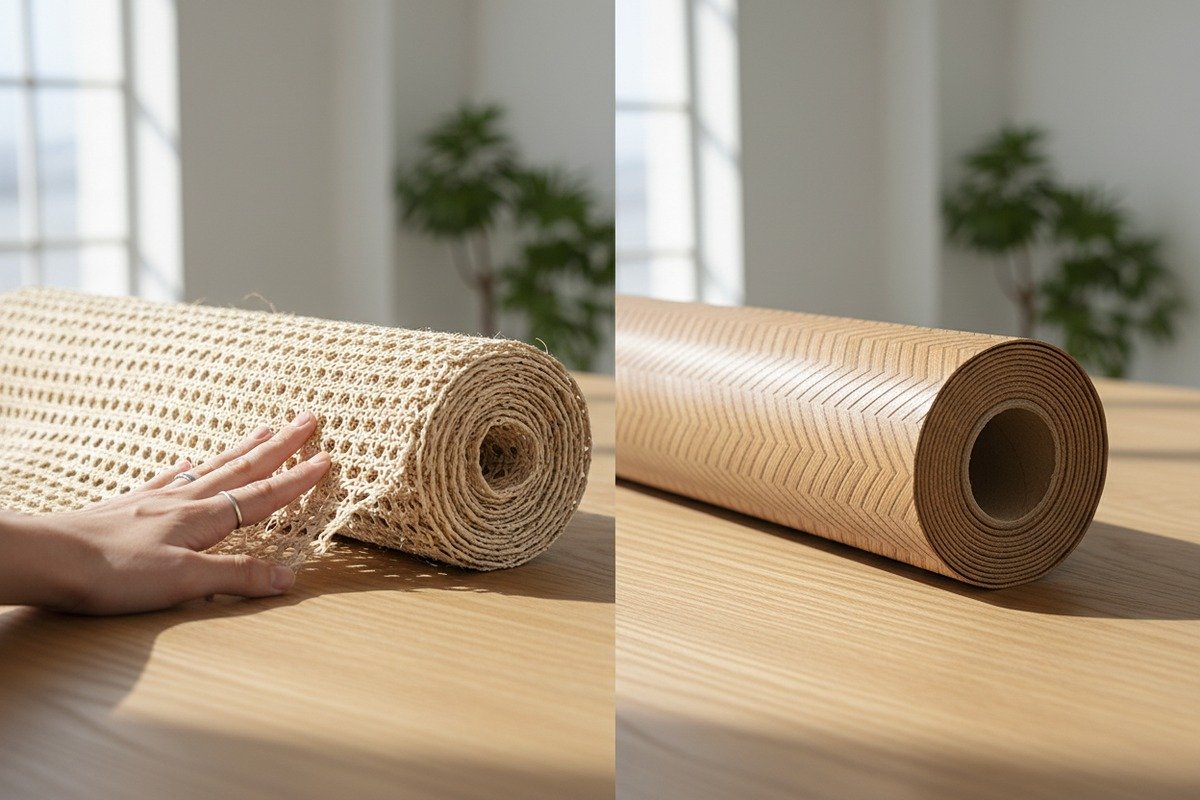
| Texture | Matte, fibrous, organic variations | Uniform, mimics wood grain |
| Fumigation Required | Yes | No |
| Roll Length (Standard) | 15 meters | 30 meters |
| Width Range | 45–100 cm | 45–100 cm |
Natural rattan has a warm, earthy look with organic variations in each strand. That is part of its charm—but it also means more variation between rolls. Synthetic rattan offers sharper, more uniform patterns like chevron or wave designs. It is more consistent, but it lacks the artisanal feel of natural cane.
How to Request and Evaluate Samples
Always request samples before placing a bulk order. When you receive them, check these points:
- Strand thickness: Measure multiple strands. They should be uniform within a 0.5mm tolerance.
- Weave tightness: Press the webbing flat. Gaps should be consistent across the panel.
- Color consistency: Compare different sections of the sample. Natural rattan will have slight variation, but extreme color shifts indicate poor sorting.
- Flexibility: Bend the webbing gently. Quality rattan flexes without cracking. Brittle material signals over-drying or old stock.
Third-Party Inspection Services
For large orders, hiring a pre-shipment inspection 6 (PSI) service is worth the cost. Companies like SGS or Bureau Veritas send inspectors to the factory before shipment. They verify quantity, check dimensions, test material quality, and photograph the goods. This step catches problems before they become expensive international disputes.
We encourage all our B2B clients to use PSI services, especially on first orders. It builds trust and sets a quality baseline for the partnership.
What are the most efficient shipping and packaging methods for my rattan orders?
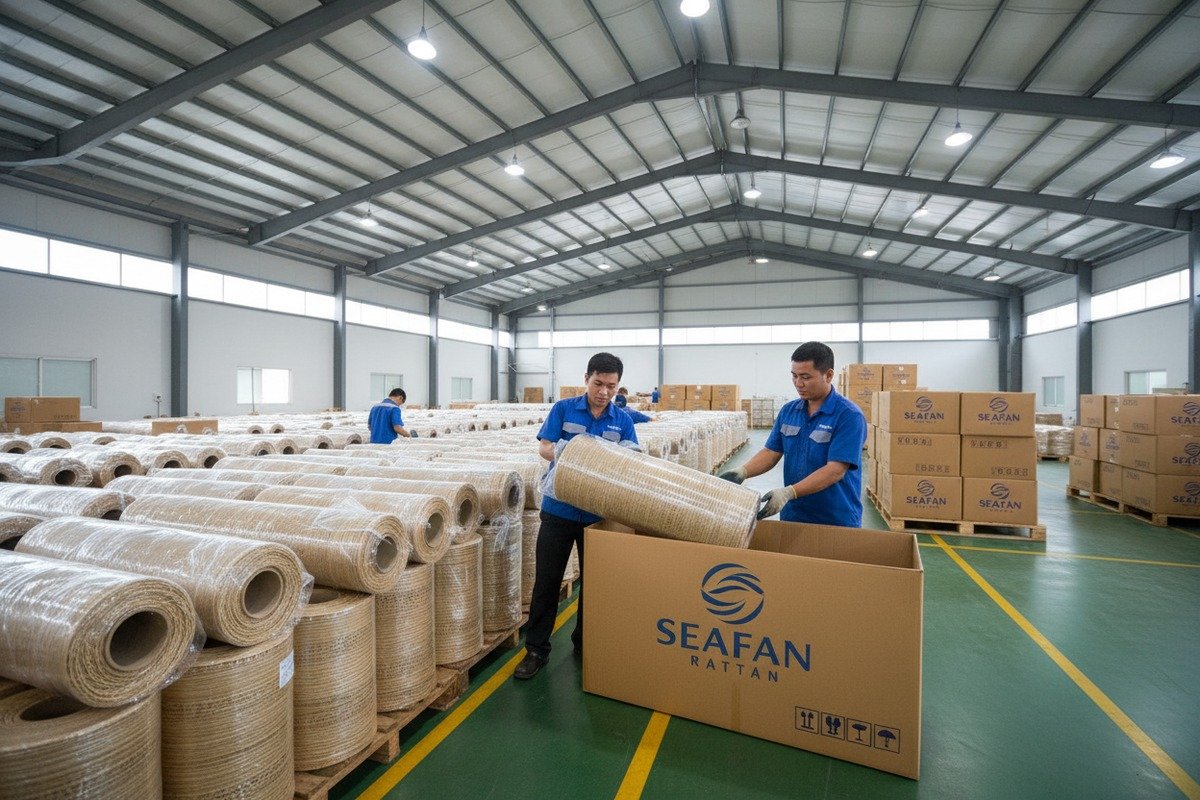
Our warehouse teams have packed and shipped rattan webbing to ports in Rotterdam, Los Angeles, Melbourne, and Istanbul. Through trial and error across thousands of shipments, we have learned exactly what protects this delicate material—and what does not.
The most efficient methods include wrapping rattan rolls in moisture-proof plastic film, reinforcing with corrugated cardboard or wooden crates, using sea freight for bulk orders over one cubic meter, and consolidating shipments through LCL containers for mid-size orders to reduce per-unit shipping costs.
Why Packaging Matters More Than You Think
Rattan cane webbing is lightweight and flexible. That sounds easy to ship—but it is also fragile. Natural rattan absorbs moisture. If it gets wet during transit, it develops mold. If it gets crushed, the weave pattern deforms. Poor packaging is the number one cause of damage claims our clients report.
A proper packaging setup has three layers:
- Inner layer: Each roll is wrapped in moisture-proof plastic film. This barrier prevents humidity from reaching the fibers.
- Middle layer: Corrugated cardboard sleeves cushion the rolls and prevent surface scratches.
- Outer layer: For large orders, wooden crates or reinforced cartons protect against stacking pressure inside containers.
Shipping Methods Compared
The right shipping method depends on your order size and urgency.
| Shipping Method | Best For | Typical Transit Time | Cost Level | Minimum Order |
|---|---|---|---|---|
| Sea Freight (FCL) | Bulk orders filling a full container | 20–40 days | Lowest per unit | 15–20 CBM |
| Sea Freight (LCL) | Mid-size orders | 25–45 days | Moderate | 1 CBM |
| Air Freight | Urgent or sample orders | 5–10 days | Highest | No minimum |
| Express Courier | Small samples | 3–7 days | Very high | No minimum |
For most B2B rattan imports, sea freight is the standard choice. A full 20-foot container can hold a large volume of rattan webbing rolls, and the cost per roll drops significantly compared to air freight.
Consolidation Tips
If your order does not fill a full container, LCL (Less than Container Load) shipping is the practical option. Your goods share container space with other shippers. This works well, but make sure your packaging is extra strong. Your goods may be stacked under heavier cargo.
We often advise clients to combine rattan webbing orders with other rattan products—like rattan poles, rattan peel, or woven panels—to fill a container. This one-stop approach lowers the shipping cost per item and simplifies logistics.
Protecting Against Humidity
Silica gel packets inside the plastic wrap add an extra layer of moisture protection. For shipments to humid climates like Southeast Asia or the Middle East, this small addition prevents costly mold damage. Our packing team includes silica gel as standard practice for all natural rattan shipments.
How do I find a reliable one-stop rattan supplier that offers competitive pricing for my business?
When we first started building our supply chain across Foshan and Indonesia, the biggest challenge was not finding rattan—it was finding the right partners who could deliver consistent quality at scale. Many of our current B2B clients came to us after frustrating experiences with suppliers who quoted low prices but delivered inconsistent goods.
To find a reliable one-stop rattan supplier, evaluate their production capacity, verify factory ownership or partnerships, request certifications and references, compare pricing across multiple suppliers for the same grade, and prioritize suppliers who offer a full product range so you can consolidate orders and reduce costs.
What Makes a Supplier "One-Stop"?
A true one-stop rattan supplier does not just sell one product. They offer the full range: rattan cane webbing (natural and synthetic), rattan poles, rattan peel, woven panels, and custom-woven products. This matters because furniture factories and material wholesalers rarely need just one type of rattan.
When you consolidate your orders with a single supplier, you save on shipping, reduce administrative work, and build a stronger relationship that leads to better pricing over time.
Key Evaluation Criteria
Here is what to check before committing to a supplier:
| Criteria | What to Look For | Red Flags |
|---|---|---|
| Factory Ownership | Self-invested factories, not just trading | No factory photos or addresses |
| Production Capacity | Can handle your volume consistently | Long lead times, frequent stockouts |
| Quality Control | In-house QC team, certifications (SGS, GRS) | No samples available, vague specs |
| Product Range | Full rattan material catalog | Only one or two products |
| Export Experience | Ships to your country, knows customs rules | No export history to your region |
| Communication | Responsive, clear, multilingual | Slow replies, unclear answers |
| Pricing Transparency | Detailed quotes with breakdown | Hidden fees, unclear terms |
Where to Search
Most importers find rattan suppliers through three main channels:
- Google search: Searching for terms like "rattan cane webbing wholesaler" or "rattan webbing manufacturer" leads to supplier websites. Look for companies with detailed product pages, clear contact information, and evidence of real operations.
- B2B marketplaces: Platforms like Alibaba connect verified suppliers with international buyers. These platforms offer buyer protection, but always verify independently.
- Trade shows: Events like the Canton Fair or Indonesia furniture exhibitions let you meet suppliers face to face, inspect samples, and negotiate directly.
Pricing: What Affects the Cost?
Rattan pricing depends on several factors. Natural rattan costs more than synthetic because the raw material requires years to mature. Indonesian rattan commands a premium in the global market. Vietnamese rattan serves the more economical segment. The grade (AA vs. standard), the weave pattern (open mesh, basketweave, diamond), and the roll dimensions all affect the final price.
Volume matters too. Ordering 500 rolls gets you a much better per-unit price than ordering 50. Our pricing tiers are structured to reward larger commitments, and we provide detailed quotes based on order volume and destination.
Building a Long-Term Partnership
The best supplier relationships are built on transparency and consistency. Start with a trial order. Verify quality. Provide feedback. Then scale up. Over time, a trusted supplier becomes an extension of your own business—someone who understands your standards, anticipates your needs, and prioritizes your orders.
What legal documents and customs procedures must I handle to import rattan cane webbing successfully?
Our export documentation team processes paperwork for shipments going to the US, Europe, Australia, and the Middle East every single week. We know that missing even one document can hold your container at port for weeks—costing you storage fees and lost business.
To import rattan cane webbing, you need a Commercial Invoice, Packing List, Bill of Lading or Airway Bill, Certificate of Origin, and the correct HS code classification. For natural rattan, a fumigation certificate is mandatory. US importers must also comply with the Lacey Act by declaring the species, origin, and quantity of the rattan.
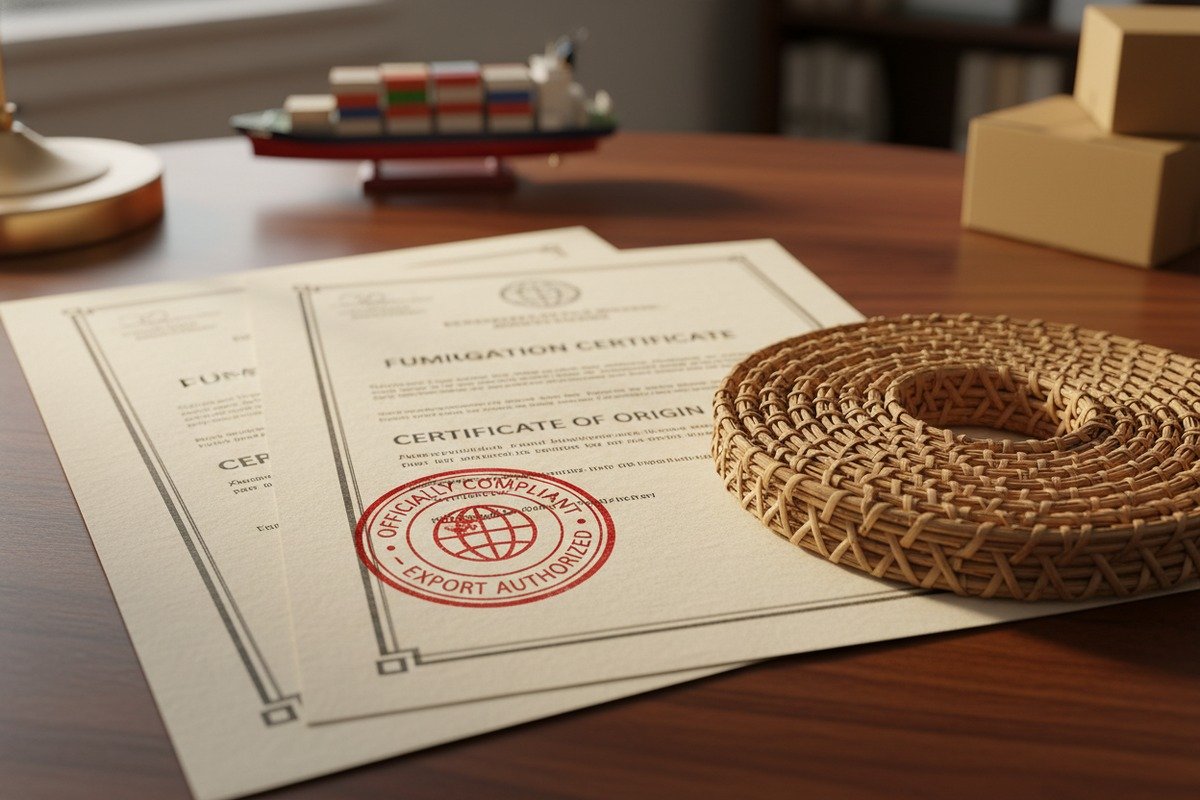
The Fumigation Certificate
This is the single most important document for natural rattan imports. A fumigation certificate proves that the rattan has been treated to eliminate pests, insects, and biological contaminants. Governments require this because rattan is an organic material that can carry invasive species across borders.
The fumigation process typically uses methyl bromide or heat treatment. The certificate is issued by an authorized government agency in the exporting country. Without it, your shipment will be stopped at customs. Synthetic rattan does not require fumigation, which simplifies the import process considerably.
HS Code Classification
The Harmonized System (HS) code tells customs authorities exactly what product you are importing. This determines the tariff rate and any applicable trade restrictions. For rattan cane webbing, the HS codes vary depending on the specific product type.
In the United States, rattan webbing commonly falls under HS code 4601.91.2000. However, codes are updated regularly, and slight differences in product description can change the classification. Getting the HS code wrong can result in overpaying duties, underpaying duties (which triggers penalties), or delays while customs reassesses your shipment.
We always provide the correct HS code on our Commercial Invoice 7s to help clients avoid classification errors.
Required Documents Checklist
Here is a comprehensive list of documents you should prepare:
- Commercial Invoice: Shows the transaction details, product description, quantity, unit price, and total value.
- Packing List: Details the contents of each package, including weight, dimensions, and number of rolls.
- Bill of Lading (B/L): The shipping contract between you and the carrier. For air freight, this is the Airway Bill (AWB).
- Certificate of Origin (CO): States where the rattan was produced. This may affect tariff rates under trade agreements.
- Fumigation Certificate: Required for all natural rattan imports.
- Phytosanitary Certificate: Some countries require this in addition to the fumigation certificate.
US-Specific: The Lacey Act
If you are importing rattan into the United States, the Lacey Act 8 applies. This law combats illegal logging and trafficking of plants and plant products. You must declare:
- The common name of the plant (rattan)
- The scientific name of the rattan species
- The country of harvest origin
- The quantity and value of the material
Failure to comply can result in fines, seizure of goods, or criminal charges. We provide Lacey Act declaration support for all our US-bound shipments.
Customs Clearance Process
The general customs clearance flow looks like this:
- Your goods arrive at the destination port.
- You or your customs broker submits all required documents to the customs authority.
- Customs reviews the documents and verifies the HS code classification 9.
- If natural rattan, they check the fumigation certificate.
- Duties and taxes are calculated and paid.
- Goods are released for delivery.
Working with an experienced customs broker in your country saves time and reduces the risk of errors. Many of our clients use freight forwarders who handle both shipping and customs clearance as a bundled service.
Common Mistakes to Avoid
Incorrect HS codes, missing fumigation certificates 10, and incomplete Lacey Act declarations are the three most common reasons rattan shipments get delayed. Each of these mistakes costs time and money. Take the extra time upfront to get your paperwork right.
Conclusion
Importing rattan cane webbing requires careful attention to quality verification, proper packaging, reliable sourcing, and complete customs documentation. Get each step right, and you build a smooth, profitable supply chain for your business.
Footnotes
1. Provides a clear definition and explains the functions of a Bill of Lading in shipping. ↩︎
2. Defines the Certificate of Origin and its role in international trade. ↩︎
3. Provides official information on the RoHS Directive for restricting hazardous substances in electronics. ↩︎
4. Explains the purpose and importance of phytosanitary certificates for plant health and trade. ↩︎
5. Defines rattan cane webbing, its materials, and production process. ↩︎
6. Replaced HTTP unknown link with an authoritative explanation from QIMA, a leading inspection company. ↩︎
7. Explains the purpose and necessity of a commercial invoice for customs clearance. ↩︎
8. Provides official information on the US Lacey Act and its requirements for plant product imports. ↩︎
9. Replaced HTTP 404 link with the official Harmonized System Nomenclature from the World Customs Organization (WCO). ↩︎
10. Explains the definition and critical role of fumigation certificates in international shipping. ↩︎

 English
  Español de México
  العربية
  Deutsch
  Français
  Русский