
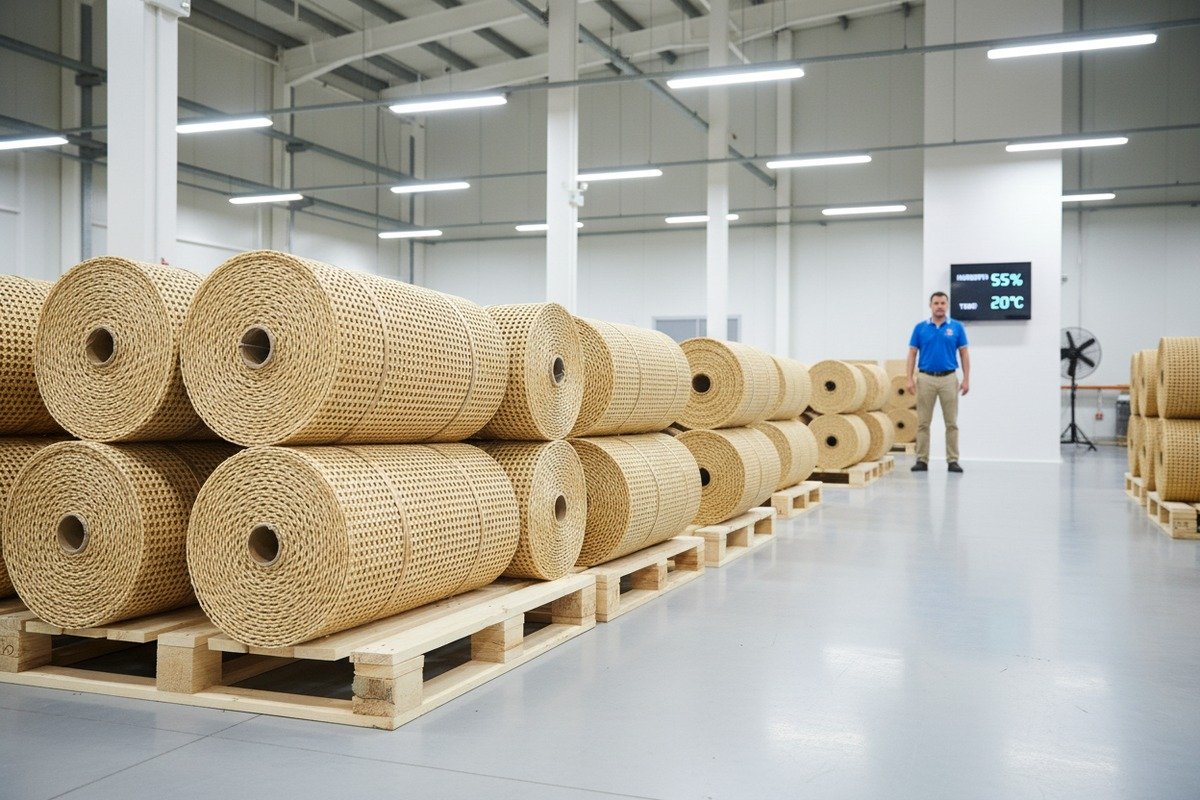
Every year, we ship thousands of rattan cane webbing rolls 1 from our factories to clients across the Netherlands, Australia, the US, and the Middle East. One thing we hear far too often? A buyer opens a shipment that sat in a hot warehouse for weeks, only to find the webbing cracked, discolored, or covered in mold. It’s a painful loss—and it’s almost always preventable.
Rattan cane webbing must be stored in a cool, dry, well-ventilated space away from direct sunlight and extreme temperature swings. Maintain humidity between 40% and 60%, store rolls elevated off the floor, use breathable containers, and periodically hydrate the material with light misting or natural oil to preserve flexibility and prevent mold or brittleness.
This guide walks you through every detail of proper rattan storage. Whether you run a furniture factory, manage a materials warehouse, or source rattan webbing for resale, these steps will save you money and protect your inventory. Let’s dive in.
How do I maintain the ideal humidity level to prevent mold on my rattan cane webbing?
Through years of exporting rattan webbing to tropical markets like Thailand and the Philippines—and dry climates like Saudi Arabia and Iran—we've learned that humidity is the single biggest factor in storage success or failure. Too much moisture breeds mold. Too little turns your webbing into something that snaps like a cracker.
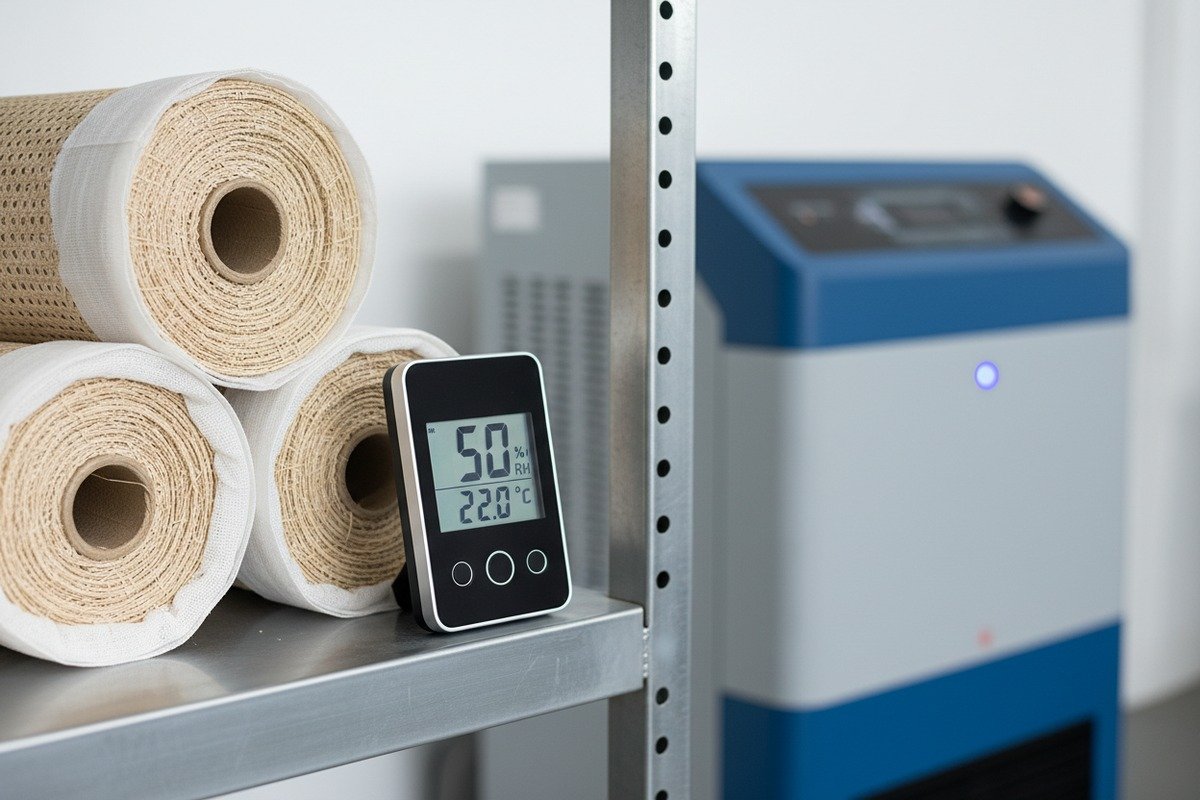
To prevent mold on rattan cane webbing, maintain your storage area's relative humidity between 40% and 60%. Use a hygrometer to monitor levels, run a dehumidifier in humid climates, and ensure steady air circulation. Avoid sealing rattan in airtight plastic, as trapped moisture accelerates mold growth rapidly.
Why Humidity Matters for Natural Rattan Fibers
Rattan cane webbing comes from the outer bark of the rattan palm. It's a natural, fibrous material—essentially a tropical grass. Like wood, it absorbs and releases moisture from the surrounding air. When humidity rises above 65%, the webbing absorbs excess water. This creates the perfect environment for mold spores and mildew 2 to take hold. You might not see the damage for days or weeks, but once mold sets in, it stains the fibers permanently and weakens the weave.
On the flip side, when humidity drops below 30%, the fibers lose their natural moisture content. They shrink, become rigid, and crack. We've seen entire pallets of premium hexagonal weave webbing ruined during winter months when warehouse heating systems dried the air out completely.
The Humidity Sweet Spot
The ideal range is 40% to 60% relative humidity 3. This keeps the rattan pliable without encouraging biological growth. Here's a quick reference table:
| Humidity Level | Effect on Rattan | Recommended Action |
|---|---|---|
| Below 30% | Severe drying, cracking, brittleness | Add humidifier or light misting |
| 30%–40% | Mild drying risk | Monitor closely, consider oil treatment |
| 40%–60% | Ideal storage range | Maintain with ventilation |
| 60%–70% | Elevated mold risk | Run dehumidifier, increase airflow |
| Above 70% | High mold and decay risk | Relocate stock immediately |
Practical Tools for Humidity Control
You don't need expensive equipment. A basic digital hygrometer 4 costs a few dollars and tells you exactly where you stand. Place one at shelf level near your rattan stock. In our Foshan warehouses, we use industrial dehumidifiers during the rainy season (April through September) and small portable units in our packing rooms. For smaller operations, silica gel packets placed inside storage containers work well for short-term control.
Air circulation is just as important as the number on your hygrometer. Stagnant air traps moisture pockets. A simple oscillating fan pointed toward your rattan shelves prevents condensation from forming on the webbing surface.
The Container Debate: Paper vs. Plastic
This is where opinions diverge. Some suppliers recommend storing rattan webbing in paper-based containers—shoeboxes, kraft paper wraps, or grocery bags—because paper absorbs residual humidity and lets the material breathe. Others use plastic totes with loose-fitting lids. Both methods have worked for years when humidity is controlled. The key rule: never seal rattan in airtight plastic bags. Trapped moisture has nowhere to go, and mold follows within days in warm conditions.
At our facility, we wrap rolls in breathable non-woven fabric before placing them in ventilated cardboard boxes for shipping. For long-term warehouse storage, we prefer open shelving with fabric dust covers.
What are the best practices for me to stack and organize rattan rolls in my warehouse?
When we pack orders for our wholesale clients—whether it's a furniture material distributor in Spain or a building material supplier in Australia—we always include storage guidelines. Why? Because how you stack and organize rattan rolls directly affects whether the material stays flat, flexible, and ready to use.
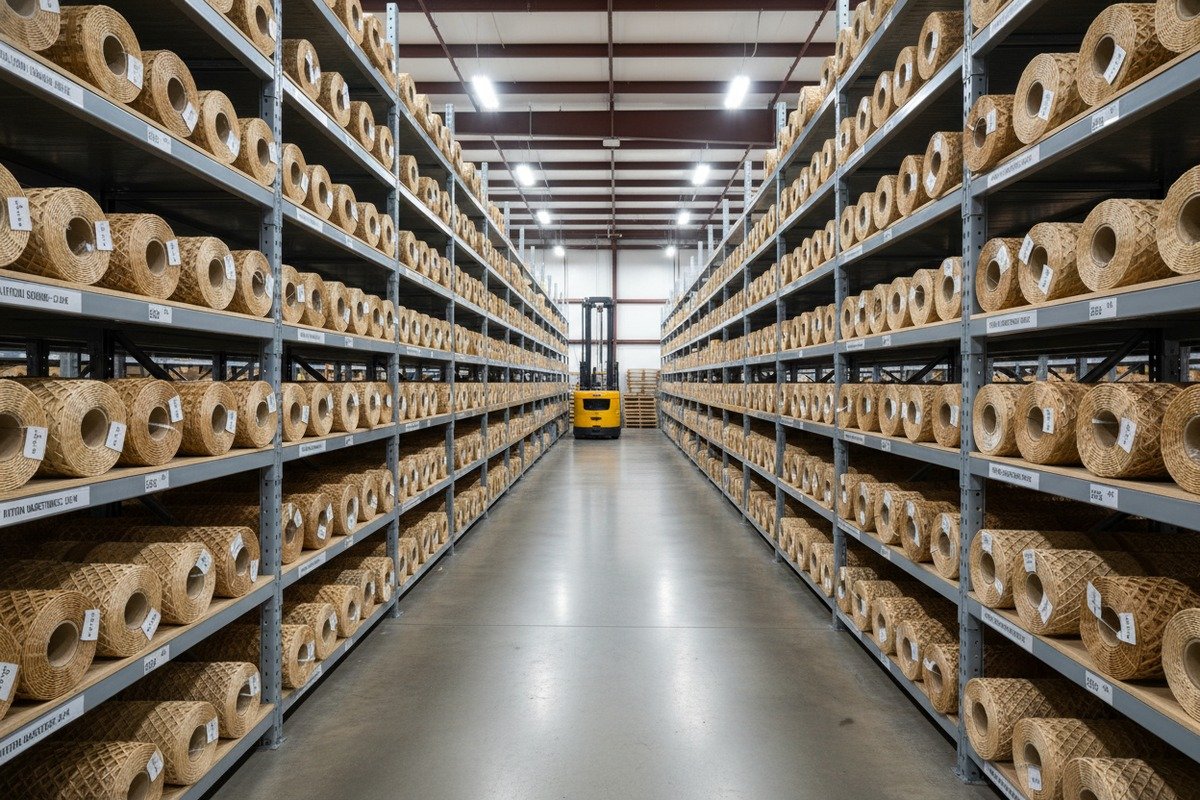
Always store rattan cane webbing rolls horizontally on elevated shelving, never directly on the floor. Roll the webbing loosely—never fold it. Use breathable fabric or acid-free tissue between layers, keep rolls separated by pattern and size, and ensure shelves sit at least 15 cm above ground level to prevent moisture damage from spills or rising dampness.
Roll, Don't Fold
This is the most critical rule. Folding rattan cane webbing creates sharp creases in the weave. Those creases become permanent stress points. When you later try to stretch the webbing across a chair seat or cabinet panel, it cracks right along the fold line. Always keep webbing in rolled form. If you receive flat sheets, roll them gently around a cardboard tube for storage.
Horizontal vs. Vertical Storage
We recommend horizontal storage for most rattan webbing rolls. Standing rolls vertically causes the bottom edge to bear all the weight, which can flatten and distort the weave pattern over time. However, if space is limited, vertical storage works for short periods—just rotate the rolls monthly so the same edge isn't always on the bottom.
Elevation and Floor Protection
Never place rattan directly on a concrete warehouse floor. Concrete sweats. Even in climate-controlled spaces, temperature differences between the slab and the air create condensation. This moisture wicks into the bottom rolls and causes mold, warping, or discoloration. Use pallets, wire shelving 6, or wooden racks to keep your stock elevated.
Organizing by Type and Pattern
If you carry multiple patterns—hexagonal open mesh 7, close square weave, radio weave, or diamond motifs—organize them separately. Different patterns have different thicknesses and flexibility levels. Mixing them on the same shelf makes inventory management harder and increases the risk of heavier rolls crushing lighter, more delicate weaves.
Here's a suggested organization system:
| Category | Storage Method | Label Info |
|---|---|---|
| Natural hexagonal weave | Horizontal on shelving, breathable wrap | Pattern, width, roll length, date received |
| Natural close weave | Horizontal, separated by tissue paper layers | Pattern, width, roll length, date received |
| Synthetic rattan matting | Can stack more densely, plastic tote acceptable | Pattern, color code, width, roll length |
| Bleached rattan webbing | Horizontal, acid-free tissue wrap, away from light | Pattern, width, roll length, bleach date |
| Strand cane / binding cane | Coiled loosely, hung on hooks or in paper bags | Diameter, length, date received |
Weight Distribution
Don't stack too many rolls on top of each other. Heavy stacking compresses the bottom rolls and flattens the weave texture. We limit stacks to three or four rolls maximum. For large inventory volumes, invest in multi-tier shelving so you can spread rolls across more shelf space rather than piling them high.
Periodic Rotation
If you store rattan for more than a few months, rotate your stock. Move older rolls to the front. Gently unroll and re-roll each piece every three to four months. This prevents the fibers from setting into a permanent tight curl and lets you inspect for early signs of mold, pest activity, or drying.
How can I protect my rattan webbing from sunlight and temperature changes during storage?
Our team learned this lesson early. Years ago, a batch of natural rattan webbing sat near a warehouse window in our Foshan facility for just two weeks. The rolls closest to the glass turned from warm straw-gold to a faded, grayish tone. Some strands had already started cracking. Since then, we've made UV and temperature control a non-negotiable part of our storage protocols.
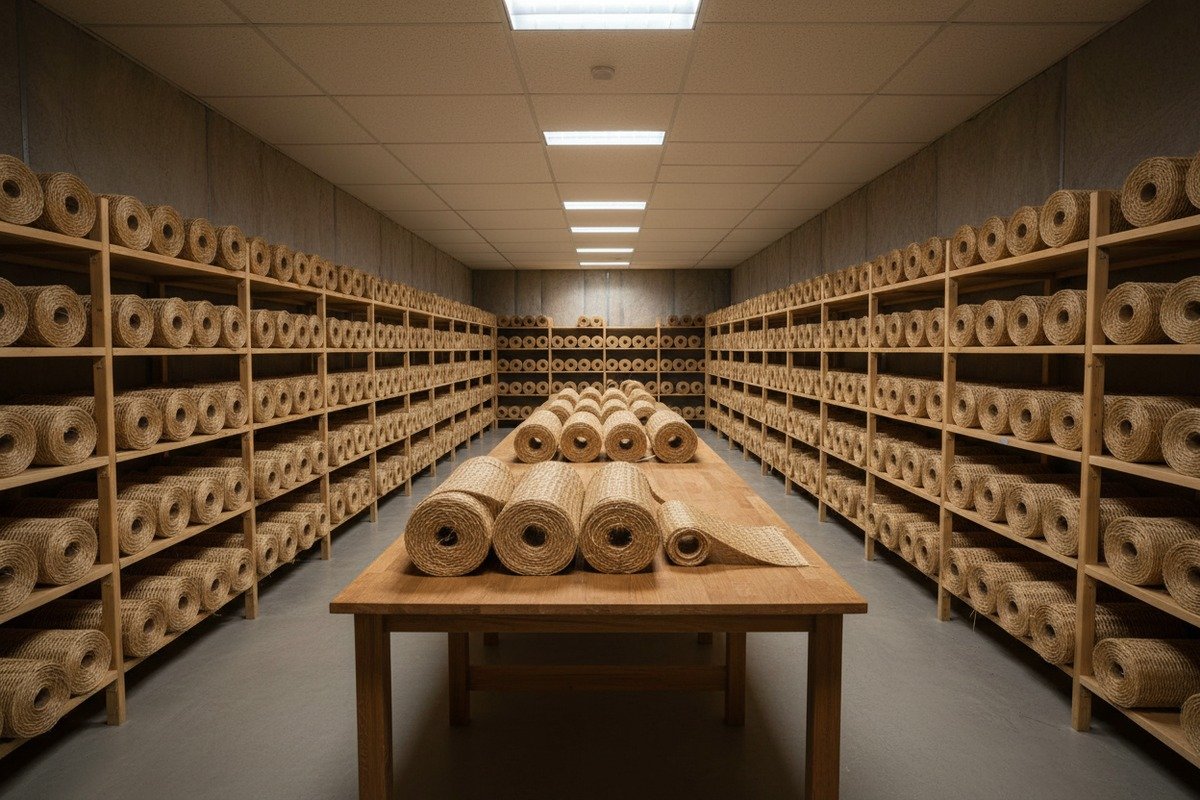
Protect rattan cane webbing by storing it in windowless or UV-filtered spaces away from direct sunlight. Keep temperatures stable between 15°C and 25°C (59°F–77°F). Avoid placing rattan near heaters, radiators, air conditioning vents, or exterior walls that experience large temperature swings throughout the day or across seasons.
How Sunlight Damages Rattan
UV radiation 8 breaks down the lignin in natural rattan fibers. Lignin is the compound that gives rattan its strength and warm color. When UV rays degrade lignin, the fibers lose structural integrity. They become pale, dry, and brittle. This process is irreversible. No amount of oil or water will restore UV-damaged rattan to its original state.
Even indirect sunlight through windows causes gradual damage. Fluorescent lighting is less harmful, but prolonged exposure to any strong light source can cause slow fading over months.
Temperature Stability Is Key
Rattan fibers expand when warm and contract when cool. Small, gradual changes are fine. But rapid temperature swings—like a warehouse that heats up to 35°C during the day and drops to 10°C at night—stress the fibers repeatedly. Over time, this cycle causes micro-cracks in the weave. The webbing looks intact but breaks easily when stretched or handled.
Here's a temperature guide for different storage scenarios:
| Storage Scenario | Temperature Range | Risk Level | Recommendation |
|---|---|---|---|
| Climate-controlled warehouse | 15°C–25°C (59°F–77°F) | Low | Ideal for long-term storage |
| Uninsulated warehouse, summer | 30°C–40°C+ | High | Add ventilation, shade, and insulation |
| Uninsulated warehouse, winter | Below 10°C | Moderate | Avoid heating blasts; warm gradually |
| Near radiators or heaters | 40°C+ locally | Very High | Relocate immediately |
| Near exterior walls | Variable, seasonal | Moderate | Use interior shelving, buffer zones |
Practical Protection Methods
If your warehouse has windows, cover them with UV-filtering film or blackout curtains. This is cheap and effective. Position your rattan shelving in the interior of the building, away from exterior walls that absorb and radiate heat.
For operations in hot climates—we export extensively to Saudi Arabia, Dubai, and Iran—insulated storage units or containers with reflective coatings make a big difference. In colder climates like Russia or the northern US, avoid placing rattan near heating systems. Radiators and forced-air heaters create localized hot, dry zones that pull moisture from the fibers rapidly.
Natural vs. Synthetic: A Different Story
One important distinction worth noting. Synthetic rattan matting—like the plastic woven varieties we produce that mimic chevron, wave, or basketweave patterns—handles UV and temperature far better than natural cane. Synthetic materials are designed for outdoor furniture and can tolerate direct sun without significant degradation. If your application involves outdoor use or your storage conditions aren't ideal, synthetic rattan webbing is a safer bet.
Natural rattan, including bleached varieties, is strictly an indoor material. Bleached rattan webbing is especially sensitive because the bleaching process already weakens the fibers slightly. It needs extra care in storage—acid-free tissue wrapping, zero UV exposure, and the most stable temperatures you can provide.
Covering and Wrapping
Use breathable fabric dust covers over your rattan shelving. Avoid dark-colored covers that absorb heat. Light-colored cotton or muslin fabric works best. It blocks light and dust while allowing air to circulate. For individual rolls, wrap them in unbleached muslin or acid-free tissue paper before placing them on shelves.
What steps should I take to ensure my rattan material stays flexible and doesn't become brittle?
Flexibility is what makes rattan cane webbing so valuable. It bends, wraps, and conforms to curved furniture frames without breaking. When we demonstrate our webbing to new clients at trade shows, we always bend a sample to show its pliability. But maintaining that flexibility over weeks and months of storage requires deliberate care.
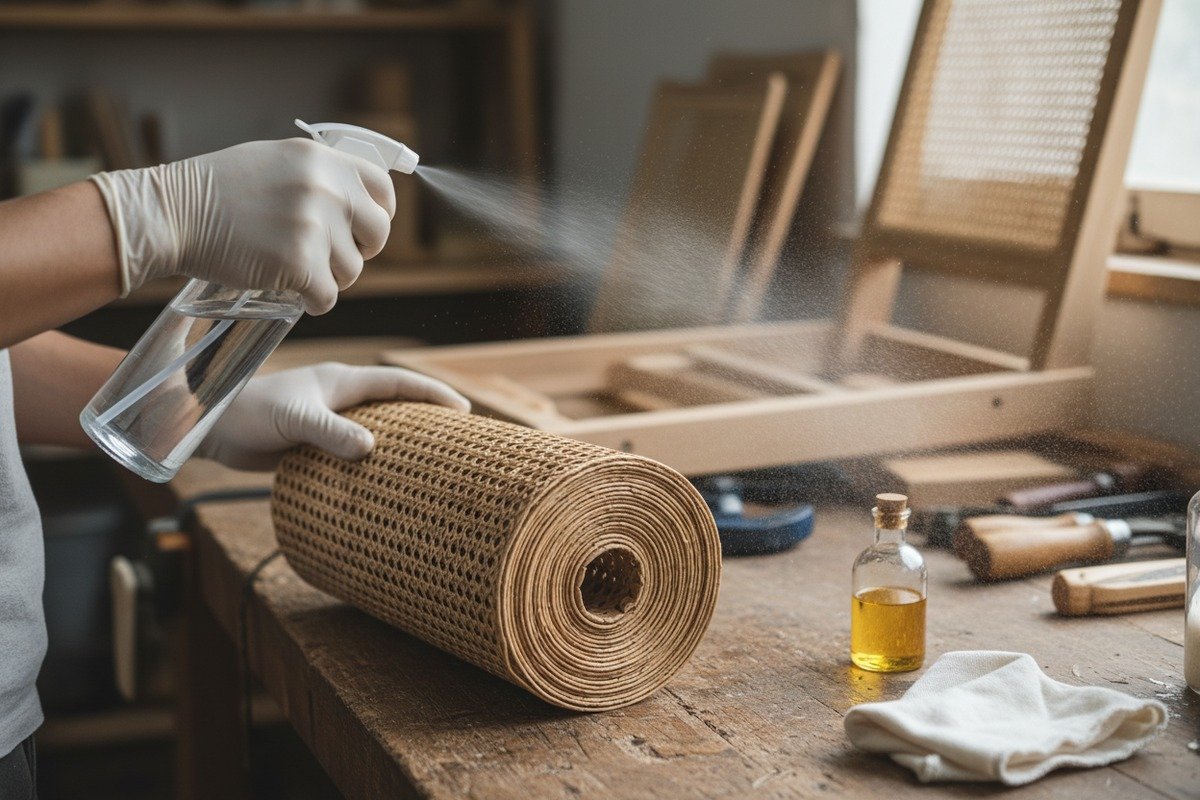
To keep rattan webbing flexible during storage, apply a thin coat of linseed oil or natural furniture oil every three to four months, lightly mist the material with water during dry seasons, avoid all heat sources that strip moisture from fibers, and store rolls loosely rather than tightly wound to prevent compression and fiber stress.
Why Rattan Becomes Brittle
Rattan fibers contain natural moisture and oils that keep them supple. When these are lost—through dry air, heat exposure, or simply time—the fibers harden. Think of it like skin. Without moisturizer, skin cracks. Rattan behaves the same way. The typical thickness of cane webbing is around 1/16 of an inch, which means there isn't much material to hold moisture. It dries out faster than solid rattan canes or thick bamboo.
Hydration Methods
There's a tension in the rattan care world between those who say "keep it bone dry" and those who advocate controlled hydration. Both sides have valid points, but the truth is in the middle. You need balanced moisture—not soaking wet, not desert dry.
Here are the most effective hydration methods we recommend to our clients:
Light misting. Use a clean spray bottle with distilled water. Hold it about 30 cm from the webbing surface and give two or three light passes. Do this once a month in dry climates or during winter heating season. Let the webbing air-dry completely before re-wrapping or re-storing it.
Oil treatment. Linseed oil 10 is the gold standard for rattan maintenance. Apply a very thin coat with a soft cloth every three to four months. The oil penetrates the fibers and replaces lost natural oils. It also adds a subtle sheen that enhances the webbing's warm, earthy color. Some of our clients use tung oil or food-grade mineral oil as alternatives. Avoid petroleum-based products—they can discolor the fibers and leave a sticky residue.
Tip-soaking for strand cane. If you also store solid strand cane or binding cane alongside your webbing, a different method applies. Stand the cane vertically in about one inch of water for six to eight hours once a month. The water travels up through capillary action and rehydrates the entire length. This method does not apply to woven webbing sheets or rolls—only individual strands.
What Not to Do
Never submerge rattan cane webbing in water. Full submersion causes the natural fibers to swell, warp, and lose their woven structure. The weave loosens, and as it dries, it may shrink unevenly. Pre-soaking is only appropriate immediately before installation—when you're about to stretch the webbing onto a frame. Even then, 15 to 20 minutes in warm water is the maximum.
Never use a hair dryer, heat gun, or any forced heat to speed-dry rattan after misting or oiling. Let it dry naturally at room temperature.
Long-Term Flexibility: Lessons From History
Here's something remarkable. Ancient cane artifacts from centuries ago remain intact and flexible in museums today. How? Consistent, stable environments. No extreme heat. No direct sun. Gentle, controlled humidity. The same principle applies to your warehouse. Our suppliers in Indonesia have stored raw rattan materials in simple thatched shelters for years without degradation—because the tropical air provides a steady 50%–60% humidity and consistent warmth without harsh temperature spikes.
We've also heard from long-time weavers and restorers in the US who stored rattan webbing in simple paper boxes in their basements for over 20 years. When they opened those boxes, the webbing was still pliable and usable. The key? A cool, dark, stable basement with naturally moderate humidity.
Inspection Schedule
Build a simple inspection routine. Check your stored rattan once a month. Look for these warning signs:
- White or green fuzzy spots: Early mold. Wipe with a dry cloth and improve ventilation immediately.
- Cracking or snapping when bent: The material has dried too much. Mist lightly and apply oil.
- Musty smell: Indicates moisture buildup or early mildew. Move to a drier area, increase airflow.
- Insect holes or frass (sawdust-like debris): Pest infestation. Isolate affected rolls and treat with food-safe insecticide or freezing.
Catching problems early saves entire batches. We tell all our clients—from purchasing managers in Thailand to wholesalers in Greece—that 10 minutes of monthly inspection prevents thousands of dollars in losses.
Conclusion
Proper storage of rattan cane webbing comes down to balance—balanced humidity, stable temperatures, gentle handling, and periodic care. Follow these guidelines, and your rattan inventory will stay beautiful, flexible, and ready for use for years to come.
Footnotes
1. Explains the material and its common form. ↩︎
2. Replaced with an authoritative .gov source (EPA) that defines mold and mildew and discusses their growth and effects. ↩︎
3. Defines the environmental factor crucial for storage. ↩︎
4. Explains the function of this tool for monitoring humidity. ↩︎
5. Provides background on the material’s composition. ↩︎
6. Details a common storage solution for warehouses. ↩︎
7. Found a specific product page detailing ‘Open Hexagonal Webbing’ which directly matches the anchor text. ↩︎
8. Explains the damaging environmental factor. ↩︎
9. Defines the chemical compound crucial to rattan’s integrity. ↩︎
10. Explains a common treatment for maintaining flexibility. ↩︎

 English
  Español de México
  العربية
  Deutsch
  Français
  Русский