
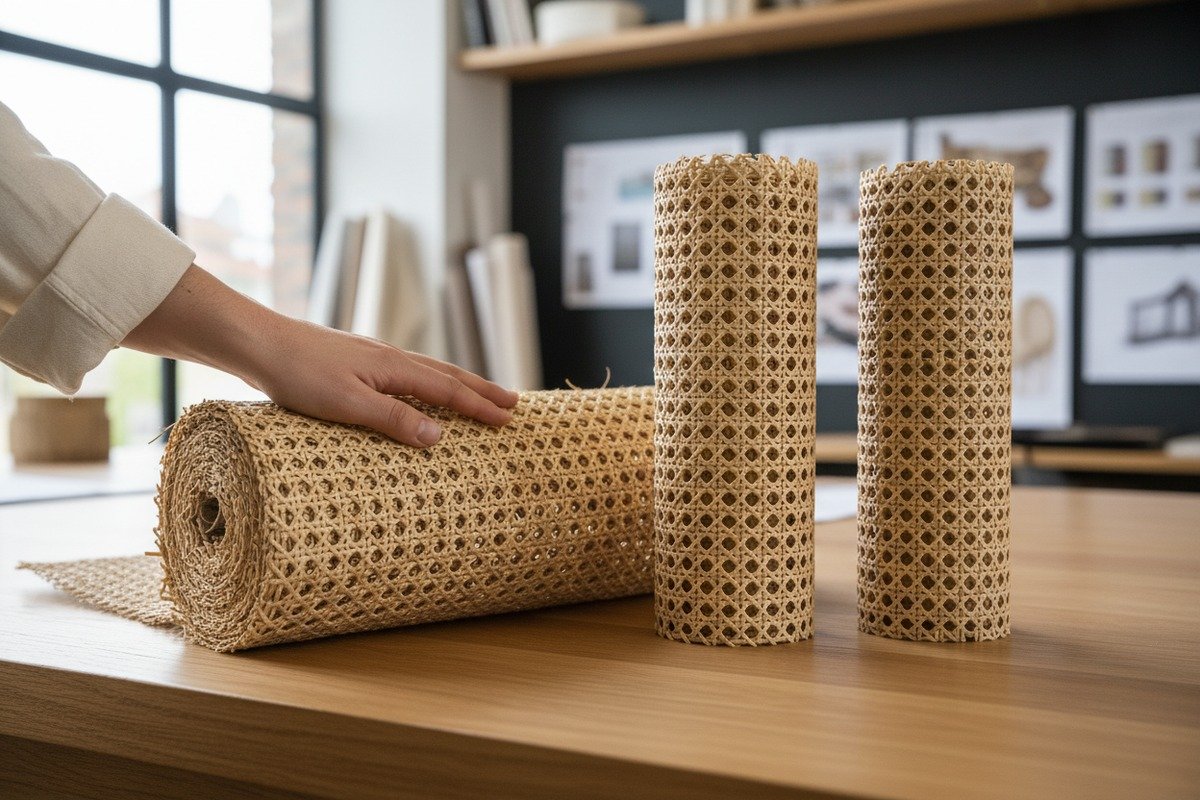
Every week, our sales team fields dozens of calls from furniture factories confused about which rattan webbing to order tropical rattan palms 1. The wrong choice can mean cracked seats, faded finishes, or angry end customers. It is a costly mistake that keeps happening.
Natural rattan cane webbing comes from the outer bark of tropical rattan palms and offers authentic texture with organic warmth, but it is best for indoor use. Synthetic rattan webbing is made from PE or PP plastics, providing superior weather resistance, UV stability, and low maintenance for outdoor applications.
This article breaks down the real differences between natural and synthetic rattan cane webbing 2. We will cover material selection, durability, cost, and aesthetics so you can make the right call for your business.
How do I choose between natural and synthetic rattan for my furniture factory?
Running three factories and working with over 30 partner workshops in Foshan has taught our team one thing clearly: the right material depends on where the furniture ends up UV stability 3. Too many factory owners pick rattan based on price alone, and they pay for it later with returns and complaints.
Choose natural rattan cane webbing for premium indoor furniture where authentic aesthetics matter most. Choose synthetic rattan for outdoor collections, high-humidity environments, or projects that demand low maintenance. Your end-use environment is the single most important factor in this decision.
Start With the End Use
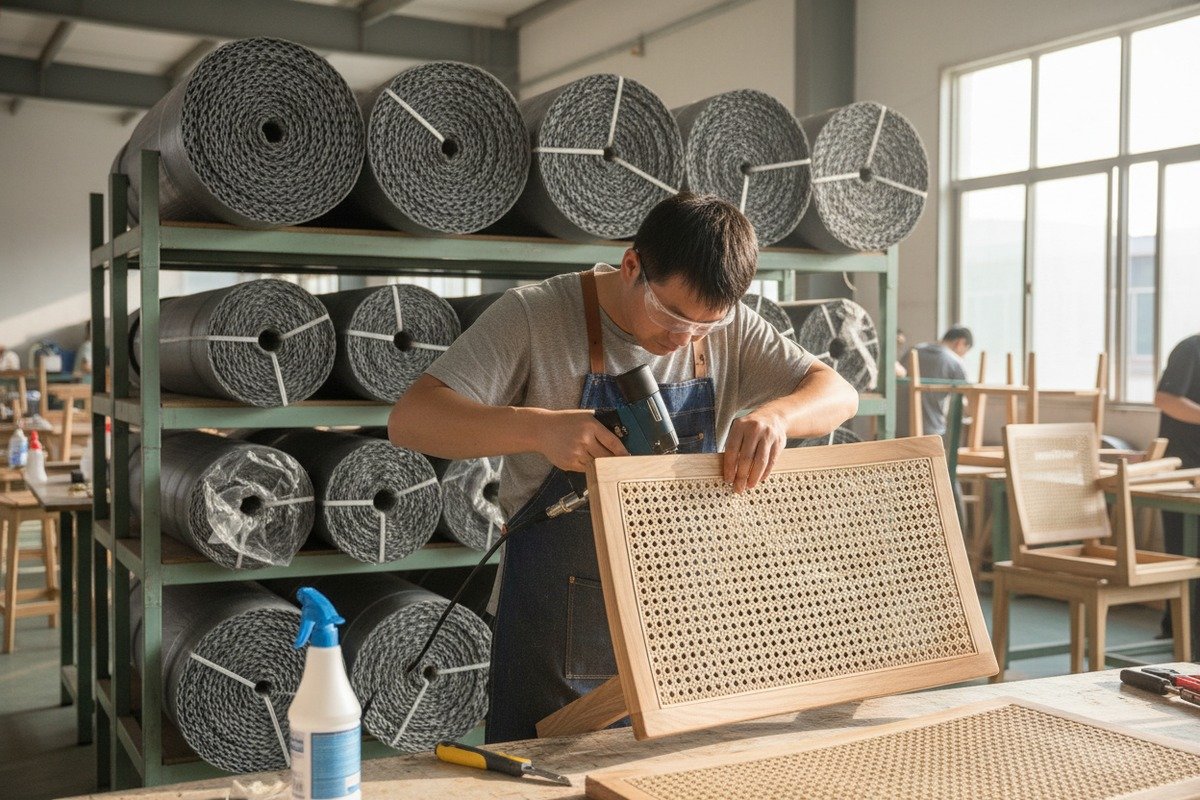
The first question we ask every new client is simple: where will this furniture live polypropylene (PP) 4? Indoor dining chairs need a different material than poolside loungers. A hotel lobby has different demands than a beach resort patio.
Natural rattan cane webbing is made from the peeled outer bark of the rattan palm. It is thin, flexible, and beautiful. The weave patterns catch light in a way that plastic simply cannot replicate. But it breaks down fast when exposed to rain, humidity, or direct sunlight.
Synthetic rattan webbing is made from polyethylene (PE) 5 or polypropylene (PP). PE or PP plastics 6 It looks like natural rattan from a distance. It handles sun, rain, and temperature swings without cracking or fading. For outdoor projects, it is the clear winner.
Match Material to Market
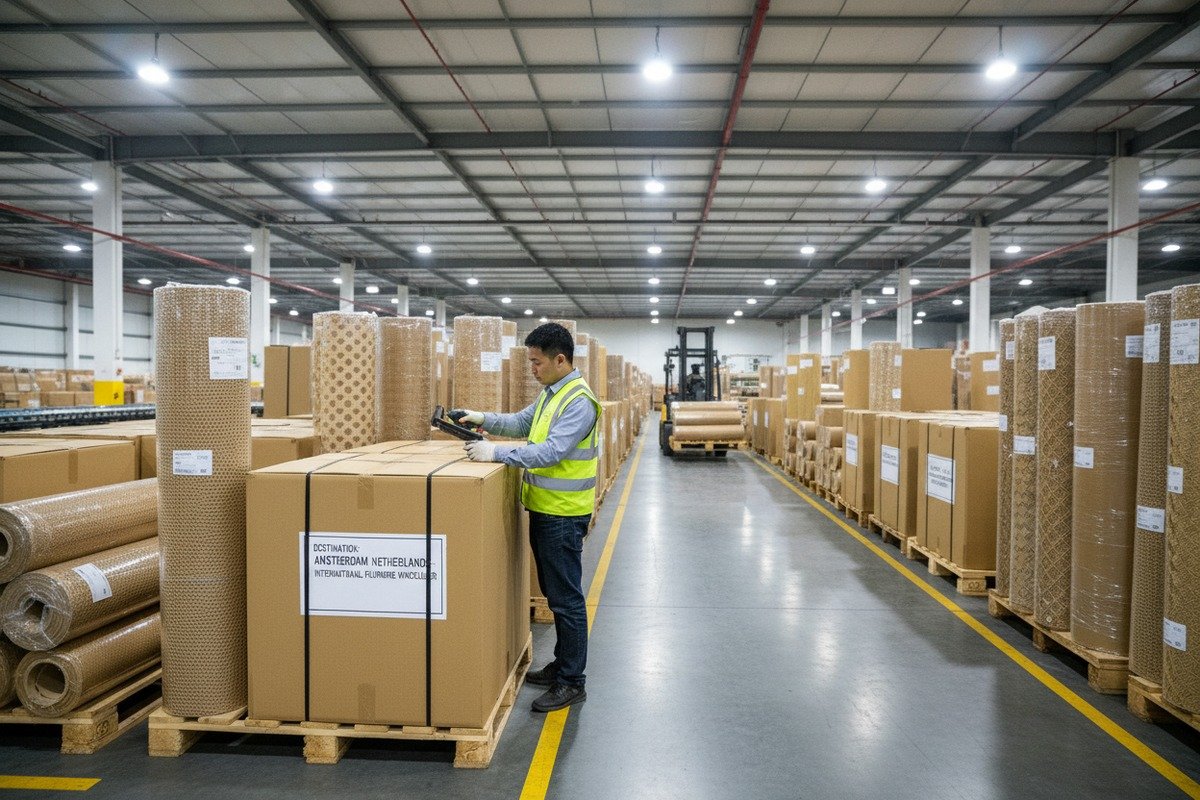
Your target market matters too. European buyers often prefer natural rattan for its eco-friendly appeal. Middle Eastern clients need synthetic for extreme heat and humidity. Our shipments to the Netherlands lean heavily toward natural cane. Orders bound for Saudi Arabia or Dubai are almost always synthetic.
Key Decision Factors at a Glance
| Decision Factor | Natural Rattan | Synthetic Rattan |
|---|---|---|
| Best environment | Indoor, climate-controlled | Outdoor, any climate |
| Aesthetic quality | Organic, unique variations | Uniform, consistent |
| Lead time sensitivity | Seasonal availability | Year-round production |
| Target buyer preference | Eco-conscious, premium | Practical, value-driven |
| Weaving complexity | Excellent for intricate patterns | Good for standard patterns |
Consider Your Production Workflow
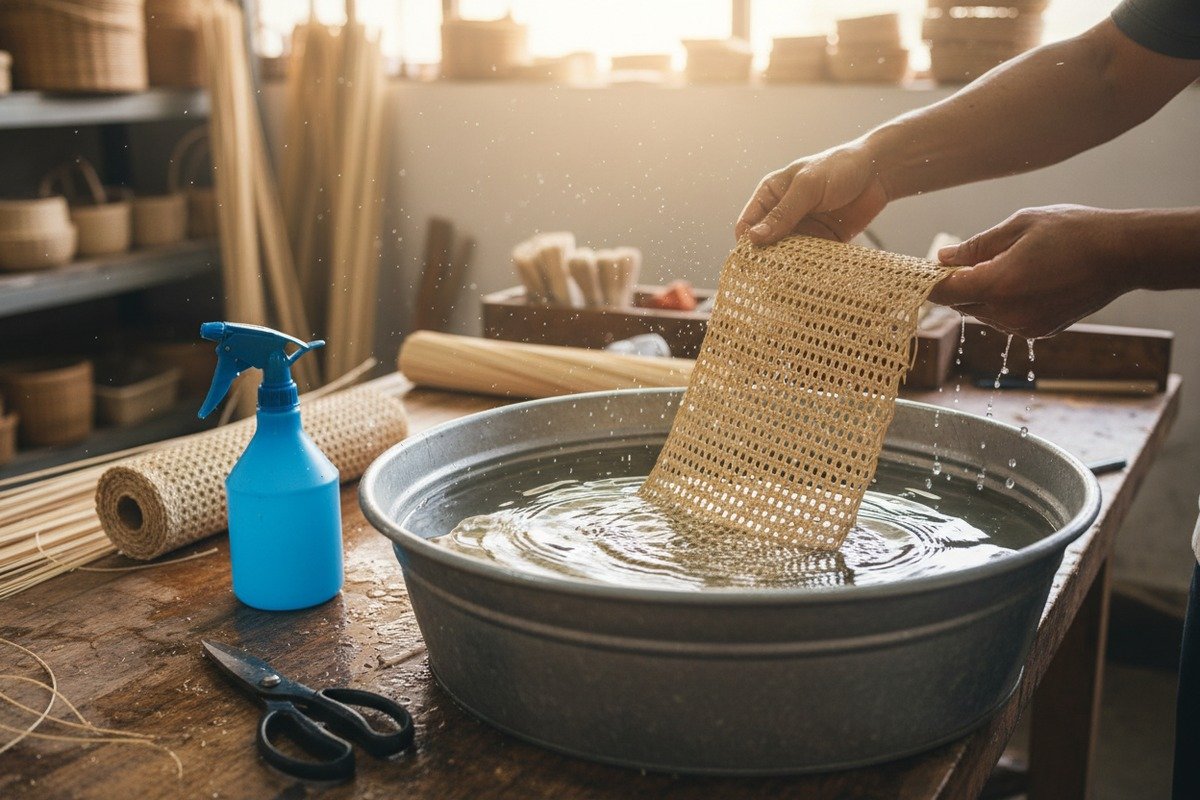
Natural cane webbing requires soaking in water for about three hours before installation. Your workers need to keep it damp during the weaving process using spray bottles. This adds labor time.
Synthetic webbing can be cut and applied right away. No soaking. No drying time. For factories running high-volume production lines, this difference adds up fast. We have seen clients shave 15-20% off their labor hours by switching to synthetic for outdoor lines while keeping natural for their indoor collections.
The smartest factories we supply use both materials. They run a natural rattan line for their premium indoor catalog and a synthetic line for outdoor and commercial projects. This gives them market flexibility without sacrificing quality in either segment.
Which material will provide the best durability for my outdoor furniture projects?
When our Indonesian processing facility runs durability tests, we expose sample panels to simulated weather cycles — UV lamps, water sprays, and heat chambers. The results always tell the same story, and it is a story every outdoor furniture maker needs to hear before placing a bulk order.
Synthetic rattan cane webbing provides the best durability for outdoor furniture. It resists UV rays, moisture, mold, and temperature extremes without cracking, fading, or corroding. Natural rattan degrades quickly outdoors and should only be used in protected indoor settings.
How Weather Destroys Natural Rattan
Natural rattan is a plant fiber 7. Like all plant fibers, it reacts to water, heat, and sunlight. When natural cane absorbs moisture, it swells. When it dries, it shrinks. This cycle of swelling and shrinking causes cracks over time. Direct sunlight bleaches the color and makes the fibers brittle.
Mold is another serious problem. In humid climates, natural rattan can develop mold within weeks if left untreated. Even with lacquer coatings and sealants, the protection is temporary. You are fighting nature, and nature eventually wins.
Why Synthetic Rattan Lasts Outdoors
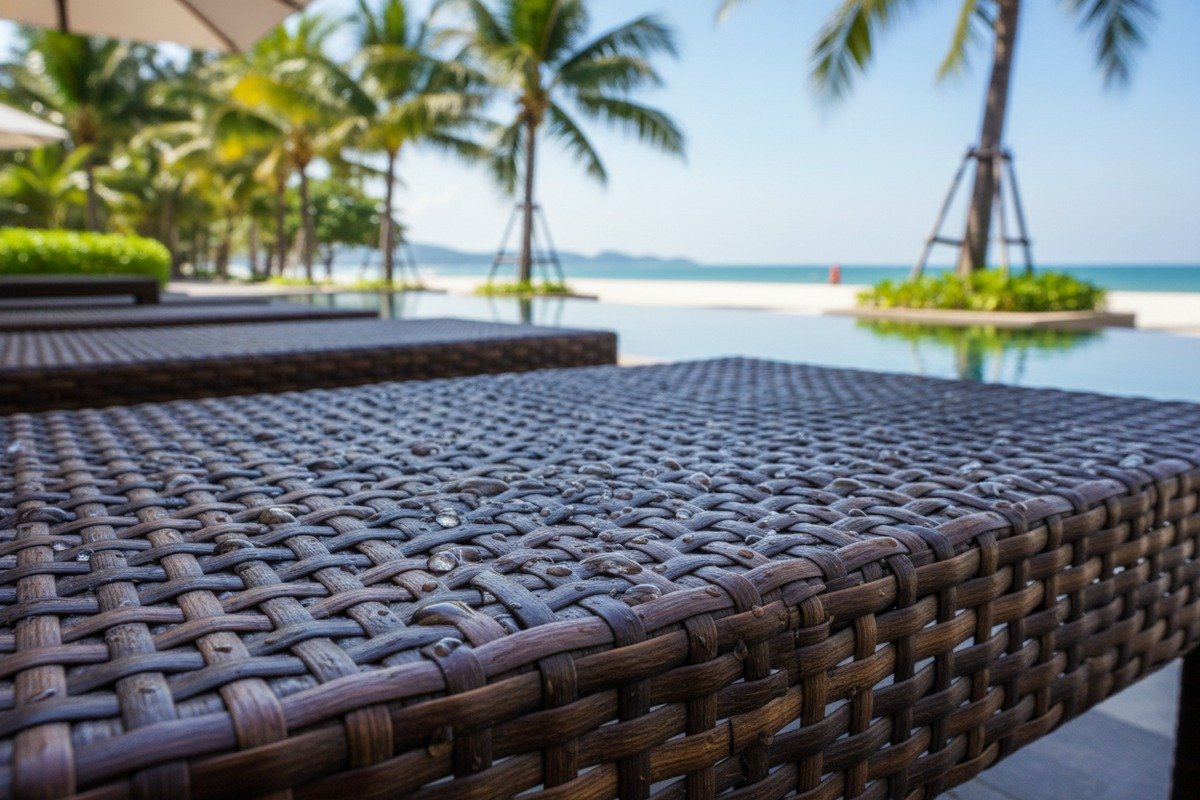
Synthetic rattan is engineered for outdoor exposure. The PE and PP polymers used in production are inherently waterproof. They do not absorb moisture. They do not swell or shrink. UV stabilizers 8 are added during manufacturing to prevent fading and brittleness from sun exposure.
We have supplied synthetic webbing panels to resort projects in Greece and Thailand. After three years of constant outdoor exposure, the material still looks and performs like new. That kind of longevity is simply not possible with natural cane.
Durability Comparison Table
| Durability Factor | Natural Rattan | Synthetic Rattan |
|---|---|---|
| UV resistance | Poor — fades and becomes brittle | Excellent — UV stabilizers prevent degradation |
| Moisture resistance | Poor — absorbs water, swells, cracks | Excellent — waterproof, no absorption |
| Mold and mildew | Susceptible without treatment | Highly resistant |
| Temperature tolerance | Sensitive to extremes | Stable across wide range |
| Expected outdoor lifespan | 1-2 years (with treatment) | 5-10+ years |
| Heat retention | Stays cooler to the touch | Can retain heat in direct sun |
The Indoor Durability Advantage of Natural Rattan
It is worth noting that natural rattan is remarkably durable indoors. In controlled environments — away from rain, humidity spikes, and direct UV — natural cane webbing can last decades. Many antique chairs from the early 1900s still have their original cane seats. The key is environment control.
For indoor furniture projects, natural rattan's durability is more than adequate. The fibers are inherently strong, and the natural elasticity gives a comfortable flex that synthetic materials struggle to match. Some of our clients have reported that their natural rattan chair seats perform beautifully for 15-20 years indoors with minimal care.
A Note on Heat Retention
One durability-related comfort factor that surprises many buyers: synthetic rattan absorbs and retains heat. In direct sunlight, synthetic seats and backs can become uncomfortably warm. Natural rattan's breathable, organic structure stays cooler. For outdoor furniture in hot climates, this is a trade-off worth discussing with your end customers. Some manufacturers address this by adding cushions or choosing lighter-colored synthetic fibers that reflect more heat.
How can I compare the costs of natural vs. synthetic webbing for my wholesale business?
Price conversations happen on almost every call with our wholesale clients. A purchasing manager in Thailand or a material distributor in the USA — everyone wants to know the bottom line. But comparing costs between natural and synthetic rattan is more nuanced than looking at the price per square meter on a quote sheet.
Compare costs by calculating total cost of ownership, not just unit price. Natural rattan has a higher upfront cost due to sourcing and harvesting labor, but synthetic rattan offers better long-term value through lower maintenance, fewer replacements, and simpler installation. Your margin depends on the full picture.
Upfront Material Costs
Natural rattan cane webbing generally costs more per square meter than synthetic alternatives. The reasons are straightforward. Natural rattan must be harvested from tropical palm plants, peeled, dried, sorted by grade, and shipped. Each step adds cost. Weather disruptions, seasonal supply fluctuations, and rising demand for Grade A quality push prices higher.
Synthetic rattan is factory-produced from plastic polymers. The manufacturing process is consistent, scalable, and not dependent on seasonal harvests. This means more stable pricing and faster lead times. For wholesale buyers placing large-volume orders, synthetic webbing often provides a meaningful cost advantage on the purchase price alone.
Hidden Costs That Change the Equation
The purchase price is only part of the story. Here is what many wholesale buyers overlook:
- Installation labor: Natural cane requires soaking and careful handling. Synthetic does not. For furniture factories, this means fewer labor hours per unit with synthetic.
- Maintenance products: Natural rattan needs protective coatings, sealants, and occasional re-treatment. Synthetic needs soap and water.
- Replacement frequency: For outdoor applications, natural rattan may need replacing every 1-2 years. Synthetic lasts 5-10 years or more.
- Waste and defects: Natural rattan has higher variability. Some pieces crack or split during installation. Synthetic waste rates are typically lower.
Total Cost of Ownership Comparison
| Cost Category | Natural Rattan | Synthetic Rattan |
|---|---|---|
| Material cost per m² | Higher | Lower |
| Installation labor | Higher (soaking + careful handling) | Lower (direct application) |
| Annual maintenance cost | Moderate (coatings, treatments) | Minimal (basic cleaning) |
| Replacement cycle (outdoor) | Every 1-2 years | Every 5-10+ years |
| Defect/waste rate | Higher (natural variability) | Lower (consistent production) |
| Total 5-year cost (outdoor) | Significantly higher | Lower |
| Total 5-year cost (indoor) | Moderate | Slightly lower |
Where Natural Rattan Justifies Its Premium
Despite the higher cost, natural rattan commands premium retail prices. Consumers will pay more for authentic, handcrafted materials. If your wholesale business serves high-end furniture brands or boutique retailers, the margins on natural rattan can be very attractive.
Our clients who sell to European and North American markets report that natural rattan products retail at a 30-50% premium over synthetic equivalents. The margin more than covers the higher material cost. The key is positioning — natural rattan is a premium product, and it should be priced and marketed accordingly.
Pricing Strategy for Wholesale Distributors
Smart distributors carry both product lines. They offer synthetic rattan to price-sensitive buyers and volume orders. They offer natural rattan to premium buyers and specialty projects. This dual-product strategy maximizes market coverage and stabilizes revenue across economic cycles.
We also see many wholesale clients using our rattan samples to upsell. When a buyer sees and touches the difference between natural and synthetic side by side, the value proposition becomes clear for each. It is much easier to justify a higher price when the material quality speaks for itself.
What are the main differences in look and feel that my customers will notice?
Our product showroom in Foshan has side-by-side displays of natural and synthetic rattan panels. When buyers visit, their hands go straight to the samples. They touch, bend, and hold the material up to the light. The reaction is always telling — and it reveals exactly what end customers will notice too.
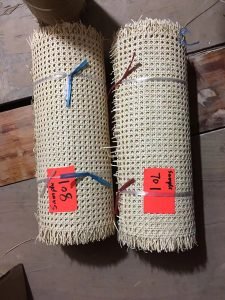
Customers will immediately notice that natural rattan has a warm, organic texture with subtle color variations, a slight earthy scent, and a softer hand feel. Synthetic rattan looks more uniform and consistent, feels smoother and slightly stiffer, and lacks the natural aroma and tactile character of genuine cane.
Visual Differences Your Customers Will Spot
Natural rattan has a visual depth that comes from real plant fibers. Each strand is slightly different in width, color, and texture. The surface has tiny natural imperfections — subtle ridges, tonal shifts from straw gold to warm honey, and grain patterns that catch light differently depending on the angle. This organic character is what makes natural rattan feel alive and handcrafted.
Synthetic rattan is designed to look like natural cane, and modern manufacturing gets remarkably close. But the finish is more even. The color is consistent across every strand. There are no natural grain variations. From a distance of a few feet, many people cannot tell the difference. Up close, the trained eye will notice the uniformity.
The Tactile Experience
Touch is where the biggest gap remains. Natural rattan has a warm, slightly textured surface. It flexes gently under finger pressure. There is a natural elasticity — a slight give — that makes sitting on natural cane feel distinctly comfortable. The material breathes, stays cool, and has a subtle earthy smell that many people find pleasant.
Synthetic rattan is smoother to the touch. It feels like what it is — a well-made plastic replica. It is slightly stiffer and does not have the same flex. In warm weather, it can feel warmer than natural cane because it retains heat from sunlight. The smell is neutral, which can be a positive or negative depending on the customer.
How Aging Affects Appearance
Natural rattan develops a patina over time 9. The color deepens. The surface softens. Many people find this aging process beautiful — it adds character and tells a story. Vintage rattan furniture is prized specifically for this quality.
Synthetic rattan does not change much over time when properly UV-stabilized. It looks the same after five years as it did on day one. For some customers, this consistency is a major selling point. For others who appreciate the evolving beauty of natural materials, it can feel static.
Regional Rattan Variations
The source of natural rattan also affects appearance. Indonesian rattan tends to be lighter in color with a smoother, more refined texture. Vietnamese rattan is typically darker with a rougher surface. When we source for clients, we match the rattan origin to their design needs. A Scandinavian-inspired furniture line might call for lighter Indonesian cane. A rustic, bohemian collection might benefit from the earthier Vietnamese material.
Repairability and Restoration
One often-overlooked aesthetic advantage of natural rattan: it can be repaired. A skilled artisan can weave in new strands to patch damaged areas. The repair blends in naturally over time. This makes natural rattan ideal for vintage restoration projects and heirloom-quality furniture.
Synthetic rattan usually requires full panel replacement when damaged. You cannot easily weave in a patch. For furniture designed to last generations and be passed down, this is a meaningful consideration.
Sustainability as an Aesthetic Value
Today's consumers increasingly view sustainability as part of a product's aesthetic identity. Natural rattan is renewable, biodegradable, and carries an authentic eco-story. For brands that position themselves around sustainability, natural rattan aligns with their visual and ethical narrative. Synthetic rattan, while durable and long-lasting, carries the baggage of petroleum-based plastics 10. However, its extended lifespan and reduced replacement frequency offer a different kind of sustainability argument. Both stories have merit, and how you present them to your customers matters as much as the material itself.
Conclusion
Natural and synthetic rattan cane webbing each serve distinct roles. Match your material to the environment, budget, and customer expectations, and you will make the right choice every time.
Footnotes
1. Provides information on the origin and characteristics of rattan palms. ↩︎
2. Wikipedia provides a clear definition of caning in the context of furniture, which includes rattan cane. ↩︎
3. This source provides a concise definition: ‘UV stability refers to a material’s capacity to withstand degradation when exposed to ultraviolet radiation, maintaining its physical, chemical, and aesthetic properties over time.’ ↩︎
4. Describes the characteristics and advantages of polypropylene as a thermoplastic. ↩︎
5. Explains the properties and uses of polyethylene in various industries. ↩︎
6. Explains the properties and applications of polyethylene and polypropylene. ↩︎
7. Provides a comprehensive overview of plant fibers, their properties, and uses. ↩︎
8. This source provides a clear definition: ‘UV Stabilizers are specialized chemical additives engineered to counteract the photodegradation of polymeric materials caused by ultraviolet (UV) radiation.’ ↩︎
9. Defines patina and how it develops on natural materials, enhancing their aesthetic. ↩︎
10. Discusses the environmental impact and origin of petroleum-based plastics. ↩︎
 English
  Español de México
  العربية
  Deutsch
  Français
  Русский