

Every week, our customer service team fields calls from frustrated buyers who received rattan cane webbing 1 that looked nothing like the product photos. Splintered edges, uneven thickness, rolls that were 10 feet shorter than promised — these stories are painfully common customs duties 2. The online rattan market is booming, but so are the pitfalls that catch even experienced purchasing managers off guard.
When buying rattan cane webbing online, you should avoid mismatching material to your use case, ignoring hidden import costs, skipping sample requests, overlooking packaging quality, and failing to verify a supplier’s manufacturing processes and quality grading standards before committing to bulk orders.
This guide walks you through the most common and costly mistakes buyers make. Whether you run a furniture factory, manage wholesale procurement, or supply building materials, the sections below will save you time, money, and headaches. Let’s dig in.
How can I tell if the rattan cane webbing I see online is actually Grade A quality?
Our quality control team sorts every batch of raw rattan that arrives at our Indonesian processing facility. Even so, we still reject roughly 15% of incoming material. If trained sorters with rattan in their hands struggle, imagine how hard it is to judge quality from a product photo on a screen.
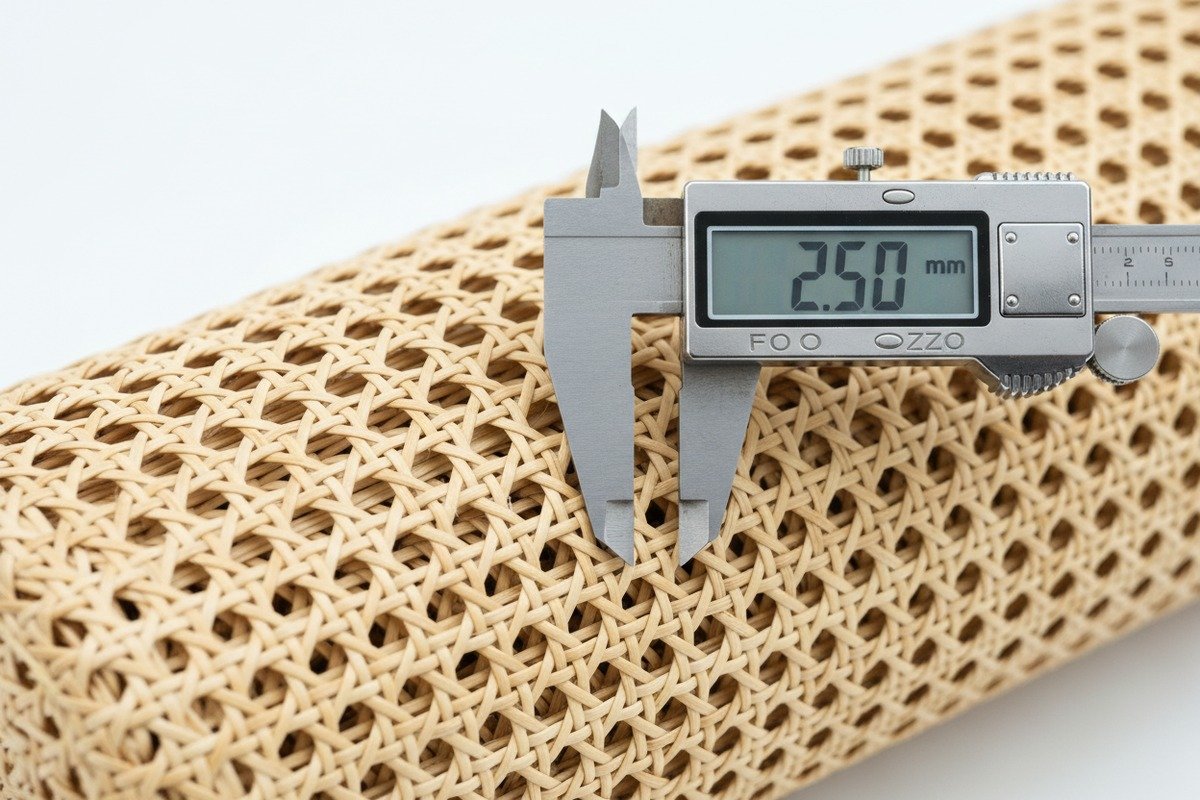
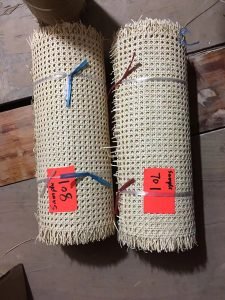
Grade A rattan cane webbing shows uniform strand thickness, consistent color with minimal dark spots, smooth surfaces free of nodules or splinters, and tight, even weave tension across the full roll. Always request physical samples and ask suppliers about their sorting and grading process before ordering.
Understanding Rattan Grading Basics
Rattan grading 3 is not standardized across all countries. A "Grade A" label from one supplier may mean something very different from another. That is why you need to know what to look for yourself. The grading generally depends on these factors: strand uniformity, surface smoothness, color consistency, moisture content, and weave tightness.
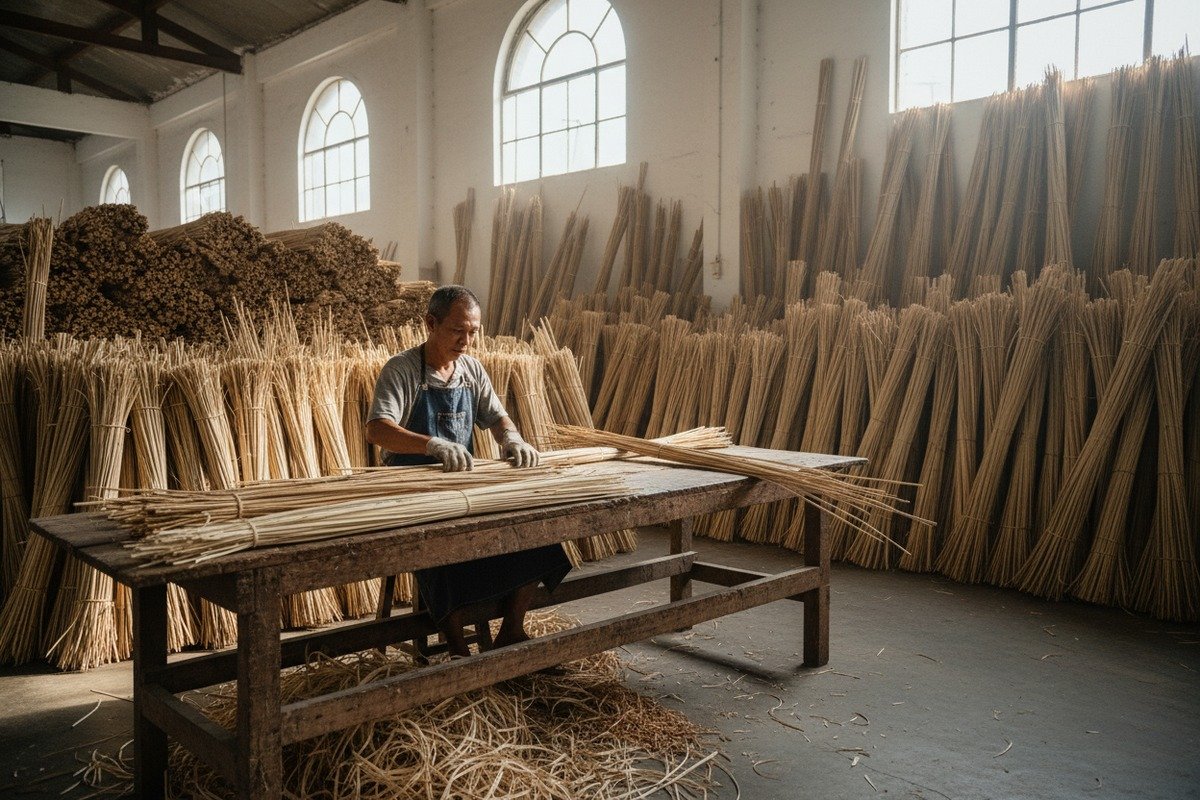
When we process rattan at our facility, the raw material goes through at least seven steps. These include sorting, thinning, peeling, core separation, sanding, weaving, and final inspection. Each step affects the final quality. Suppliers who skip or rush any step produce webbing that breaks easily, has uneven thickness, or shows rough nodules on the surface.
Key Visual Indicators of Quality
Here is a quick reference table to help you spot quality differences:
| Quality Indicator | Grade A | Grade B / Low Quality |
|---|---|---|
| Strand thickness | Uniform across the roll | Varies noticeably, some strands thicker |
| Surface texture | Smooth, lightly fibrous | Rough, visible nodules or splinters |
| Color consistency | Even beige/straw tone | Dark spots, patchy discoloration |
| Weave tension | Tight, no sagging gaps | Loose in places, uneven spacing |
| Flexibility | Bends without cracking | Brittle, cracks when flexed |
| Edge finish | Clean, trimmed edges | Frayed or uneven edges |
Natural vs. Synthetic: Know What You Are Buying
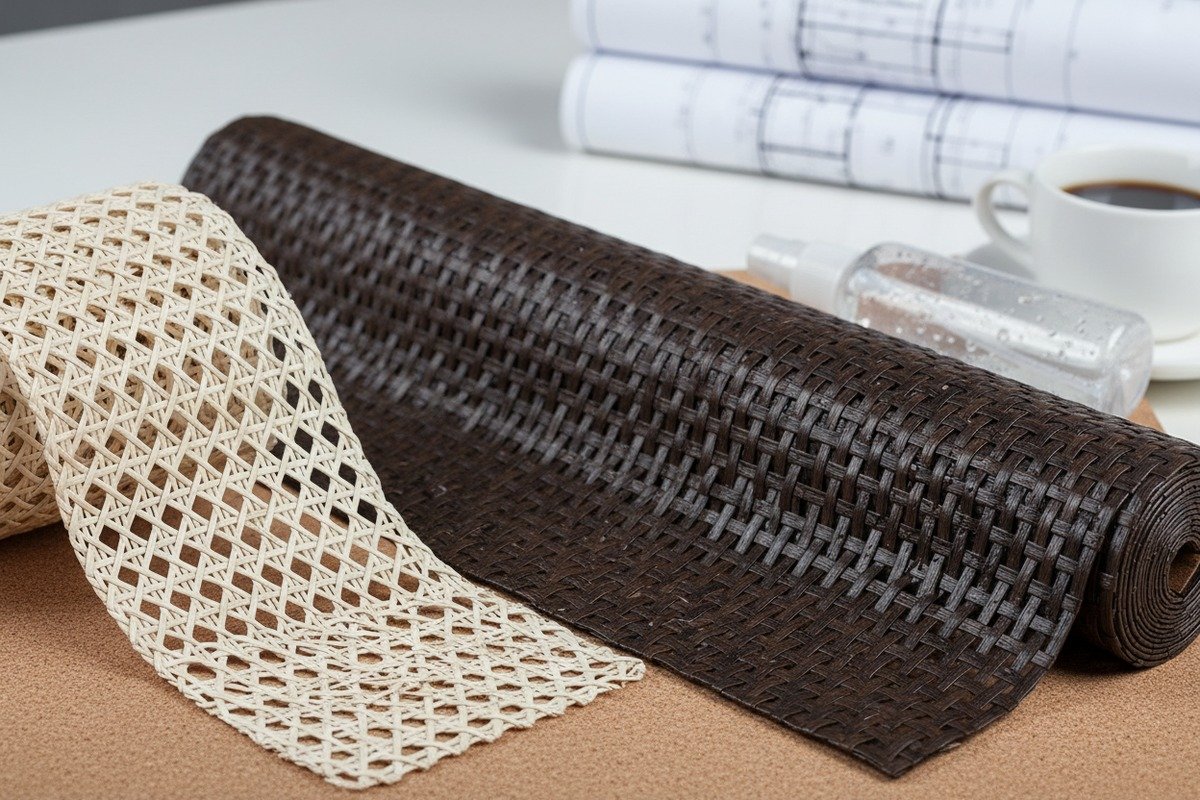
One of the biggest pitfalls is confusing natural rattan cane webbing with synthetic PE alternatives 4. Both have their place, but they serve different purposes. Natural rattan comes from the bark of the rattan palm 5. It has a warm, organic look. But it is sensitive to moisture, UV exposure, and insects. Synthetic PE rattan mimics the natural look while offering weather resistance, anti-corrosion properties, and longer outdoor lifespan.
| Feature | Natural Rattan Webbing | Synthetic PE Rattan Webbing |
|---|---|---|
| Material source | Rattan palm bark (organic) | Polyethylene plastic |
| Best use | Indoor furniture, decor | Indoor and outdoor furniture |
| Moisture resistance | Low — warps and molds | High — waterproof |
| UV resistance | Low — fades over time | High — anti-fading |
| Insect resistance | Low — vulnerable | High — no organic food source |
| Aesthetic feel | Warm, artisanal, rustic | Mimics natural but feels smoother |
| Typical roll length | ~50 feet | Up to 99 feet |
| Price range | Mid to high | Mid to high (varies by pattern) |
If your project is outdoor furniture, do not buy natural cane webbing. It will fail within months. Check the product specs carefully. Some listings on platforms like Amazon or Alibaba do not clearly state the material type.
Request Samples — Always
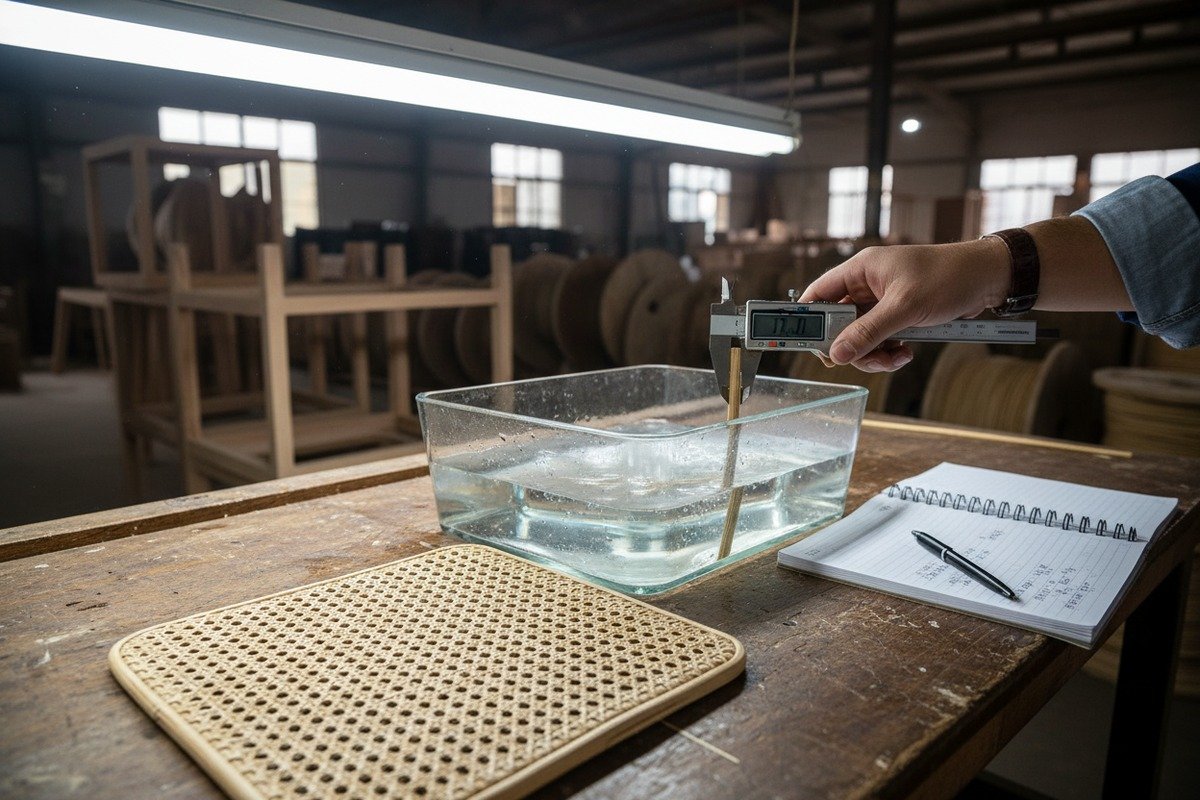
For any order over a few hundred dollars, request samples first. This is non-negotiable. A 12-inch sample piece tells you more than 50 product photos. Check the thickness with calipers. Flex it gently. Soak a small piece in water for 15 minutes and see how it responds. Grade A natural cane should become pliable without falling apart.
If a supplier refuses to send samples, that is a red flag. Walk away.
We have shipped rattan webbing to over a dozen countries, from the Netherlands to Saudi Arabia to Australia. And in every region, buyers who focus only on the unit price end up surprised by the total landed cost. The invoice price is just the beginning.
Hidden costs when importing rattan materials include freight charges, customs duties, fumigation or phytosanitary certificates for natural materials, packaging surcharges, port handling fees, currency conversion losses, and potential re-inspection costs if shipments fail local compliance standards. Always calculate total landed cost before comparing suppliers.
The True Cost of Importing Rattan
Many first-time buyers compare FOB prices 6 from different suppliers and pick the cheapest one. That is a mistake. The FOB price does not include ocean freight 7, insurance, import duties, or inland trucking. Depending on your destination country, these can add 20% to 40% on top of the product price.
Natural rattan, being an organic material, often requires fumigation certificates 8 or phytosanitary documentation. Without these, your shipment can be held at customs. Some countries — notably Australia and the EU — have strict regulations. Getting held up at port costs you daily storage fees, which add up fast.
Common Hidden Costs Breakdown
Here is what we advise every new client to budget for:
| Cost Category | What It Covers | Typical Impact |
|---|---|---|
| Ocean freight | Shipping container from port to port | 10–20% of product cost |
| Import duty | Varies by HS code and country | 3–12% of declared value |
| Fumigation / Phyto cert | Required for natural rattan in many countries | $100–$300 per shipment |
| Port handling / THC | Terminal charges at destination | $150–$500 per container |
| Insurance | Covers damage or loss in transit | 0.3–0.5% of shipment value |
| Inland trucking | Delivery from port to your warehouse | Varies by distance |
| Currency conversion | Exchange rate fluctuations | 1–3% loss depending on timing |
| Re-inspection fees | If goods fail local compliance checks | $200–$1,000+ |
Tips to Minimize Surprise Costs
First, always ask for CIF pricing, not just FOB. CIF includes cost, insurance, and freight to your destination port. This gives you a clearer picture.
Second, confirm document requirements with your customs broker before the supplier ships. We have seen containers sit at port for two weeks because a single certificate was missing. That delay cost the buyer over $1,500 in storage fees alone.
Third, clarify the payment currency and method upfront. Wire transfer fees, PayPal surcharges, and exchange rate timing all eat into your budget. We recommend locking in rates through your bank when possible.
Fourth, ask about minimum order quantities. Some suppliers offer a lower unit price but require you to buy 500 meters when you only need 200. The "savings" become dead stock sitting in your warehouse.
Finally, factor in the cost of potential quality failures. If you receive substandard webbing and cannot return it internationally, you absorb that loss entirely. This is another reason samples matter so much.
How do I ensure my rattan webbing rolls are packaged securely to prevent damage during transit?
Our warehouse team has re-packed thousands of rolls over the years because we learned early on that rattan webbing is more fragile than it looks. One bad corner crush during container loading can ruin 20 feet of material. And once it is cracked, you cannot fix it. That roll becomes waste.
To prevent transit damage, ensure rattan webbing rolls are wrapped in moisture-proof plastic film, reinforced with cardboard tubes or edge protectors, placed inside sturdy cartons or wooden crates, and loaded with proper cushioning. Natural rattan also needs silica gel packets inside packaging to control humidity and prevent mold growth.
Why Packaging Matters More Than You Think
Rattan cane webbing — especially natural cane — is a hygroscopic material 9. That means it absorbs and releases moisture from the air. During a 20- to 35-day ocean voyage, the inside of a shipping container can experience dramatic temperature and humidity swings. Without proper moisture barriers, natural webbing can develop mold, warp, or become brittle before it even reaches you.
Synthetic PE webbing is more resilient, but it still needs protection from physical damage. Crushed edges, creased rolls, and compressed weave patterns are all common issues when packaging is poor.
What Good Packaging Looks Like
At our facilities, we follow a layered packaging protocol. Each roll is first wrapped in a moisture-barrier plastic film. Then it goes onto a rigid cardboard tube to maintain its shape. Silica gel packets 10 are inserted to absorb excess moisture. The wrapped roll is placed inside a double-walled corrugated carton or, for larger orders, a wooden crate with foam padding.
For container loading, we use corner protectors and fill gaps with airbags to prevent shifting. Every pallet is stretch-wrapped and strapped.
What to Ask Your Supplier About Packaging
Do not assume packaging quality. Ask these questions directly:
- What material is used for the inner wrap? (It should be moisture-proof plastic, not just paper.)
- Are cardboard tubes or cores used to support the roll shape?
- Do you include silica gel or desiccant packets for natural rattan shipments?
- What type of outer carton is used? (Double-walled corrugated is the minimum.)
- How are rolls secured inside the container to prevent shifting?
- Can you send photos of the packaged goods before shipping?
If a supplier cannot answer these questions clearly, they probably do not have a proper packaging process. And that means your webbing is at risk.
Acclimatization After Arrival
Even with perfect packaging, do not unpack and install immediately. Natural rattan needs to acclimatize to your local humidity and temperature. Open the rolls in your workspace and let them rest for 24 to 48 hours. This reduces the risk of warping or cracking during installation. Store rolls flat or on their sides in a dry, ventilated area away from direct sunlight.
Can I trust an online wholesaler to provide the consistent quality my furniture factory needs?
When we first started supplying furniture factories in Europe and Southeast Asia, the number one concern was never price. It was consistency. A purchasing manager from Thailand once told us: "I can handle a slightly higher price. What I cannot handle is rolls that look different from each other inside the same shipment." That statement shaped how we run quality control today.
You can trust an online wholesaler only after verifying their manufacturing process, inspecting physical samples from multiple batches, confirming they have documented quality control procedures, and establishing a trial order before committing to long-term supply. Consistency requires transparent communication, not just promises on a website.
The Consistency Problem in Rattan Supply
Rattan is a natural material. No two harvests are identical. The color, thickness, and flexibility of raw rattan peels vary by season, region, and even the age of the plant. This natural variation is expected. But a good manufacturer manages it through rigorous sorting, calibrated processing, and batch-level quality checks.
The problem arises when suppliers skip these steps to cut costs. They mix peels from different harvests, skip the thinning and sanding stages, and weave rolls with whatever material is available. The result? Your first order looks great. Your second order is noticeably different. And your third order has rolls with visible defects mixed in.
How to Vet an Online Wholesaler
Here is a practical vetting checklist we recommend to every new client:
-
Ask for factory photos or video tours. A legitimate manufacturer can show you their facility. Look for organized workspaces, visible quality control stations, and proper material storage.
-
Request samples from at least two different production batches. One sample proves nothing. Two samples from different batches show you whether consistency is real.
-
Ask about their raw material sourcing. Where do they get their rattan? Do they own or control any part of the supply chain? Our own rattan processing facility in Indonesia gives us direct control over raw material quality. Not every supplier has this, but they should be able to explain their sourcing clearly.
-
Check their export history. Ask which countries they export to. Request references if possible. A supplier who regularly exports to markets with strict quality standards — like the EU, US, or Australia — is more likely to maintain consistent processes.
-
Start with a trial order. Never commit to a full container on your first purchase. Place a smaller trial order — even if the per-unit cost is higher — and evaluate the product, packaging, documentation, and communication quality before scaling up.
Retail Platforms vs. Direct Manufacturer Relationships
For casual DIY projects, buying rattan cane webbing from Amazon or eBay works fine. The quantities are small, and the stakes are low. But for furniture factories and wholesale operations, these platforms create serious risks.
Retail platforms often source from multiple unknown suppliers. The roll you order today might come from a completely different factory than the roll you ordered last month. There is no customization, no batch control, and limited recourse for quality issues.
Direct manufacturer relationships solve these problems. You get consistent sourcing, the ability to specify sizes and patterns, and a single point of accountability. You can negotiate on packaging, labeling, and documentation. And over time, the manufacturer understands your standards and adjusts their process to meet them.
Patterns and Sizing: Getting Exactly What You Need
Beyond consistency, you also need the right product for your application. Different weave patterns serve different functions. A fine hexagonal open-mesh pattern (often called "radio weave") is popular for chair backs and cabinet doors. A close-woven or dense basketweave pattern works better for seating surfaces that need more strength. Diamond or chevron patterns add a decorative touch for panels and headboards.
Make sure you communicate your exact requirements: pattern type, width, roll length, and whether you need the webbing pre-cut or in full rolls. Provide frame dimensions and groove sizes if applicable. Mismatches between webbing width and groove dimensions cause installation failures.
For grooved chairs, ask whether spline is included with your order. Standard spline sizes like #8 (3/16 inch wide) are common, but verify the match. A 6-foot coil of spline typically accompanies kits sized for 18×18 inch or 24×24 inch chairs.
Soaking and Installation Readiness
One final note on consistency that many buyers overlook: the webbing you receive should respond predictably to installation prep. Natural cane webbing needs to be soaked in warm water for 15 to 20 minutes before installation to become pliable. If the quality is inconsistent — some strands thicker, some thinner — the soaking time varies across the same sheet. Thinner strands over-soak and weaken. Thicker strands stay stiff. The result is uneven tension and a poor finish.
Consistent manufacturing produces webbing that soaks evenly and installs cleanly. This is the invisible benefit of working with a reliable supplier — and it shows up in every piece of furniture you build.
Conclusion
Buying rattan cane webbing online does not have to be risky. Verify quality through samples, calculate your full landed cost, demand proper packaging, and build a direct relationship with a manufacturer you can trust over time.
Footnotes
1. Defines rattan cane webbing and its origin from rattan palm. ↩︎
2. Explains what customs duty is and its purpose in international trade. ↩︎
3. Explains the process and key factors in classifying rattan quality. ↩︎
4. Describes the properties and applications of polyethylene plastic. ↩︎
5. Provides a comprehensive definition and description of rattan palm species. ↩︎
6. Explains the meaning and responsibilities associated with FOB Incoterms in shipping. ↩︎
7. Defines ocean freight and its role in global supply chains. ↩︎
8. Explains what a fumigation certificate is and why it’s required for international trade. ↩︎
9. Defines hygroscopy as the phenomenon of attracting and holding water molecules. ↩︎
10. Explains what silica gel is and its function as a desiccant to absorb moisture. ↩︎

 English
  Español de México
  العربية
  Deutsch
  Français
  Русский