
I see orders stall over paperwork, then color varies across batches. I set import basics first, then lock color standards and testing before bulk.
You need a business ID, consignee and tax details, HS codes, and core import documents. I provide ISO/AATCC colorfastness reports, tight batch dye control, outdoor UV‑stable plastic cane, and Pantone/RAL approvals with retained standards for QC.
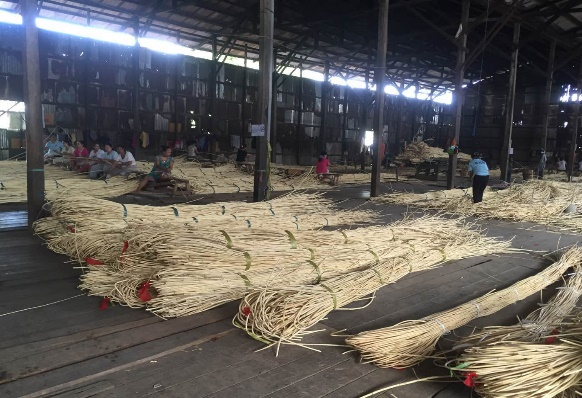
I will share the import steps I use with new buyers. Then I will show how I test colorfastness, control dye lots, build outdoor UV stability, and run color approvals with retains so every repeat order matches.
Can I get ISO or AATCC colorfastness test reports1 for UV, rubbing, and sweat?
Hotels and restaurants need proof. Color must hold under light, cleaning, and body contact.
Yes. I issue ISO and AATCC test reports. I test UV (ISO 105‑B022/B04), rubbing/crocking (AATCC 8/165, ISO 105‑X12), perspiration (ISO 105‑E04, AATCC 15), and wash/solvent spot tests. I share grade numbers and photos before you approve bulk.
[^1]](https://rattanwholesaler.com/wp-content/uploads/2025/09/20250915161159-1024x609.png "ISO/AATCC UV, rubbing, sweat colorfastness tests")
Dive deeper: What we test, target grades, and how we sample
I test both natural cane finishes and plastic rattan cane webbing. For UV lightfastness, I run ISO 105‑B022 xenon arc on plastic cane and coated natural cane. I target Grade 4 or better for indoor hotel use and Grade 6–7 Blue Wool for outdoor plastic lines. For rubbing, I use AATCC 8 for dry/wet crocking and ISO 105‑X12. I aim for Grade 4–5 dry and Grade 4 wet on plastic; natural cane with clear coat meets Grade 4 dry and Grade 3–4 wet. For perspiration, I run ISO 105‑E04 acidic and alkaline; I target Grade 4 change and Grade 4–5 staining on adjacent fabrics. I include alcohol rub checks for housekeeping chemicals. I test before color approval and again on first bulk. I pull retain swatches from each lot and put them in a light‑controlled file so future orders match the same anchor.
How do you batch‑control dyeing to reduce color variation across orders?
Color drift happens when dye strength, moisture, or cure shifts. I lock a standard, then control every input.
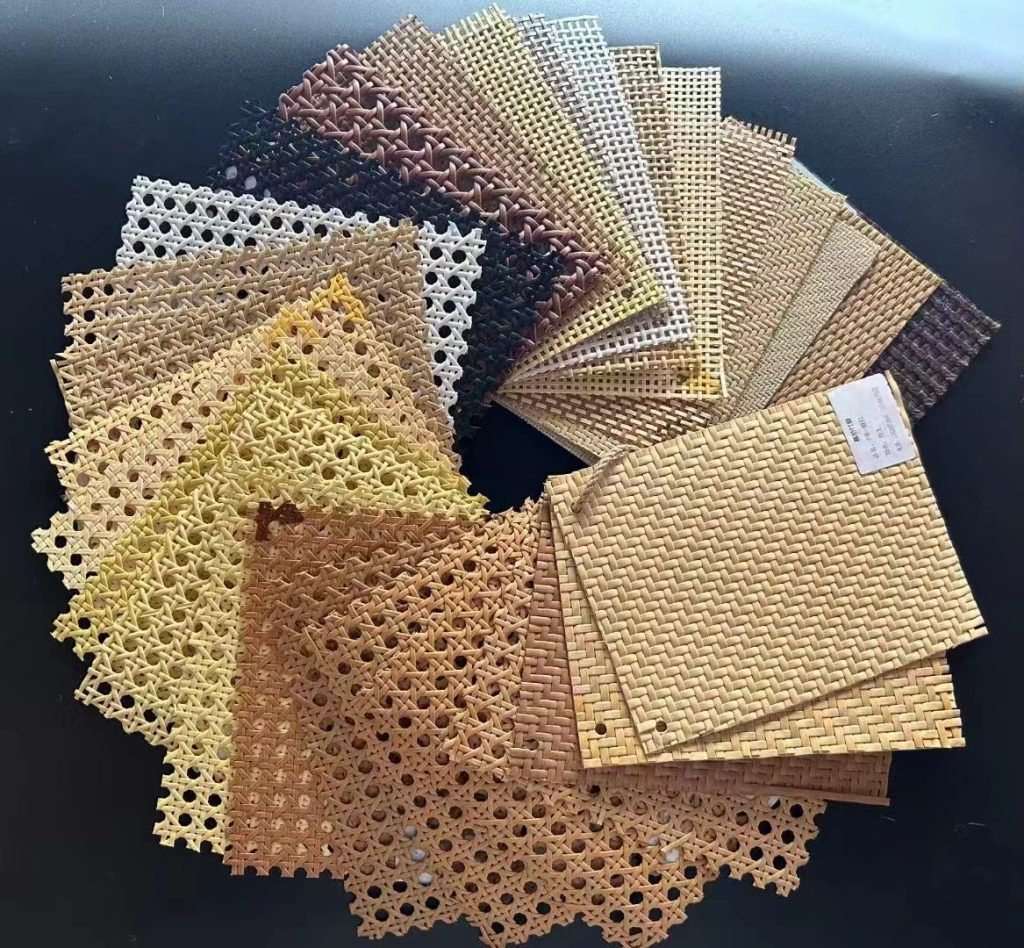
I use master recipes tied to a signed standard, fixed moisture targets, in‑line spectro checks, and sealed retains per batch. I record delta E1 for every lot and stop if it exceeds the limit.
Dive deeper: Recipes, in‑process QC, and delta E3 limits
I start with your Pantone/RAL or a physical standard. I measure it with a spectrophotometer and store the Lab* values. I build a master dye recipe4 and set moisture of the base material: natural cane gets conditioned to a narrow range so uptake stays even; plastic cane uses masterbatch color with fixed dosing. During production, I cut a first‑off strip and read delta E3 against the master. My indoor target is ΔE ≤ 0.8 for plastic cane and ≤ 1.0–1.2 for stained natural cane, since natural fibers vary. I log bath temperature, time, and pH for stains and fixatives. I cure at controlled temp, then check again after cure because tone can shift as it dries. I seal two retain swatches from each lot: one goes to you, one stays with me. Each carton carries the lot code, color code, and delta E3 reading. When you re‑order, I produce against the same master and place the new reading on the PI so you can match before shipment.
Will outdoor‑grade plastic cane resist fading in tropical sun for hotel projects?
Tropical sun is strong. Salt air and heat speed fading. Outdoor grade needs UV and heat stability.
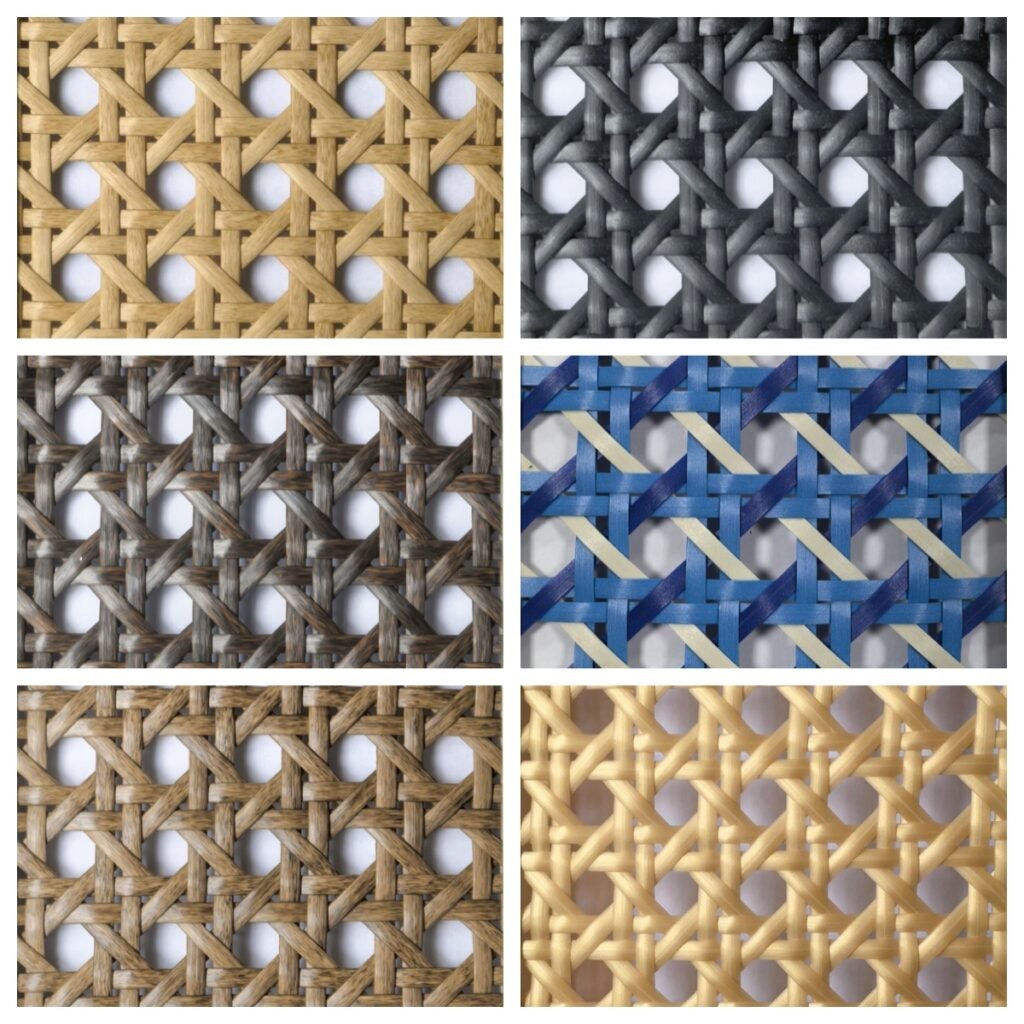
Yes. My outdoor plastic cane uses UV‑stabilized polymers5, HALS, and carbon‑black or inorganic pigments. It passes 1,000–1,500 hours xenon arc with small delta E and holds color in hot, humid coastal sites.
Dive deeper: Polymer, pigment, and test performance
I build outdoor lines with PP or PE blends that have UV packages and HALS to slow chain breakdown. I choose pigments that handle sun: carbon black for deep darks, and mixed inorganic systems for lights. I texture the surface matte so scuffs do not show. Typical xenon arc performance6: 1,000–1,500 hours at 0.35–0.55 W/m² shows ΔE ≤ 1.5–2.5 on mid tones and ≤ 1.0 on darks; gloss change stays low. I also run heat aging at 80–90°C and humidity cycling to mimic pool decks. For frame builds, I suggest aluminum or treated wood and stainless fasteners to avoid rust stains on light colors. For seaside hotels, I clean with mild soap and rinse monthly to remove salt. I stock 10+ outdoor weaves and colors that match indoor palettes so guest areas feel consistent across inside and outside spaces.
Can I approve a color standard (Pantone/RAL) and receive retains for QC?
Approvals prevent disputes later. A clear standard speeds production and checks incoming goods.
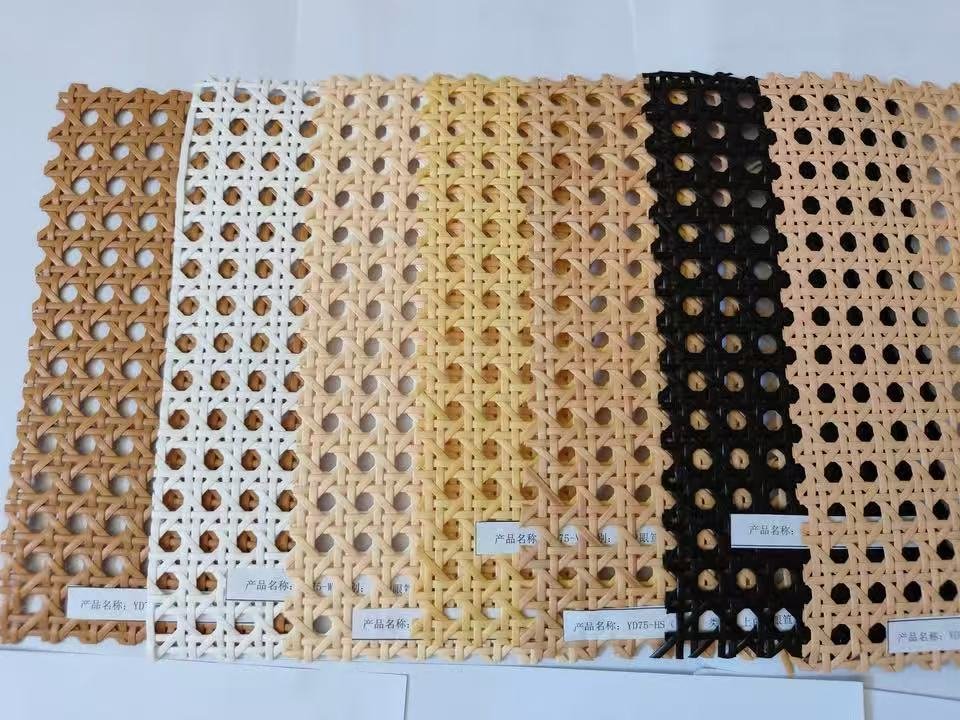
Yes. I match Pantone or RAL, send lab dips and weave samples, and ship signed retains. I put the standard on the PI, print it on cartons, and keep duplicates for future orders.
Dive deeper: Approval workflow, lab dips, and receiving checks
I follow a simple loop. Step 1: you send Pantone/RAL or a physical chip; I scan and issue two lab dips on flat strips and one on finished weave. Step 2: you pick one, mark “approved,” and note lighting (D65) and viewing angle. Step 3: I make a production standard card that shows color data, batch tolerance, and surface texture notes. I ship a signed retain set: one hangs in your QC room, one stays in my lab. Every shipment includes a cutting from production stapled to the COA with delta E vs the card. Your warehouse checks inbound under D65 light and compares to the retain. If it passes, they sign and store the new retain with date and lot. For multi‑factory hotel projects, I send each maker the same standard pack so all parts match once installed.
Conclusion
You need basic import documents and a tight color plan. I provide ISO/AATCC test reports, strict dye lot controls, UV‑stable outdoor plastic cane, and Pantone/RAL approvals with retains to keep every order consistent.
-
Understanding colorfastness test reports is crucial for ensuring fabric durability in various conditions, making this resource invaluable. ↩ ↩
-
Exploring ISO 105‑B02 will provide insights into UV testing standards, essential for quality assurance in textiles. ↩ ↩
-
Understanding delta E is crucial for maintaining color consistency in dyeing processes, ensuring quality across batches. ↩ ↩ ↩
-
A well-crafted master dye recipe is essential for achieving uniform color in textile production, reducing variations in orders. ↩
-
Understanding UV‑stabilized polymers can help you choose durable outdoor furniture that withstands harsh conditions. ↩
-
Exploring xenon arc performance testing will reveal how materials endure UV exposure, ensuring longevity in outdoor settings. ↩


 English
  Español de México
  العربية
  Deutsch
  Français
  Русский