
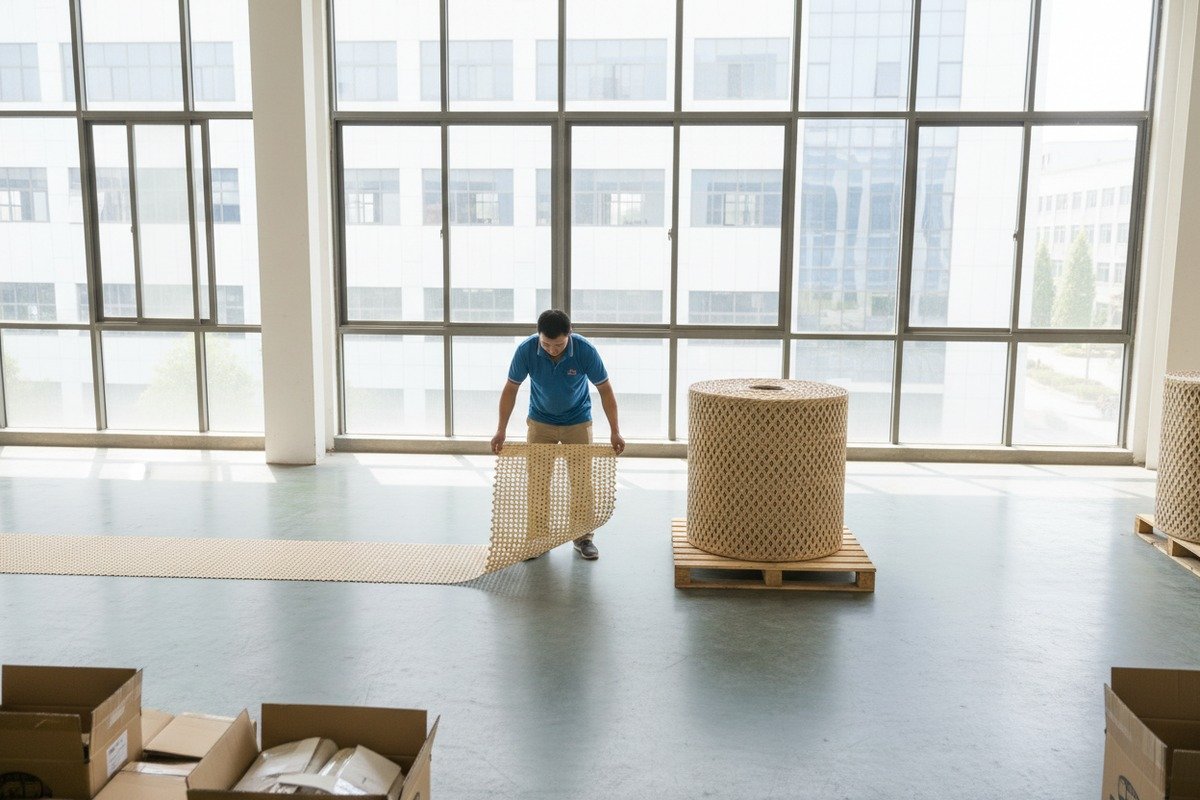
Every week, buyers email our sales team asking the same question before placing their first rattan cane webbing 1 order — “What is the minimum I have to buy?”
There is no universal standard MOQ for bulk rattan cane webbing. Most natural rattan suppliers set their MOQ at one full 15-meter roll, while synthetic PE webbing typically starts at one 30-meter roll. Custom sizes, colors, or weave patterns often raise the MOQ to 5–10 rolls or more, depending on the factory’s production setup.
The real answer depends on your supplier type, material choice, and customization needs synthetic PE webbing 2. Let me walk you through the key factors so you can plan your sourcing with confidence.
How can I determine the standard MOQ for my bulk rattan cane webbing order?
When our team works with new buyers from the Netherlands or the US, the very first conversation always circles back to MOQ. The confusion is understandable — different suppliers quote wildly different numbers.
To determine the standard MOQ, you should first identify your supplier type (factory, wholesaler, or retailer), your material preference (natural or synthetic PE), and the specific weave pattern you need. Factory-direct suppliers typically require a minimum of one 15-meter roll for natural rattan, while retailers may sell by the foot with no MOQ at all.
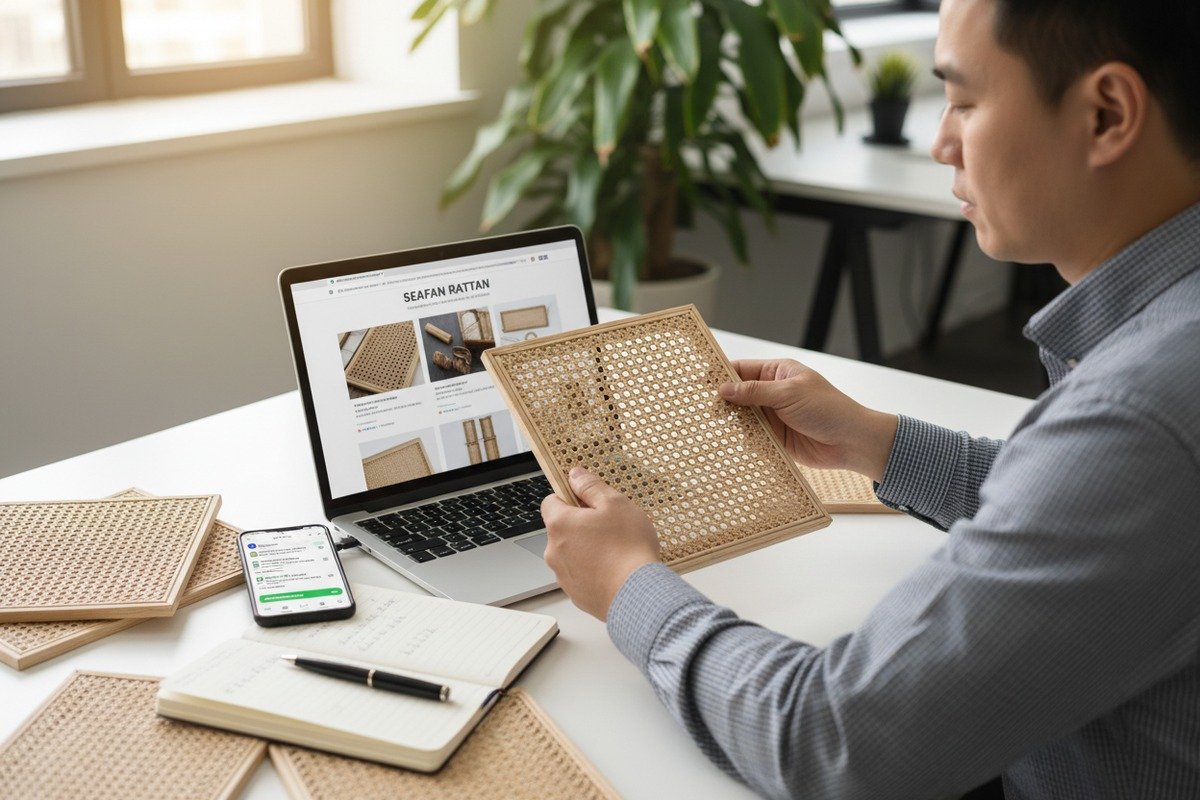
The MOQ landscape for rattan cane webbing is not one-size-fits-all. In our experience shipping to over 15 countries, we have seen MOQs range from a single cut piece to hundreds of rolls. The key is understanding what drives these numbers.
Supplier Type Matters Most
Factory-direct suppliers like us operate with production schedules. We set up machines, calibrate weave patterns, and run batches. A single roll is the minimum viable unit for natural rattan because the raw material comes from Indonesia and Vietnam 3 in standardized lengths. Wholesalers often mirror this policy. Retailers on Etsy or Walmart, however, break rolls into smaller pieces for DIY buyers.
Natural vs. Synthetic PE Rattan
Natural rattan cane webbing comes in 15-meter rolls. The material is harvested, dried, and woven in lengths that match traditional processing methods. Synthetic PE rattan comes in 30-meter rolls because the extrusion process 4 allows for longer continuous lengths. This difference directly affects your MOQ calculation.
| Supplier Type | Natural Rattan MOQ | PE Synthetic MOQ | Best For |
|---|---|---|---|
| Factory Direct | 1 roll (15m) | 1 roll (30m) | Furniture manufacturers, wholesalers |
| Wholesaler | 1–5 rolls | 1–3 rolls | Material distributors, mid-size projects |
| Online Retailer (Etsy) | No MOQ (by the foot) | No MOQ (by the foot) | DIY buyers, small repairs |
| Big Box Retail (Walmart) | 1 pre-cut sheet | 1 pre-cut sheet | Home decorators, hobbyists |
Weave Pattern and Width Affect Availability
Not all weave patterns carry the same MOQ. Our most popular patterns — the classic hexagonal open-mesh "radio weave" 5 and the dense square basketweave — are always in stock. We can ship these from as little as one roll. But less common patterns like the octagonal weave or complex geometric diamond motifs may require batch production, pushing the MOQ to 5 or even 10 rolls.
Width also plays a role. Standard widths of 40 cm, 50 cm, 60 cm, and 90 cm are easy to source. If you need 120 cm or wider, the machine setup is different. Our factory can produce widths up to 180 cm, but those rolls are only 10 meters long and may need a higher MOQ to justify production.
How to Check MOQ Before You Order
Here is a simple process. First, decide your material (natural or PE). Second, pick your weave pattern. Third, choose your width. Then contact the supplier with these three details. A good supplier will give you a clear MOQ within 24 hours. At our facility in Foshan, we respond to MOQ inquiries within the same business day.
Will my custom size and pattern requirements impact the minimum order quantity?
Our production team handles customization requests almost daily. One buyer from Australia wanted a 75 cm width in a radio weave pattern dyed in dark walnut. Another client in Spain needed bleached rattan at 110 cm. Each request changed the MOQ.
Yes, custom sizes and patterns almost always increase the MOQ. Standard widths (40–90 cm) and popular weave patterns like radio or square mesh maintain a low MOQ of 1 roll. But non-standard widths, custom dye colors, or rare weave designs typically require 5–20 rolls minimum because of machine setup costs and material preparation.
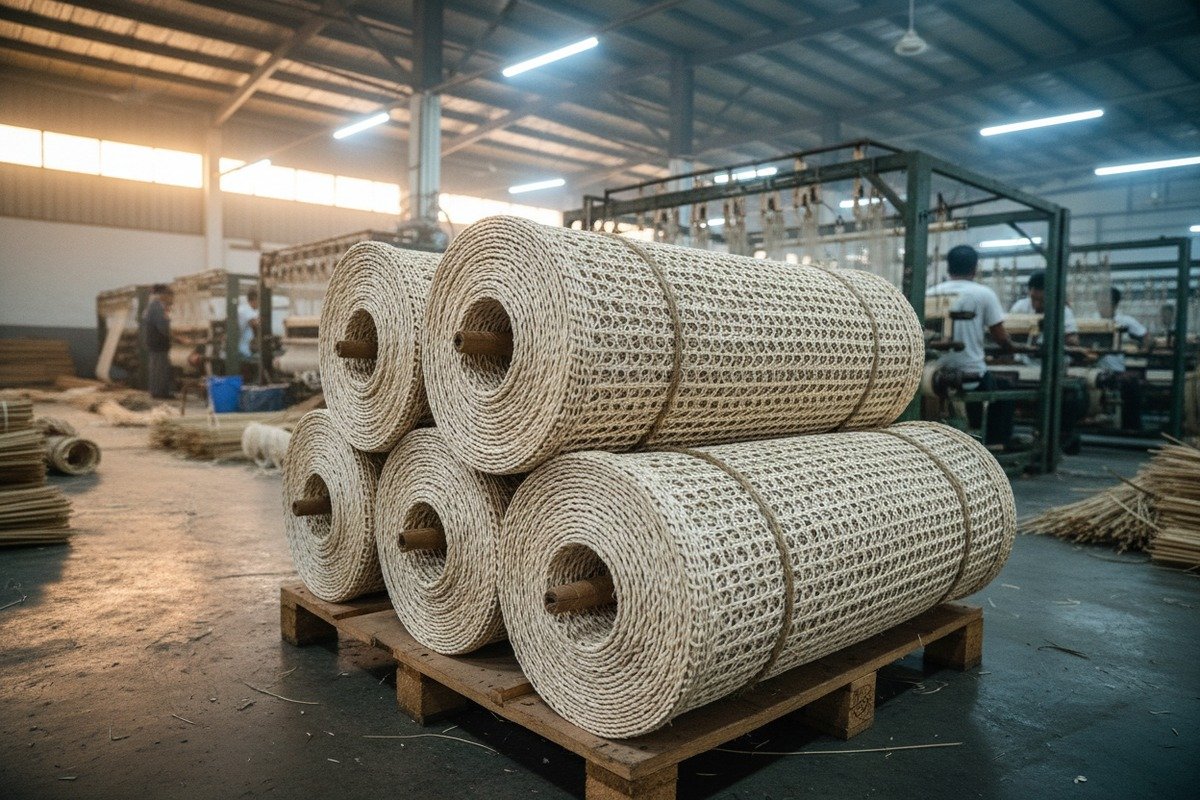
Customization is where the MOQ conversation gets nuanced. Let me break down exactly how different custom requests change your minimum order.
Width Customization
Our machines at the Foshan facility 6 are set to produce standard widths. Switching to a non-standard width means recalibrating the loom. That takes time and creates waste material during setup. To make that worthwhile, we need a larger order.
| Width Range | Roll Length | Typical MOQ | Notes |
|---|---|---|---|
| 35–40 cm | 15m (natural) | 1 roll | Standard, always in stock |
| 50–60 cm | 15m (natural) | 1 roll | Most popular for furniture |
| 90–100 cm | 15m (natural) | 1–3 rolls | Common for headboards, panels |
| 100–120 cm | 15m (natural) | 5–10 rolls | Requires machine adjustment |
| 120–180 cm | 10m (natural) | 10–20 rolls | Special production run needed |
| 40–100 cm | 30m (PE synthetic) | 1 roll | Standard PE sizes |
Color and Finish Customization
Natural rattan comes in its organic beige-to-straw-yellow color. Bleached rattan is also commonly stocked. But if you want a custom dye — say, dark brown, grey, or black — that is a batch process. We need to prepare the dye, test it, and run the entire batch at once. The MOQ for custom-dyed rattan usually starts at 10 rolls.
The same logic applies to finishes. Our standard is a matte, fibrous finish with natural variation in the strands. If you want a lacquered or UV-treated finish, that adds a production step and raises the MOQ.
Pattern Complexity
We keep our six most popular patterns in continuous production: the classic 1/2 mesh open weave, radio weave (hexagonal), square basketweave, octagonal, chevron wave, and diamond motif. These can ship from one roll.
A fully custom pattern — something designed by your furniture designer, for example — requires new tooling. In that case, the MOQ can jump to 20–50 rolls. We always recommend buyers start with our existing patterns and modify slightly rather than designing from scratch.
The Cost-Benefit of Customization
Here is the honest truth from running three factories. Custom orders cost more per roll at low quantities. But once you hit the MOQ threshold, the per-unit cost drops. Many of our long-term clients in Turkey and the Netherlands started with standard products, tested the market, and then moved to custom specs once they knew their volumes.
Can I request a lower MOQ for my initial trial shipment of Grade A rattan?
We understand the hesitation. When our purchasing manager Ranoo in Thailand placed his first order with us, he wanted to test quality before committing to a container-load. That is smart sourcing. Testing before scaling is a best practice, not a weakness.
Yes, many reputable suppliers offer reduced MOQs for initial trial orders of Grade A rattan cane webbing. A common approach is to order 1–3 rolls of standard sizes and patterns, which allows you to inspect weave quality, color consistency, and packaging durability before placing a larger bulk order. Some suppliers even provide sample swatches at minimal or no cost.
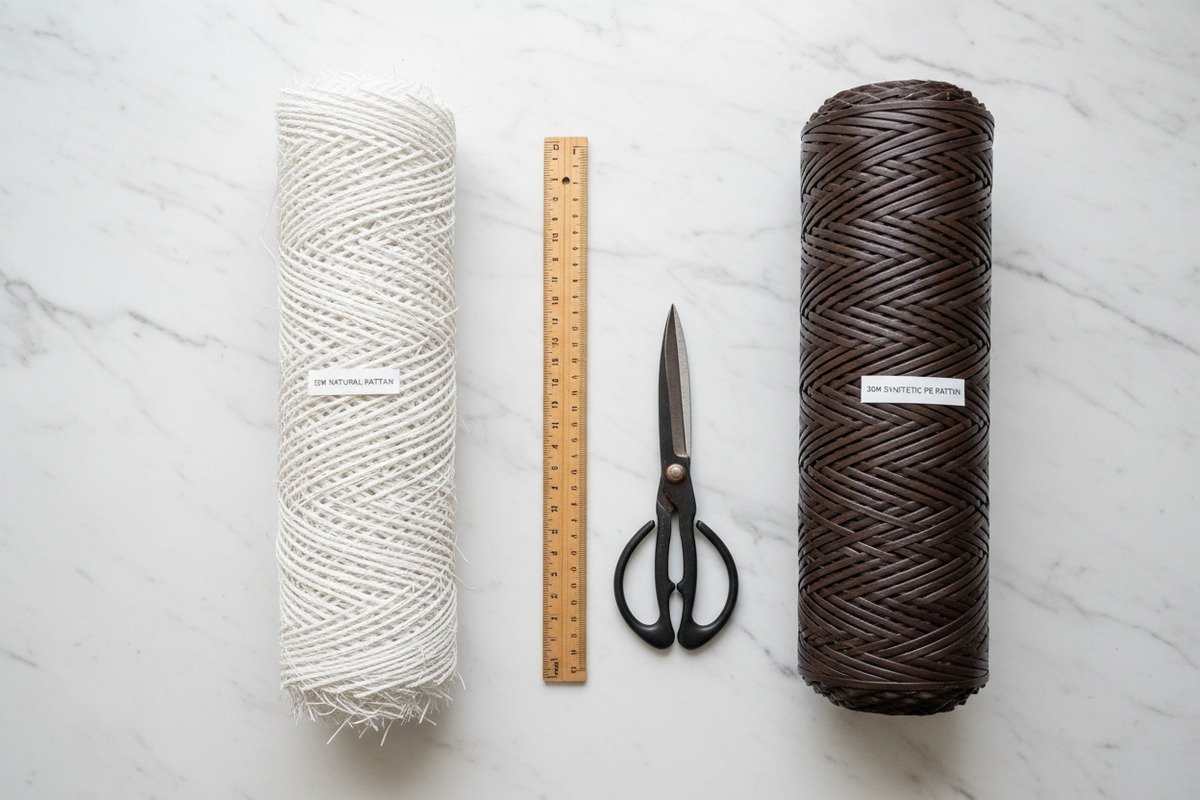
Trial orders are the foundation of good B2B relationships. Here is how to approach them and what to expect.
What "Grade A" Actually Means
Not all rattan is equal. Grade A rattan cane webbing should have consistent small holes in the mesh, thick and even knitting, no signs of mold or termite damage, and a clean machine-dried finish. When we process rattan at our Indonesian facility, every batch goes through insect-proofing without harsh preservatives. The material is kiln-dried 7 to prevent mold during shipping.
Before ordering your trial, ask the supplier for their quality markers. A transparent factory will tell you exactly how they grade their material.
How to Structure Your Trial Order
Here is a practical framework we recommend to first-time buyers:
- Start with 1–3 rolls in your most-needed width and pattern.
- Choose standard options to get the lowest possible MOQ.
- Request a quality certificate or production photos.
- Inspect upon arrival for weave tightness, color uniformity, and packaging condition.
- Test in your production line before scaling up.
Most trial shipments from our Foshan warehouse ship within 1–3 business days of payment. Delivery takes 8–20 days depending on your destination.
Negotiation Tips for Lower Trial MOQs
From years of dealing with buyers across Europe, the Middle East, and Southeast Asia, here are tactics that actually work:
- Be upfront about your long-term volume. If you plan to order 50 rolls per quarter after testing, tell the supplier. We are far more flexible on trial MOQs when we see future potential.
- Offer to pay a slight premium. A 5–10% markup on a small trial order is fair compensation for the supplier's handling costs.
- Ask about mixed rolls. Some suppliers, including us, allow you to mix different widths or patterns within a single trial shipment. This way, you test multiple SKUs without ordering full MOQs for each.
- Leverage sample swatches. Before ordering even one roll, ask for cut samples. We send A4-sized swatches of any pattern in our catalog. This costs almost nothing and saves you from ordering the wrong product.
Quality Checkpoints for Your Trial
When your trial rolls arrive, use this checklist:
- Are the holes in the mesh consistent in size?
- Is the rattan strand thickness uniform across the roll?
- Are there any dark spots, mold, or insect damage?
- Does the roll unwind smoothly without cracking?
- Is the packaging intact — film-wrapped, no moisture?
- Does the width match your specification within ±1 cm tolerance?
If the trial passes all six checks, you have found a reliable supplier. Scale with confidence.
How does the MOQ affect my total shipping costs and pricing for bulk rattan?
When we quote a buyer, the unit price is only part of the story. Shipping costs can make or break your margins. We have seen buyers order one roll and pay more in freight than in product cost. That is a sourcing mistake we want to help you avoid.
The MOQ directly affects your total landed cost because shipping rattan cane webbing has high fixed costs per shipment. Ordering at or above the supplier's MOQ unlocks wholesale pricing (typically 15–30% below retail), and consolidating more rolls per shipment dramatically reduces your per-roll freight cost. A single 15-meter roll may cost $15–30 to ship, but 20 rolls in one shipment can bring that down to $3–5 per roll.
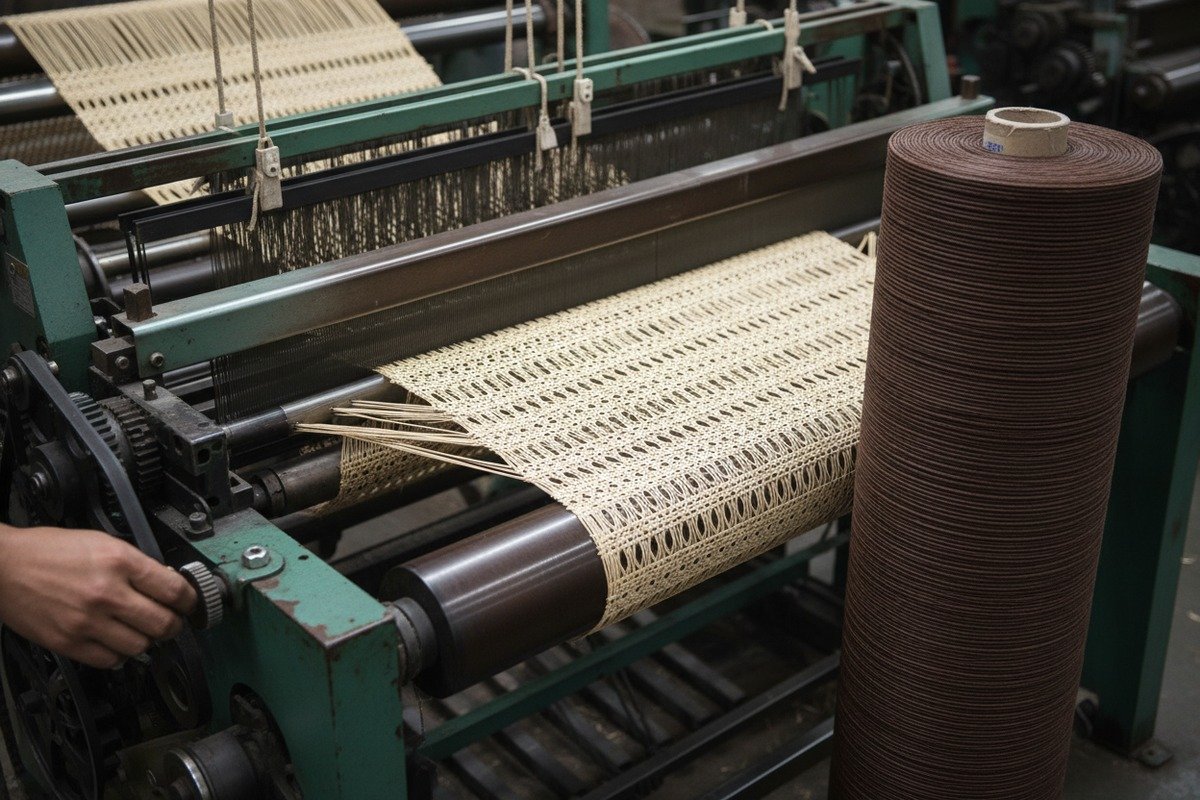
Understanding the relationship between MOQ, pricing tiers, and shipping costs is essential for profitable sourcing. Let me show you the real numbers.
Pricing Benchmarks: Retail vs. Wholesale
Retail platforms like Etsy and Walmart price rattan cane webbing at $0.30–$3.00 per square foot, depending on the pattern and material. A 16-inch by 3.3-foot pre-cut sheet sells for about $16.99 at Walmart. European boutiques charge €25–€76 for a single 15-meter roll in widths from 40 cm to 90 cm.
Wholesale pricing from a factory like ours is significantly lower. Once you hit the minimum roll quantity, your cost per square meter drops. Here is a realistic pricing comparison:
| Order Size | Price Per Sq Meter (Natural) | Price Per Sq Meter (PE) | Shipping Cost Per Roll | Total Landed Cost Per Roll |
|---|---|---|---|---|
| 1 roll (retail/Etsy) | $8.00–$15.00 | $6.00–$10.00 | $15–$30 | $55–$100+ |
| 1 roll (wholesale) | $4.00–$7.00 | $3.00–$5.00 | $15–$25 | $40–$70 |
| 10 rolls (bulk) | $3.00–$5.00 | $2.50–$4.00 | $5–$8 per roll | $25–$45 |
| 50+ rolls (container) | $2.00–$3.50 | $1.80–$3.00 | $2–$4 per roll | $15–$30 |
How Shipping Costs Scale
Rattan cane webbing is lightweight but bulky. A single roll of 60 cm × 15 m natural rattan weighs about 3–5 kg but takes up significant volume. Shipping companies charge by dimensional weight 8 or actual weight — whichever is greater. This means small orders get hit with high per-unit freight costs.
Here is the math. Shipping one roll by express courier from China to the US costs roughly $20–$30. Shipping 20 rolls by sea freight 9 costs about $80–$120 total, or $4–$6 per roll. That is an 80% reduction in shipping cost per unit.
Consolidation Strategies
Smart buyers consolidate. Instead of ordering 5 rolls of radio weave this month and 5 rolls of square mesh next month, combine them into one 10-roll shipment. You save on shipping and may qualify for a volume discount on the product itself.
We also recommend mixing product types within a single shipment. If you need rattan cane webbing, rattan poles, and woven rattan panels, bundling everything into one order from one supplier cuts your logistics costs and simplifies customs clearance 10.
Packaging and Damage Prevention
At our factories, every roll is film-wrapped and reinforced for export. Proper packaging adds a small cost but prevents damage during transit. We have learned that rolls shipped without film wrapping arrive with frayed edges and moisture stains — especially on ocean freight during humid months. Insist on quality packaging from your supplier. It is worth the extra $0.50–$1.00 per roll.
The Break-Even Point
For most B2B buyers, the break-even point where wholesale pricing and reduced shipping costs make bulk ordering clearly superior is around 5–10 rolls. Below that, you are paying a premium for small quantities. Above that, every additional roll improves your per-unit economics.
Conclusion
The standard MOQ for bulk rattan cane webbing depends on your supplier, material, and customization needs — but smart sourcing starts with one roll and scales from there.
Footnotes
1. Explains what cane webbing is and its production process. ↩︎
2. Describes synthetic PE rattan webbing made from polyethylene. ↩︎
3. Highlights Indonesia and Vietnam as major rattan exporters. ↩︎
4. Wikipedia provides a comprehensive and authoritative overview of the plastics extrusion manufacturing process. ↩︎
5. Illustrates and describes the hexagonal open-mesh weave pattern for rattan. ↩︎
6. Details Foshan’s role as a major manufacturing hub, especially for furniture. ↩︎
7. An authoritative .edu source explaining the fundamental aspects of kiln drying lumber, including the process and types of kilns. ↩︎
8. Defines dimensional weight and explains its calculation in shipping. ↩︎
9. Provides a comprehensive guide to sea freight shipping. ↩︎
10. Describes the process and importance of customs clearance in international trade. ↩︎
 English
  Español de México
  العربية
  Deutsch
  Français
  Русский