

Years on our production floor have taught us that rattan cane webbing 1 shows up in more restoration projects than most people realize.
Natural rattan cane webbing is used to restore chair seats, sofa backs, cabinet door panels, headboards, coffee tables, side tables, and decorative screens. It is the preferred material for antique and mid-century modern furniture restoration because it preserves historical authenticity, provides breathability, and offers lasting durability when properly installed.
Whether you run a furniture factory or manage a wholesale operation, understanding where rattan cane webbing fits into restoration work helps you choose the right material mid-century modern furniture restoration 2. Below, we break down the most common applications, selection tips, and sourcing strategies so you can make confident decisions for your next project.
How do I select the best natural rattan cane webbing for my chair seat restoration?
Every week, our customer service team fields questions from furniture restorers who picked the wrong mesh size 3 or grade for their chair projects. The wrong choice leads to sagging seats, cracked cane, and wasted labor. Getting it right the first time saves money and headaches.
To select the best natural rattan cane webbing for chair seat restoration, match the mesh size and pattern to your original piece, choose Grade A cane with consistent color and no visible cracks, and verify the webbing width exceeds your seat opening by at least one inch on each side for secure spline installation.
Understanding Mesh Sizes
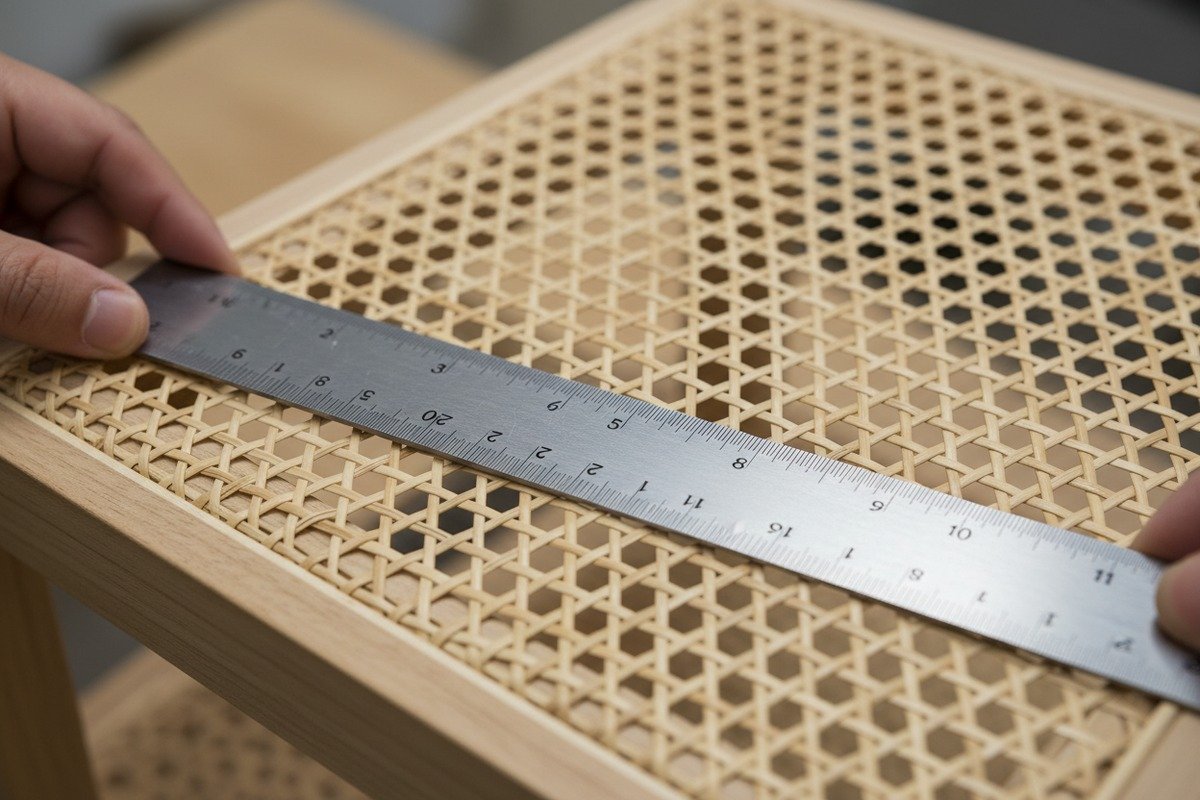
Mesh size is the single most important factor in chair seat restoration 4. It determines the look, feel, and structural performance of the finished seat. Common mesh sizes range from fine (small openings) to open (larger openings). Antique European chairs often use finer mesh, while tropical and mid-century designs favor a more open weave.
If you are restoring a specific period piece, measure the old webbing before removing it. Count the number of holes per inch. This tells you the exact mesh pattern you need. When the original is too damaged to measure, consult reference photos or bring a sample to your supplier.
Grading and Quality Markers
Not all rattan cane webbing is equal. Grade A material 5 has uniform strand thickness, consistent color, and no splits or dry spots. Lower grades may have visible knots, uneven color, or brittle sections that crack during installation.
| Quality Grade | Strand Consistency | Color Uniformity | Typical Use |
|---|---|---|---|
| Grade A | Even thickness, no splits | Consistent light beige to straw yellow | Professional restoration, antique pieces |
| Grade B | Minor variations, occasional thin spots | Slight color variation | Mid-range furniture, practice projects |
| Grade C | Uneven, visible knots | Noticeable color differences | Budget repairs, non-visible applications |
From our production lines in Indonesia, we sort every batch by hand. Grade A webbing costs more, but it installs cleaner and lasts longer. For professional restoration, it is the only sensible choice.
Matching the Original Pattern
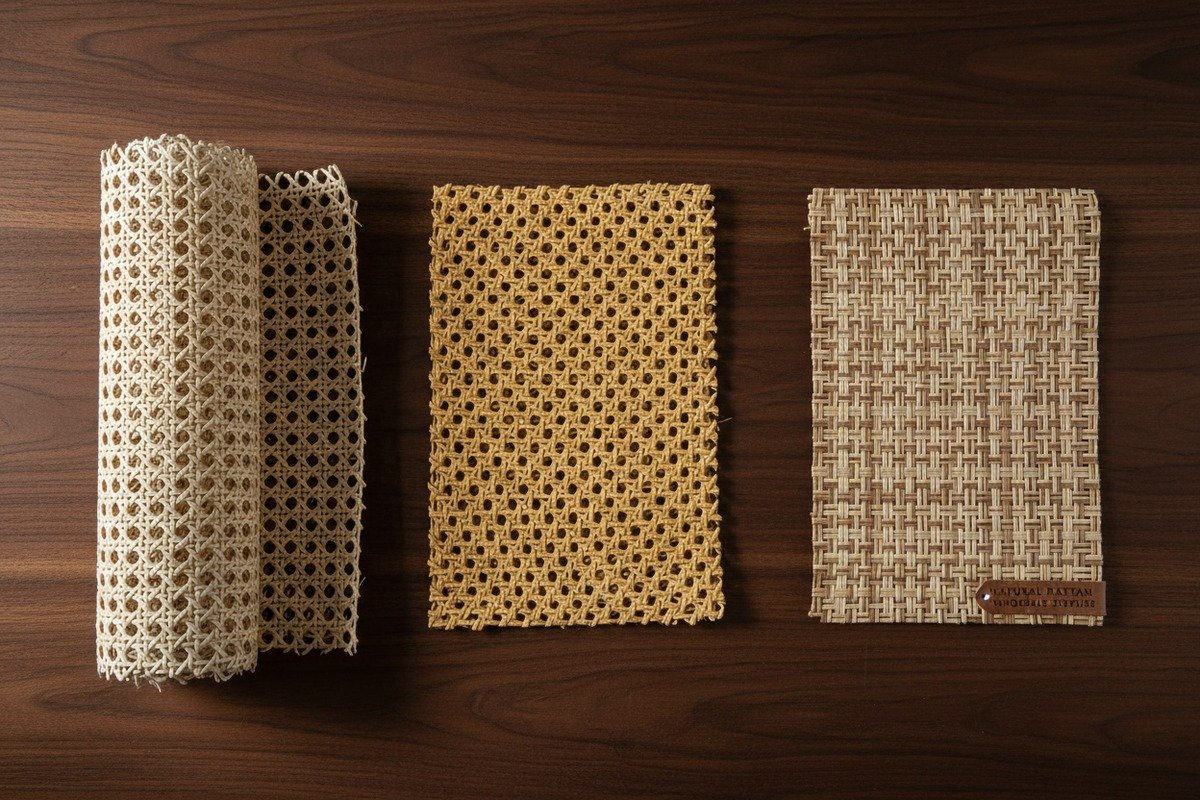
Chair seats typically use one of several standard weave patterns. The most common include the classic hexagonal open-work cane, the tight basketweave, and the simple square grid. Each pattern has a different visual weight and structural behavior.
The hexagonal pattern is traditional for Victorian and colonial-era chairs. The basketweave suits mid-century designs. The open square grid works well on casual or bohemian-style pieces.
Soaking and Preparation Tips
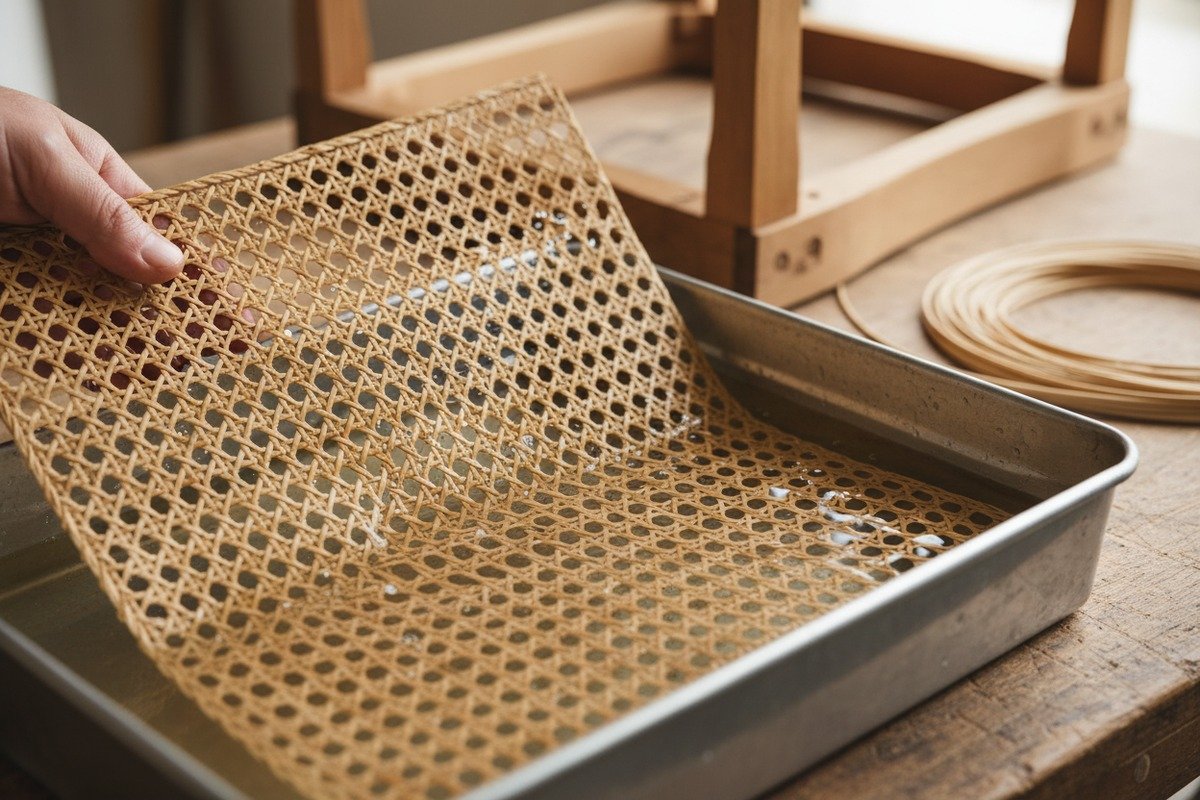
Before installation, soak the webbing in warm water for 20 to 30 minutes. This step is critical. Dry cane cracks when you press it into the groove. Over-soaking (more than 45 minutes) makes the fibers too soft and leads to a loose fit after drying.
Once soaked, lay the webbing over the seat opening. Trim it so it extends about one inch beyond the groove on all sides. Use a cane webbing tool — not a wooden wedge — to press the material into the groove. Wooden wedges can chip or split the frame. Secure the webbing with reed spline 6 and white PVA glue. Let it dry for a full 24 hours. The cane tightens as it dries, creating a taut, drum-like surface.
Color Matching Challenges
Rattan cane webbing does not accept stain the way solid wood does. The factory finish on the surface resists penetration. If you need to match a darker frame, test a small piece first with a diluted wood stain or a light spray of tinted lacquer. We have seen restorers get good results with tea-staining for subtle aging effects.
Can I use woven rattan materials to repair my mid-century modern cabinet doors?
Our factory in Foshan ships rattan cane webbing panels specifically cut for cabinet door applications every month. mid-century modern cabinet doors 7 Mid-century modern cabinets are one of the fastest-growing segments in our order book. The demand makes sense — these pieces look stunning with fresh cane panels, and the repair process is straightforward.
Yes, woven rattan cane webbing is ideal for repairing mid-century modern cabinet doors. Sheet cane panels fit into routed grooves or attach behind door frames to replace worn or damaged sections. The material adds texture, allows airflow for electronics or stored items, and maintains the clean-lined aesthetic that defines mid-century design.
Why Rattan Works for Cabinet Doors
Mid-century modern furniture embraced natural materials. Designers like those from the Danish modern school used rattan panels to break up large wood surfaces and introduce organic texture. The woven pattern softens angular cabinet forms without adding visual clutter.
Beyond aesthetics, rattan panels in cabinet doors serve a practical purpose. They allow air to circulate inside closed cabinets. This matters for media consoles housing electronics, linen cabinets in humid climates, and shoe storage units where ventilation prevents odor buildup.
Installation Methods for Cabinet Doors
There are two main approaches to installing rattan webbing on cabinet doors. The method depends on how the original panel was mounted.
| Installation Method | Best For | Tools Needed | Difficulty |
|---|---|---|---|
| Groove and spline | Doors with routed channels around the panel opening | Cane chisel, spline, PVA glue, mallet | Moderate |
| Staple and trim | Doors where cane mounts behind the frame, covered by molding | Staple gun, trim strips, finishing nails | Easy |
For groove-and-spline doors, the process mirrors chair seat restoration. Remove the old spline and cane with a cane chisel. Clean the groove. Soak your new webbing. Press it in with a spline tool and secure it with glue and new spline.
For staple-and-trim doors, remove the decorative trim strips around the panel opening. Pull out the old cane. Cut new webbing slightly larger than the opening. Staple it to the back of the door frame. Reattach the trim strips to hide the staples.
Choosing the Right Weave Pattern
Cabinet doors benefit from tighter weave patterns. A dense diamond-motif or close basketweave provides more visual coverage and better conceals cabinet contents. Open hexagonal weaves look beautiful but offer less privacy.
Consider the room and the cabinet's purpose. A living room media console might use a semi-open weave for speaker sound to pass through. A bedroom dresser might use a tight weave for a cleaner look.
Structural Reinforcement
Cabinet doors take less stress than chair seats, but they still get opened and closed daily. Make sure the frame joints are solid before installing new cane. Loose mortise-and-tenon joints 8 should be re-glued and clamped before you add webbing. A fresh cane panel on a wobbly frame will not last.
If the original door had a solid panel and you are converting it to cane, consult a woodworker to rout the proper groove depth. The groove should be about 3mm wide and 8mm deep for standard sheet cane and spline.
What should I look for to ensure my rattan webbing is durable enough for professional furniture restoration?
We test every production batch at our processing facility before it ships. Even so, we still get questions from furniture factories asking how they can verify quality on their end. Durability is not something you can assume — you have to check for it deliberately.
For professional furniture restoration, look for rattan webbing with uniform strand diameter, no visible cracks or dry spots, a natural flexibility when bent, and a consistent light beige to straw yellow color. Grade A material from reputable suppliers should bend without snapping, soak evenly, and show no signs of mold, insect damage, or chemical bleaching.
The Bend Test
The simplest quality check is the bend test. Take a dry strand from the edge of the webbing and bend it gently between your fingers. Grade A rattan bends smoothly without cracking. If the strand snaps or splinters, the material is too old, too dry, or too low in quality for professional work.
This test matters because furniture restoration pieces must endure daily use. A chair seat, for example, flexes slightly every time someone sits down. Brittle material fails within months. Flexible, well-processed rattan lasts for years.
Visual Inspection Checklist
Before accepting a shipment, inspect the webbing under good lighting. Here is what to look for:
| Inspection Point | Acceptable | Unacceptable |
|---|---|---|
| Strand color | Consistent light beige to straw yellow | Dark spots, green discoloration, white bleach marks |
| Strand surface | Smooth, slight natural sheen | Rough, fuzzy, or peeling fibers |
| Weave tightness | Even spacing, no gaps | Loose intersections, missing strands |
| Smell | Mild, earthy, natural | Musty, chemical, or sour odor |
| Edge finish | Clean cut, minimal fraying | Excessive fraying, ragged edges |
Understanding Processing Quality
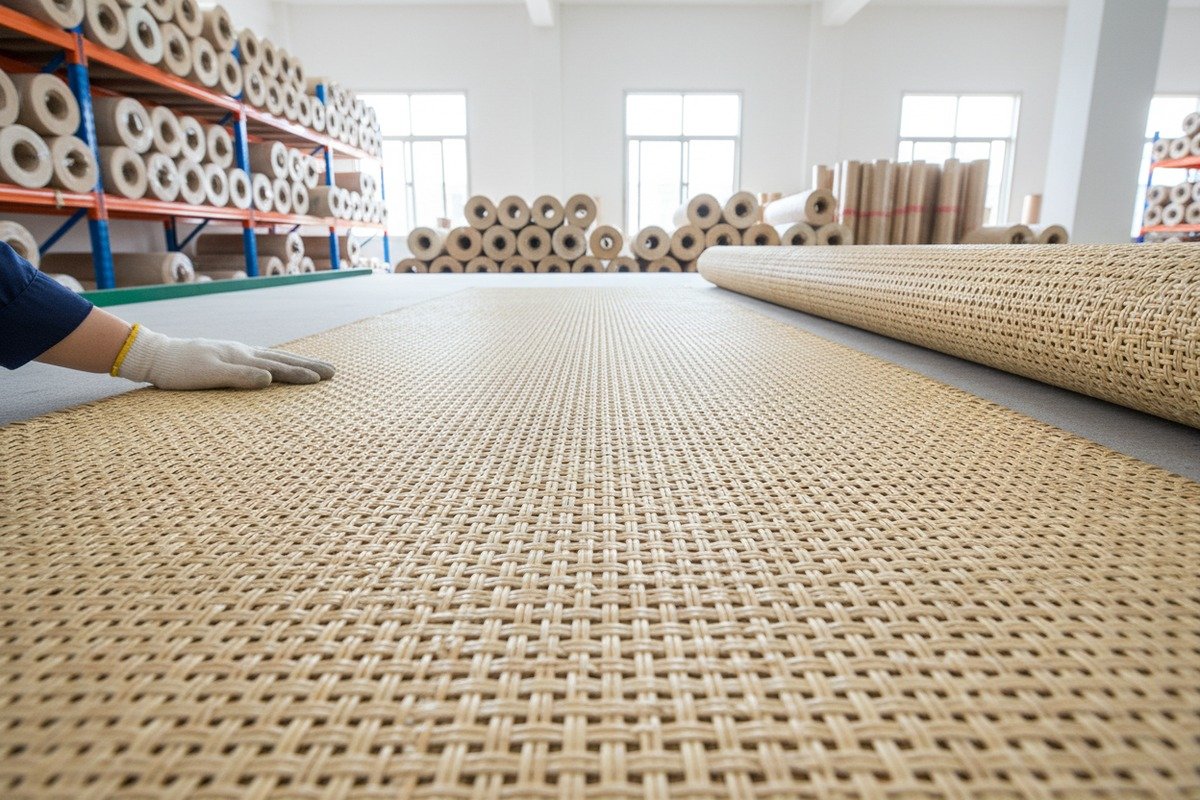
Rattan cane goes through several processing steps before it becomes webbing. The raw rattan 9 is harvested, cleaned, split into strips, and woven. Each step affects the final product's durability.
Poor harvesting timing produces rattan with high moisture content that is prone to mold. Inadequate drying leads to shrinkage after installation. Over-processing with harsh chemicals strips the natural oils that keep rattan flexible.
At our Indonesia facility, we control the entire process from raw rattan to finished webbing. This vertical integration means we catch quality issues early. Not every supplier has this level of control. Ask your supplier about their processing chain. If they cannot explain it, that is a red flag.
Storage and Shipping Considerations
Even high-quality rattan degrades if stored or shipped improperly. The material should be kept in a cool, dry environment away from direct sunlight. Excessive heat dries out the natural oils. Humidity promotes mold growth.
When receiving shipments, check the packaging. The rolls or sheets should be wrapped in protective material — not just tossed in a box. Crushed edges and bent rolls indicate poor handling and may mean hidden damage inside.
Matching Durability to Application
Not every restoration project demands the same level of durability. A decorative headboard panel faces less stress than a dining chair seat. Choose your grade and mesh accordingly.
For high-traffic pieces like dining chairs and bar stools, always use Grade A with a tighter weave. For decorative pieces like screens, room dividers, or wall panels, Grade B can work fine and saves cost.
How can I find a reliable wholesale supplier for my factory's rattan furniture restoration needs?
Over the past decade, we have built supply partnerships with furniture factories in more than a dozen countries — from the Netherlands to Australia to Thailand. The questions factory procurement managers ask us are remarkably similar everywhere. They want consistent quality, competitive pricing, and packaging that survives international shipping.
To find a reliable wholesale rattan webbing supplier, verify their production capacity through factory visits or video tours, request Grade A samples before placing bulk orders, confirm they offer customized sizing and consistent mesh patterns, and check references from existing clients in your region. A true one-stop supplier should cover all rattan material categories under one roof.
What Makes a Supplier Reliable
Reliability in wholesale rattan supply comes down to three pillars: quality consistency, delivery dependability, and communication responsiveness. A supplier who sends perfect samples but ships inconsistent bulk orders is not reliable. A supplier who makes promises about lead times but misses deadlines is not reliable either.
Start by requesting samples. Order at least three pieces from different production batches. Compare them side by side. The color, strand thickness, and weave tightness should be virtually identical. If the samples vary significantly, the supplier has quality control problems.
Questions to Ask Before Placing a Bulk Order
Before committing to a supplier, get clear answers to these questions:
- Do you own or control your rattan processing facility?
- Can you provide certificates of origin 10 for your raw materials?
- What is your minimum order quantity (MOQ)?
- Can you produce custom mesh sizes and panel dimensions?
- How do you handle quality claims and returns?
- What packaging methods do you use for international shipping?
A supplier who hesitates or gives vague answers to these questions may not be the right fit for a professional factory operation.
Evaluating Pricing and Value
The cheapest supplier is rarely the best supplier. Low prices often hide poor material grades, inconsistent production, or packaging that fails during transit. Damaged goods cost more than the savings on unit price.
Look at total landed cost instead. This includes unit price, shipping, packaging quality, defect rate, and lead time reliability. A slightly higher unit price from a supplier with zero defects and on-time delivery usually costs less overall.
The Advantage of a One-Stop Supplier
Running a furniture factory means managing dozens of material inputs. If you can source all your rattan needs — cane webbing, rattan poles, rattan peel, rattan core, and finished woven products — from a single supplier, you simplify your procurement chain dramatically.
We designed our operation around this principle. Our three factories and over 30 partner factories in Foshan cover every rattan category. This means one point of contact, one shipping arrangement, and one quality standard across all materials.
Building a Long-Term Partnership
The best supplier relationships grow over time. Start with a smaller trial order. Evaluate the results. Provide feedback. A good supplier will adjust production parameters based on your input.
Once trust is established, negotiate annual contracts with volume commitments. This gives you price stability and priority production slots during peak seasons. It also gives your supplier confidence to invest in quality improvements that benefit your specific needs.
Conclusion
Natural rattan cane webbing remains essential for restoring chairs, cabinets, tables, and decorative furniture. Choose the right grade, match your mesh pattern, and partner with a reliable supplier for lasting results.
Footnotes
1. Provides a foundational understanding of the material and its uses. ↩︎
2. Offers historical context and characteristics of mid-century modern design. ↩︎
3. Explains different mesh sizes and patterns available for cane webbing. ↩︎
4. Details the specific craft and techniques for restoring chair seats with cane. ↩︎
5. Replaced with an academic source detailing rattan grading, including Grade A. ↩︎
6. Describes the function and types of reed spline in caning. ↩︎
7. Explores the use of rattan in mid-century modern cabinet door design. ↩︎
8. Explains a traditional and strong woodworking joint used in furniture construction. ↩︎
9. Details the harvesting and initial processing steps of raw rattan. ↩︎
10. Explains a crucial document in international trade and sourcing. ↩︎


 English
  Español de México
  العربية
  Deutsch
  Français
  Русский