
Every week, our customer service team fields calls from first-time buyers who ordered the wrong rattan grade and ended up with cracked panels, wasted material, and a lot of frustration tung oil 1. The problem is real. Choosing the wrong grade turns a simple weekend project into a costly headache.
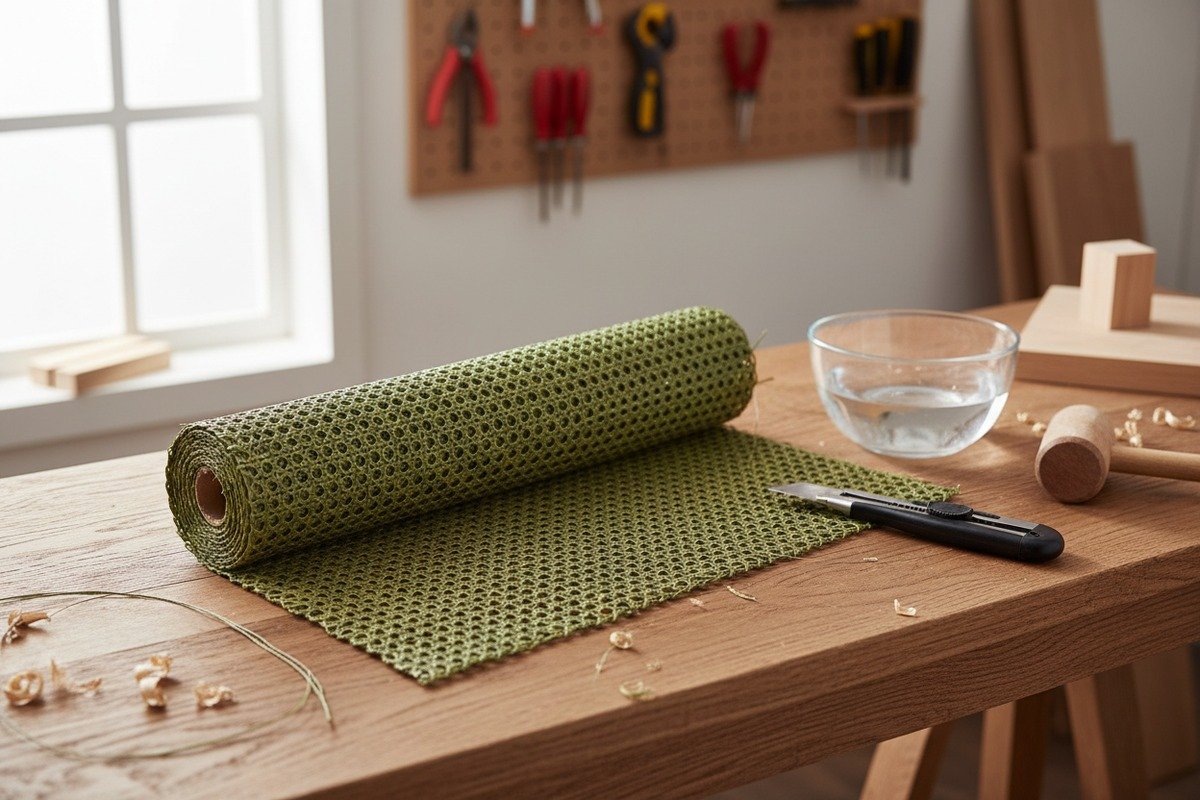
For beginners, a medium-grade natural greenish Indonesian rattan cane webbing in a 3.5mm common weave is the best choice. It offers excellent flexibility, hides minor installation errors with its organic color variation, and requires only basic soaking and simple tools to install properly.
In this guide, we break down every grade, weave size, and material type so you can pick the right rattan webbing for your very first project. We also share insider tips from years of processing and exporting rattan to over a dozen countries. Let us walk you through it step by step.
How do I distinguish between Grade A and Grade B rattan webbing for my first furniture project?
When we sort rattan webbing at our Indonesian processing facility, the difference between Grade A and Grade B is something you can see and feel within seconds. Grade A rattan cane webbing 2 Many beginners skip this step and regret it later.
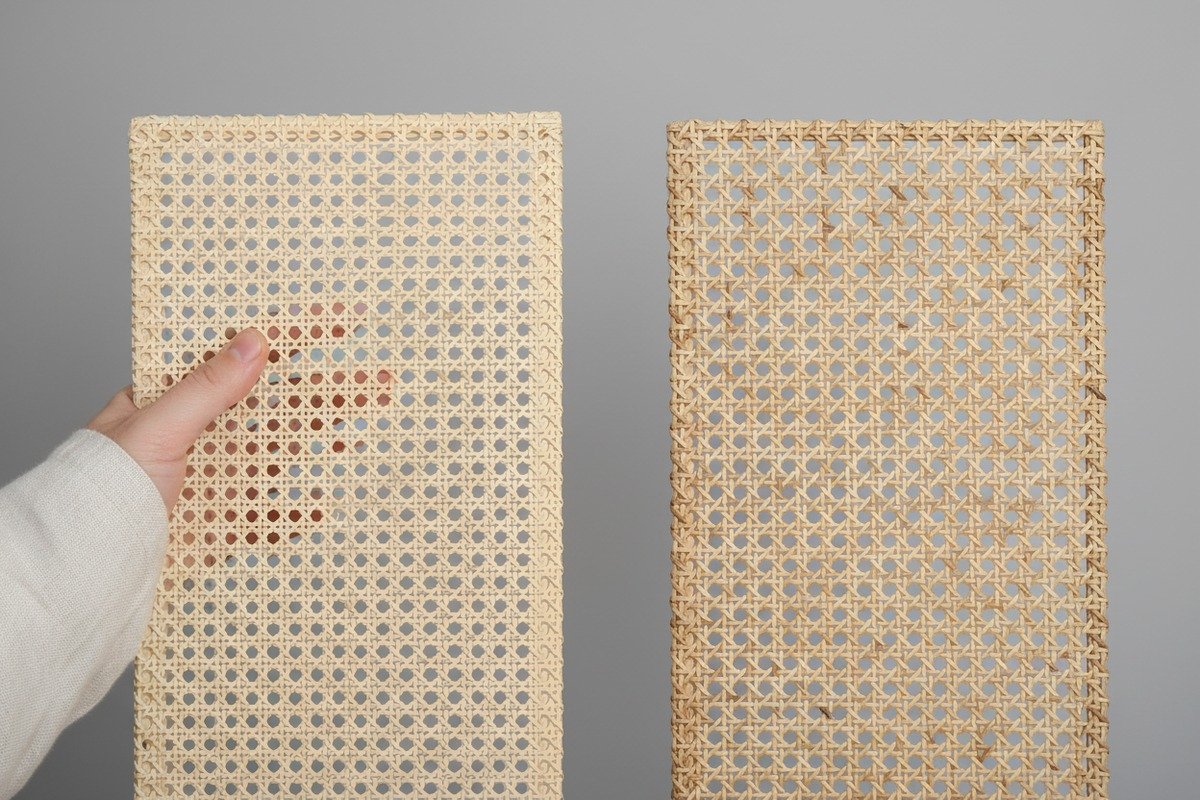
Grade A rattan cane webbing features uniform strand thickness, consistent color, minimal node marks, and tight weave patterns. Grade B has more color variation, visible knots, occasional uneven strands, and slightly looser weaving. Both grades are functional, but Grade A delivers a cleaner finish.
Visual Differences You Can Spot Immediately
The easiest way to tell grades apart is by looking at the surface. Grade A rattan has a smooth, even bark surface. The strips are peeled from the outer layer of the rattan palm vine 3, and in Grade A, those strips come from the straightest sections of the cane. You will notice very few dark spots or node bumps.
Grade B rattan, on the other hand, shows more natural character. Nodes are more prominent. Some strips may be slightly thicker or thinner than others. The color can shift from pale straw to deeper tan within a single sheet. This is not a defect. It is simply the natural variation of tropical rattan vines.
Texture and Flexibility
Run your fingers across both grades. Grade A feels consistently smooth. Grade B may have a slightly rougher patch here and there. For beginners, this matters during installation. Smoother strips slide into place more easily when you press the webbing into a groove with a spline 4.
In our experience exporting to furniture factories in the Netherlands and Australia, Grade A is preferred for visible panels like chair backs and cabinet doors. Grade B works great for hidden panels, practice pieces, or rustic-style projects where imperfection adds charm.
Quick Reference Table
| Feature | Grade A | Grade B |
|---|---|---|
| Strand uniformity | High — even thickness throughout | Moderate — some variation in width |
| Color consistency | Uniform pale straw or greenish tone | Mixed tones, visible node marks |
| Surface smoothness | Very smooth, minimal rough spots | Slightly rougher in areas |
| Best use for beginners | Visible furniture panels, clean designs | Practice projects, rustic aesthetics |
| Price point | Higher | More affordable |
| Availability | Standard from quality suppliers | Widely available, bulk-friendly |
Which Should a Beginner Pick?
If this is your first project and you want a polished result, go with Grade A. If you want to practice cutting, soaking, and installing without worrying about wasting premium material, Grade B is a smart training ground. Many of our wholesale clients in Thailand and India actually order both. They use Grade B for prototyping and Grade A for final production runs.
One more thing to remember: the "grade" of rattan webbing indicates the consistency of the strands and the presence of imperfections. A higher grade does not mean it is harder to work with. It simply means the finished look will be more uniform.
Why is Grade A natural rattan cane webbing the safest choice if I want to avoid material breakage?
Our production team in Foshan has tested thousands of rattan sheets under tension, and the data always points in the same direction. Grade matters when breakage is your main concern.
Grade A natural rattan cane webbing resists breakage better because its strands are uniformly thick, free of weak nodes, and harvested from mature cane sections. These consistent fibers distribute tension evenly during soaking, stretching, and installation, reducing the chance of cracks or snaps significantly.
Why Breakage Happens in the First Place
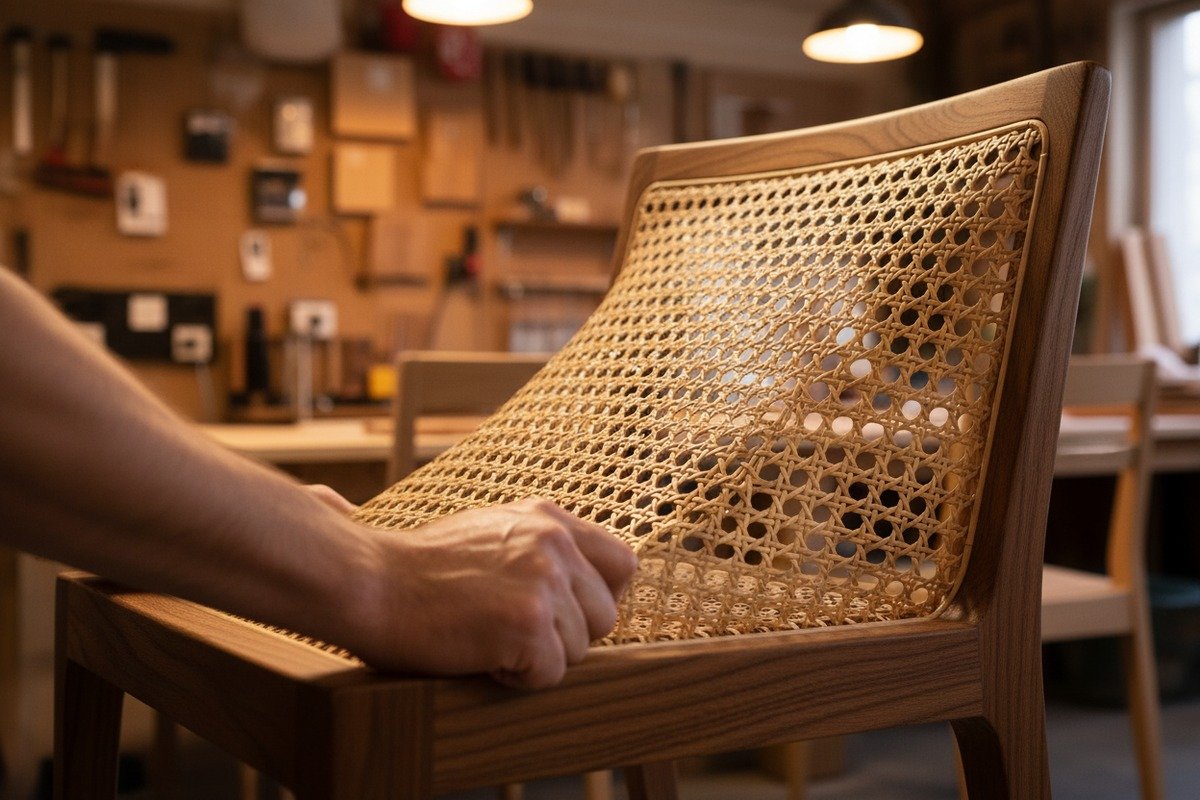
Rattan cane webbing 5 breaks for three main reasons. First, the material was not soaked long enough. Dry rattan is brittle. Second, the strands have weak points at nodes or where the bark was unevenly peeled. Third, the installer pulled too hard during fitting. Grade A minimizes the second risk because it is selected specifically for strand consistency.
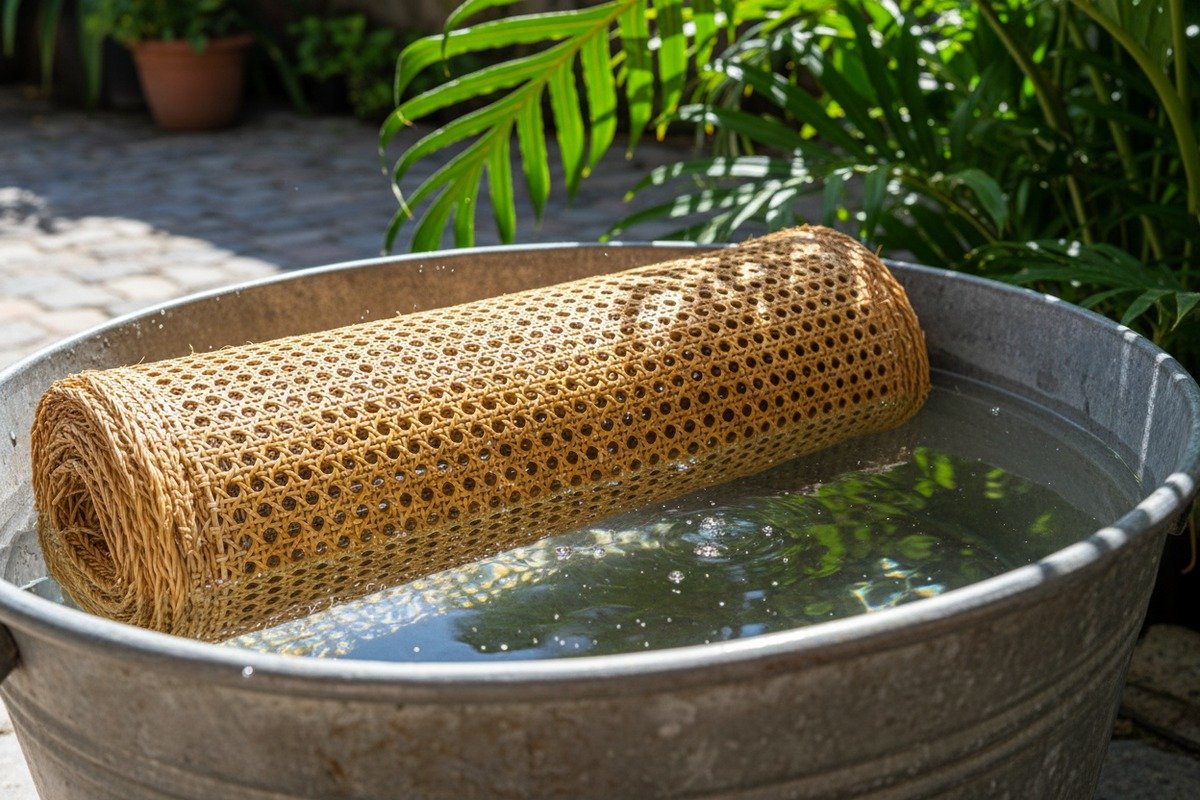
When you soak Grade A webbing in water for about three hours, it becomes uniformly pliable. Every strip absorbs moisture at a similar rate because the thickness is even. With Grade B, thinner spots absorb faster, and thicker nodes stay stiffer. This uneven flexibility is where beginners run into trouble.
The Soaking Factor
Proper soaking is non-negotiable. Here is what we recommend based on our experience supplying rattan to DIY markets in the US and Europe:
| Material Type | Recommended Soak Time | Water Temperature | Pliability After Soaking |
|---|---|---|---|
| Grade A cane webbing | 2–3 hours | Room temperature | Uniformly flexible |
| Grade B cane webbing | 3–4 hours | Slightly warm | Mostly flexible, some stiff nodes |
| Strand cane (for hand-weaving) | 10–15 minutes | Warm | Very flexible |
| Synthetic rattan webbing | No soaking needed | N/A | Always flexible |
Notice that Grade A needs less soaking time than Grade B. This is because Grade A strips have a more consistent fiber density 6. They absorb water evenly and reach the ideal working pliability faster.
Installation Without Fear
Once soaked, Grade A webbing installs smoothly. You press it into the frame groove, tap in the spline with a mallet, and trim the excess with a sharp utility knife. Because the strands are even, the webbing sits flat without bunching or buckling.
For beginners, we always suggest starting with a small project. A stool seat or a cabinet door panel is ideal. You build confidence with a forgiving piece before moving to a full chair back or headboard. Using Grade A for these first attempts means fewer surprises.
A sharp utility knife or rotary cutter 7 on a self-healing mat gives you cleaner, straighter cuts. This minimizes fraying at the edges, which is a common beginner frustration.
Natural Shrink-Tighten Effect
Here is a detail many beginners miss. Natural rattan cane webbing shrinks and tightens as it dries after installation. This is actually a benefit. The webbing pulls taut across the frame, giving you a drum-tight finish. But if the material has weak spots from inconsistent grading, those spots can crack as the tension increases during drying. Grade A handles this natural tension beautifully because there are no weak links in the chain.
Can I achieve a professional look on my prototypes using more budget-friendly rattan grades?
We ship containers of mixed-grade rattan to furniture factories across Southeast Asia and the Middle East every month. Many of those factories prototype with lower grades before switching to premium for final production. It works.
Yes, you can achieve a professional-looking prototype with budget-friendly Grade B or mid-range rattan webbing. The key is proper soaking, careful cutting, and tight spline installation. Finishing touches like sanding frame edges and applying a light oil coat can elevate even mid-grade rattan to a polished appearance.
Why Budget Grades Work for Prototyping
Prototypes are about testing fit, proportion, and design. They are not showroom pieces. A Grade B sheet costs significantly less than Grade A, sometimes 30–40% less depending on the supplier and order volume. For a beginner running through multiple test panels, that price difference adds up fast.
The natural color variation in Grade B can actually work in your favor. If you are building a rustic or bohemian-style piece, the mixed tones look intentional. Pair it with warm-toned wood like walnut or teak, and the organic imperfections become a design feature.
Tips for Making Budget Rattan Look Premium
Here are practical steps we share with our first-time wholesale clients:
- Soak longer. Give Grade B an extra hour in water. This softens the stiffer nodes and makes the whole sheet more cooperative.
- Cut with precision. Use a rotary cutter on a self-healing mat instead of scissors. Clean edges make a huge visual difference.
- Sand your frame. Rough frame grooves cause uneven webbing. A quick pass with 220-grit sandpaper creates a smooth channel.
- Apply tung oil or Danish oil. A thin coat after the webbing dries enhances the natural color and gives a cohesive, finished look.
- Trim excess carefully. A flush-cut knife along the spline line gives a professional, clean edge.
Natural vs. Bleached vs. Synthetic for Prototyping
Beginners often ask us whether they should prototype with natural, bleached, or synthetic rattan. Here is a straightforward comparison:
| Factor | Natural (Greenish/Straw) | Bleached (White/Yellowish) | Synthetic |
|---|---|---|---|
| Cost per meter | Low to moderate | Moderate to high | Moderate |
| Soaking required | Yes, 2–3 hours | Yes, 2–3 hours | No |
| Color consistency | Natural variation | More uniform, but may re-yellow | Very uniform |
| Indoor/outdoor use | Indoor only | Indoor only | Indoor and outdoor |
| Authentic look and feel | Excellent organic warmth | Clean, modern white | Lacks organic appeal |
| Best for prototyping | Yes — hides errors well | Decent — shows smudges easily | Easy handling, but poor feel |
For budget-conscious beginners, natural greenish rattan in a medium 3.5mm weave is the sweet spot. It hides minor installation errors, works with most wood tones, and costs less than bleached or synthetic options.
The Indonesian Advantage
We operate our own rattan processing facility in Indonesia, so we see firsthand how origin affects quality. Indonesian rattan, harvested from managed jungle areas, tends to be smoother and lighter in color than Vietnamese rattan. This smoother texture makes it easier for beginners to handle during cutting and installation. Vietnamese rattan is darker and slightly rougher, which some professional weavers prefer for its durability, but it can be more difficult for a novice to work with.
For your first bulk prototype order, Indonesian-origin rattan in a medium grade gives you the best balance of price, workability, and appearance.
What quality indicators should I look for when sourcing my first bulk order of rattan materials?
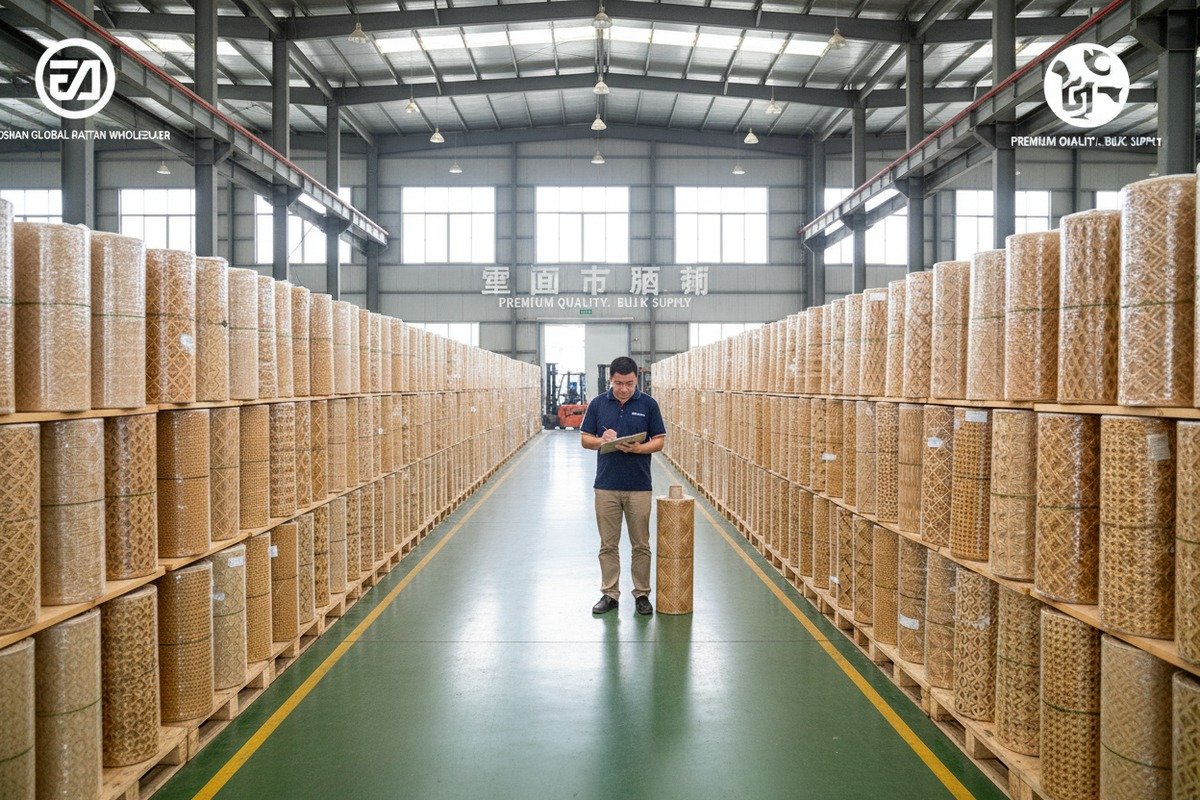
When we onboard new wholesale clients, especially purchasing managers ordering rattan cane webbing for the first time, we always walk them through a quality checklist. Skipping this step leads to disputes, returns, and wasted production time.
When sourcing your first bulk order, check for uniform strand thickness, consistent weave tension, minimal broken strands per square meter, accurate roll dimensions, proper moisture content, and clean packaging. Request samples before committing to large quantities, and verify the supplier's grading standards match your expectations.
The Five-Point Quality Check
Over the years, we have refined our quality control process down to five essential checks. These apply whether you are ordering 50 meters or 5,000 meters.
1. Strand Uniformity
Unroll a section and look at the individual strips. Are they roughly the same width? In Grade A, the variation should be less than 0.3mm. In Grade B, up to 0.5mm is acceptable. Anything beyond that signals poor sorting at the source.
2. Weave Tension
Press your palm flat against the webbing. It should feel consistently taut across the sheet. Loose spots indicate sloppy weaving or damaged warp strands. Loose weave leads to sagging after installation.
3. Broken Strand Count
Count how many broken or spliced strands you can find in a one-meter section. Grade A should have zero to one. Grade B might have two to three. More than five per meter is a red flag.
4. Moisture Content
Rattan should be shipped at 12–15% moisture content 8. Too dry, and it becomes brittle during transit. Too wet, and mold can develop inside the roll. A simple moisture meter pressed against the surface gives you a quick reading. If you do not have a meter, the rattan should feel cool and slightly pliable, not damp or crackly.
5. Packaging Integrity
This is the one most beginners overlook. Rattan rolls should be wrapped tightly in protective plastic or kraft paper. Inner cardboard tubes prevent crushing. If rolls arrive dented, kinked, or with broken wrapping, the webbing inside is likely damaged.
Matching Weave Size to Your Frame
Choosing the right weave size is just as important as choosing the right grade. Here is a simple guide:
| Frame Hole/Groove Size | Recommended Weave | Strand Diameter | Best For |
|---|---|---|---|
| ½ inch (small) | Fine open weave | 2.5mm | Delicate panels, small frames |
| ¾ inch (medium) | Medium open weave | 3.0mm | Side panels, decorative accents |
| ⅞ inch (common) | Common open weave | 3.5mm | Chair seats, headboards, cabinets |
| 1 inch (large) | Wide open weave | 4.0mm+ | Large panels, room dividers |
For beginners, the ⅞-inch common weave with 3.5mm strands is the most forgiving. It balances tension and durability. It fits the most standard furniture frames. And it is the easiest to find from reputable suppliers.
Sourcing Tips for First-Time Buyers
Start by requesting two or three samples from different suppliers. Compare them side by side under natural light. Look at color, texture, and flexibility. Bend a strip gently. It should flex without cracking.
Ask your supplier about the rattan species. Indonesian Manau rattan 9 has the largest diameter, up to 4 inches, and is considered premium. Rotin Tohiti, at 1–2 inches, is flexible and great for medium-grade webbing. For a beginner's bulk order, Tohiti-based or similar medium-species webbing gives you the best price-to-quality ratio.
Also, ask about sustainability. Eco-conscious sourcing from managed Indonesian forests is now a market expectation, not a bonus. Our rattan is harvested from renewable jungle growth, and bleached grades use chemical-free steaming 10 rather than harsh whitening agents. This matters to end consumers and retailers alike.
Finally, confirm minimum order quantities, lead times, and shipping terms before you commit. A reliable supplier will provide clear answers and consistent communication. If they cannot answer basic questions about grading or origin, that is your cue to look elsewhere.
Conclusion
Choosing the right rattan grade does not have to be complicated. Start with natural greenish Indonesian cane webbing in a 3.5mm common weave, and you will set yourself up for a successful first project.
Footnotes
1. Provides information on various wood finishes, including natural oils like tung oil. ↩︎
2. Replaced broken FAO link with a relevant article on rattan grading. ↩︎
3. Replaced broken Kew Gardens link with authoritative Wikipedia page on rattan. ↩︎
4. Explains the process of installing cane webbing using a spline in furniture restoration. ↩︎
5. Replaced broken link with authoritative Wikipedia page on caning, which defines rattan cane webbing. ↩︎
6. Replaced broken link with a scientific explanation of fiber density. ↩︎
7. Describes the tool and its common applications for precise cutting in crafts and sewing. ↩︎
8. Explains the significance of moisture levels for wood and natural materials. ↩︎
9. Provides botanical details and characteristics of the Manau rattan species. ↩︎
10. Discusses sustainable practices in forest management and material sourcing, relevant to eco-friendly processing. ↩︎

 English
  Español de México
  العربية
  Deutsch
  Français
  Русский