
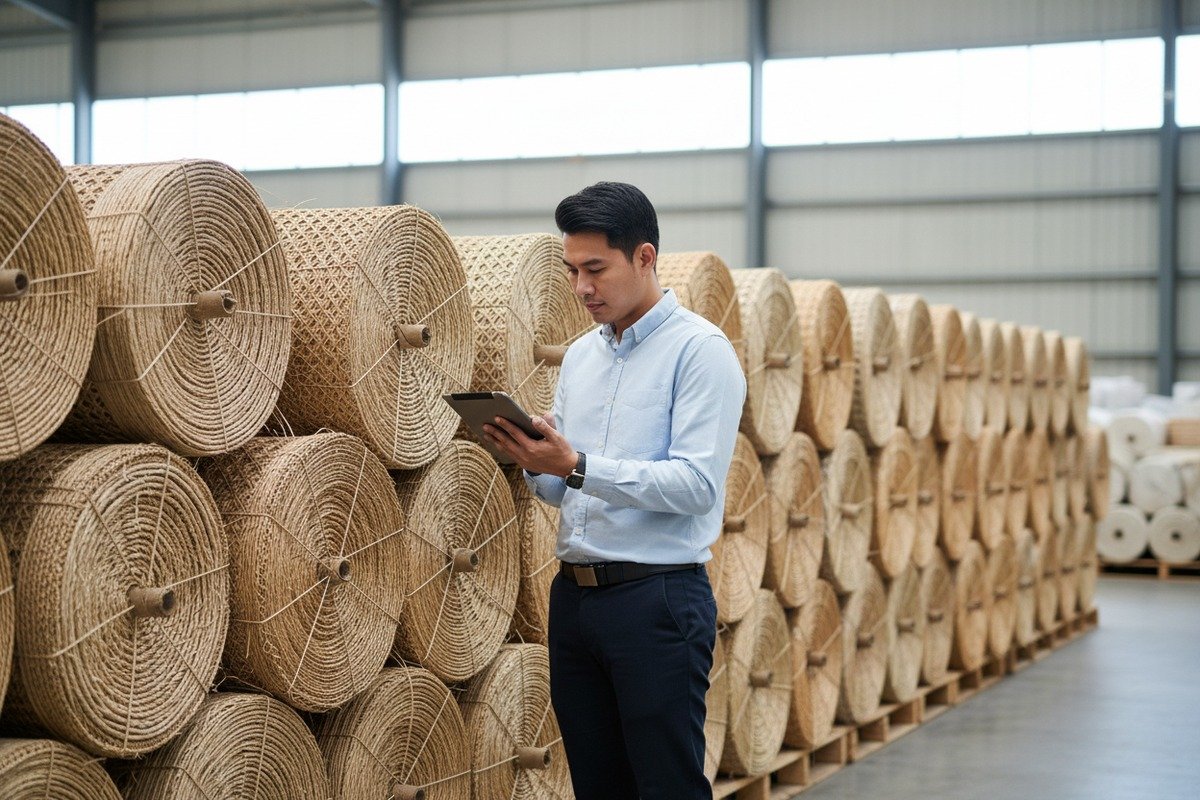
Every year, we see purchasing managers leave thousands of dollars on the table simply because they don’t know where or how to buy rattan cane webbing 1 in bulk. The markup from middlemen, wasted material from wrong roll sizes, and shipping fees that balloon out of control — these problems eat into margins fast.
To save money when bulk purchasing natural rattan cane webbing, source directly from manufacturers in Indonesia or Vietnam, choose the right material grade for your project, consolidate shipments to reduce freight costs, and request custom roll dimensions to minimize cutting waste. These steps can cut your total spend by 20–40%.
We have spent over a decade helping furniture factories, material wholesalers, and building suppliers across more than 15 countries optimize their rattan procurement 2. Below, we break down four proven strategies that our clients use every day to get more value from every order.
How can I find a direct rattan manufacturer to reduce my wholesale costs?
Most buyers start their search on Google or Alibaba 3. But finding a real manufacturer — not a trading company 4 wearing a factory mask — takes a bit more digging. We operate our own rattan processing facility 5 in Indonesia, and we know firsthand how many layers sit between the raw cane and the buyer's warehouse.
To find a direct rattan manufacturer, search platforms like Alibaba for verified suppliers with factory certifications, request video tours of production lines, attend trade shows like CIFF or Canton Fair, and prioritize suppliers based in rattan-producing regions such as Indonesia, Vietnam, or China's Foshan area.
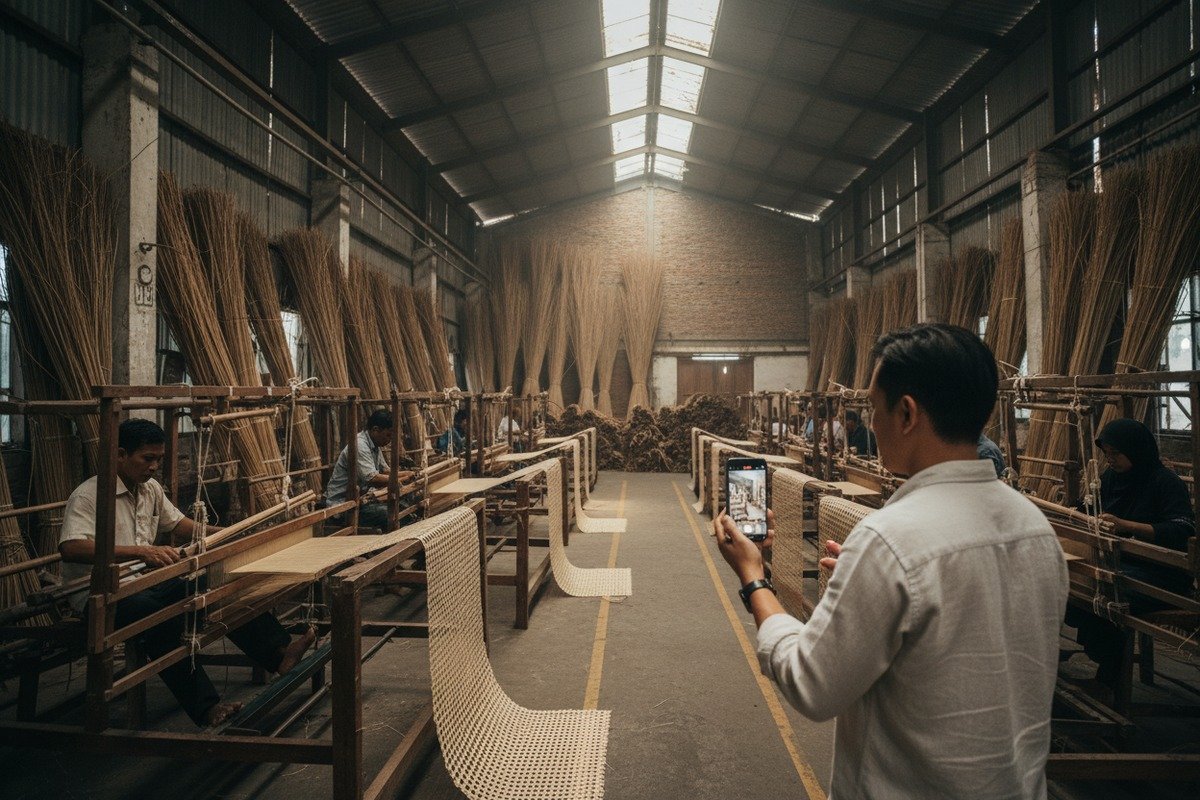
Why Direct Sourcing Matters
When you buy from a trading company, you typically pay a 15–30% markup. That middleman adds no value to the product. They simply place the order with the same factory you could contact yourself. Direct sourcing removes that cost layer entirely.
In our experience exporting to the US, Australia, and Europe, clients who switch from traders to direct factory partnerships save an average of 20% on their first order. Over a year of repeat orders, those savings compound.
How to Spot a Real Manufacturer
Not every "factory" on Alibaba actually owns production equipment. Here are signs you're dealing with a real manufacturer:
- They can show you raw material inventory (unprocessed rattan poles).
- They offer factory video tours — not just showroom photos.
- They have consistent lead times tied to production capacity.
- They hold certifications like ISO, BSCI, or FSC for sustainable sourcing 6.
- They can customize weave patterns, widths, and lengths.
A trading company, on the other hand, often lists hundreds of unrelated product categories. If a supplier sells rattan webbing, LED lights, and phone cases, that's a red flag.
Where to Search for Suppliers
| Platform | Best For | Pros | Cons |
|---|---|---|---|
| Alibaba | B2B bulk orders | Verified suppliers, trade assurance, MOQ filters | Many traders disguised as factories |
| Canton Fair 7 | High-value partnerships | Meet suppliers face-to-face, inspect samples | Travel cost, held only twice a year |
| Google Search | Niche factory websites | Find specialists like rattanwholesaler.com | Requires more vetting effort |
| Industry Referrals | Trusted connections | Pre-vetted quality and reliability | Limited to your existing network |
| Vietnam/Indonesia Trade Directories | Origin sourcing | Access to raw material processors | Language barriers, longer lead times |
Build a Long-Term Relationship
One order won't get you the best price. Factories reward loyalty. After two or three orders, ask for a partnership pricing tier. Many manufacturers — ourselves included — offer 5–10% loyalty discounts for clients who commit to quarterly or annual purchase volumes. This approach works far better than haggling on every single invoice.
Also, consider requesting a dedicated account manager. When your supplier knows your preferences, repeat orders become faster and errors drop. That alone saves money on returns and replacements.
Which grade of natural rattan webbing offers the best value for my specific furniture projects?
Choosing the wrong grade is one of the most expensive mistakes we see. A client once ordered premium Grade A Indonesian rattan 8 for a budget café furniture line — beautiful material, but the project didn't need it. That overspend could have funded an entire extra shipment of the right grade.
The best-value rattan webbing grade depends on your project. Grade A (premium) suits high-end furniture and heirloom restorations. Grade B offers strong quality at 20–30% less cost for mid-range production. Budget or B-grade rolls with minor cosmetic flaws work perfectly for painted, covered, or concealed applications.
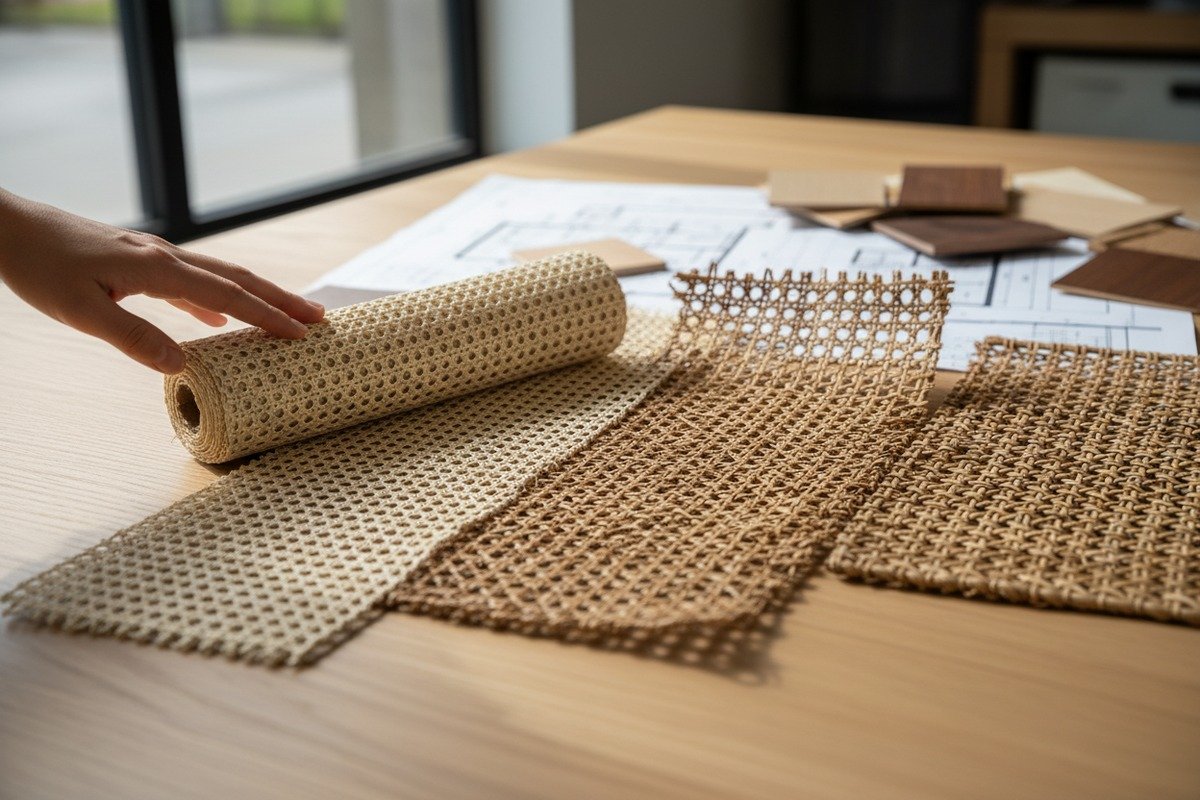
Understanding Rattan Grades
Not all rattan cane webbing is equal. The grade reflects the uniformity of the weave, the thickness and color consistency of the cane strands, and the presence of any natural blemishes. Here's how grades typically break down:
| Grade | Characteristics | Best Use Cases | Price Range (per roll, 15m) |
|---|---|---|---|
| Grade A (Premium) | Uniform color, tight consistent weave, no visible knots or breaks | High-end furniture, retail display, heirloom restoration | $90–$122 |
| Grade B (Standard) | Slight color variation, minor weave irregularities, occasional small knots | Mid-range furniture production, hospitality projects | $60–$85 |
| B-Grade / Off-Spec | Noticeable color patches, loose strands, cosmetic flaws | Painted furniture, backing panels, concealed inserts, prototyping | $35–$55 |
Match the Grade to the Application
When our production team processes rattan from our Indonesian facility, every batch gets sorted by grade. We always tell clients: don't pay for perfection you won't see.
If you're building chair cane panels that will be stained dark walnut, minor color variations in Grade B become invisible after finishing. If you're making decorative room dividers where every strand is on display, Grade A is worth the investment.
For prototyping and samples, B-grade rolls save 40–50% compared to premium. Many furniture factories we supply in the Netherlands and Spain use B-grade exclusively for their production samples before committing Grade A material to final pieces.
Natural vs. Synthetic: A Cost Consideration
Some projects don't require natural rattan at all. For outdoor furniture or high-humidity environments, synthetic PE rattan webbing 9 lasts longer and costs less over time. Natural rattan has a 5+ year indoor lifespan, but it can degrade quickly when exposed to rain and direct sun.
Here's a quick comparison to help you decide:
| Factor | Natural Rattan | Synthetic (PE) Rattan |
|---|---|---|
| Aesthetic | Warm, organic, authentic texture | Mimics natural look, less warmth |
| Indoor Lifespan | 5–10 years | 8–15 years |
| Outdoor Suitability | Poor — degrades with moisture/UV | Excellent — weather-resistant |
| Price (30m roll) | $75–$122 | $4.90–$21.90 |
| Eco-Friendliness | Renewable, biodegradable | Plastic-based, not biodegradable |
| Maintenance | Needs occasional conditioning | Wipe clean, minimal care |
The key takeaway: choose based on function, not habit. If your end customer needs outdoor durability, natural rattan is the wrong material regardless of price.
Don't Overlook Weave Pattern Economics
Different weave patterns use different amounts of raw cane per square meter. A tight basketweave consumes more material than an open hexagonal cane pattern. That material difference shows up in price.
For decorative panels where the pattern is the focal point, an open hexagonal or radio weave gives you a stunning look at a lower cost per roll. For structural applications — seat panels that bear weight — a denser weave is worth the extra spend because it adds strength and longevity.
How can I optimize my bulk order volume to save on international shipping and packaging fees?
Shipping costs have surprised more than a few of our clients. We once had a buyer in Turkey order 20 rolls of 24-inch rattan webbing. The product cost was competitive. But the shipment was too small for a full container and too large for express courier — it landed in the worst pricing zone for ocean freight. A small adjustment to order volume would have saved over $600.
To optimize bulk order volume for shipping savings, consolidate orders to fill a full container (FCL), combine multiple SKUs into one shipment, negotiate FOB or CIF terms with your supplier, and time your orders to avoid peak freight seasons. Hitting container volume thresholds can reduce per-unit shipping costs by 30–50%.
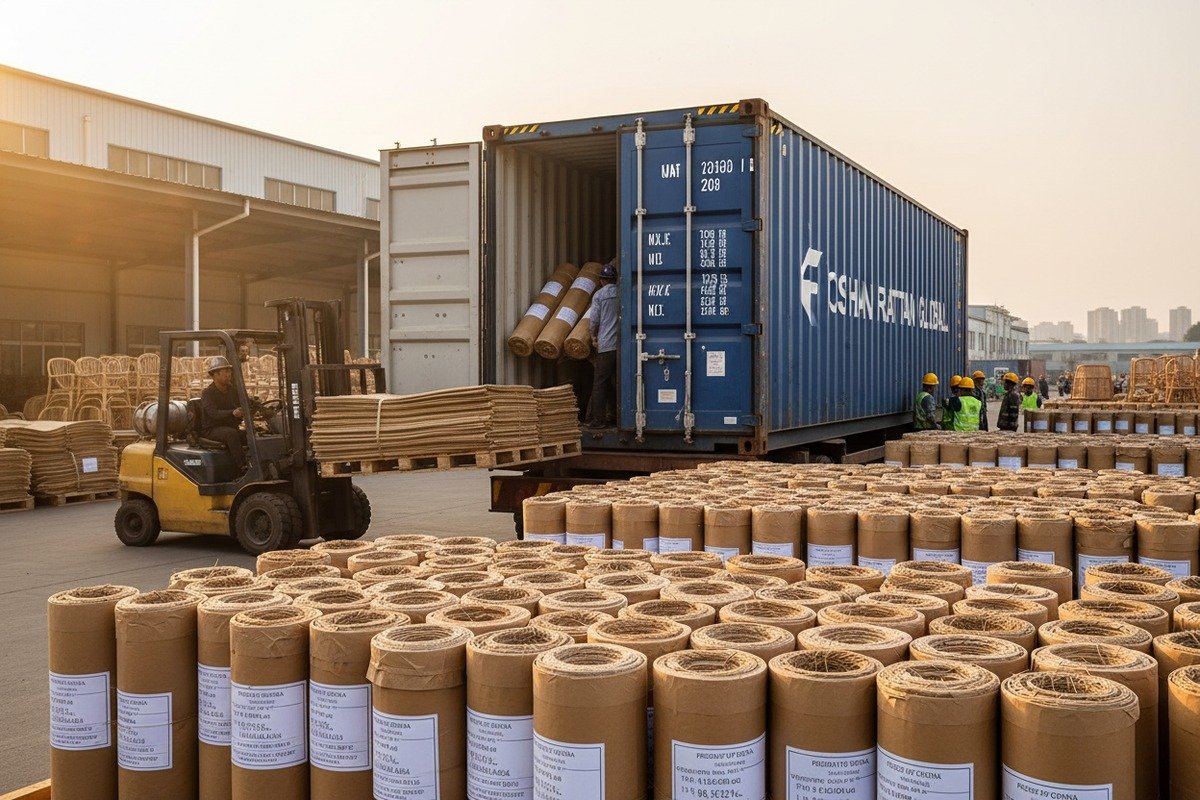
Understand Container Economics
International ocean freight 10 pricing works on a simple principle: you pay for space, not weight (for most rattan products). A 20-foot container (20GP) and a 40-foot container (40GP) have fixed costs regardless of whether they're half-full or packed to capacity.
When we ship from our Foshan warehouse, here's what typical container loads look like for rattan webbing:
| Container Type | Internal Volume | Rattan Webbing Capacity | Typical Freight Cost (to US West Coast) |
|---|---|---|---|
| 20GP | 33 cubic meters | ~400–500 rolls (15m, 24" width) | $1,800–$2,500 |
| 40GP | 67 cubic meters | ~800–1,000 rolls | $2,800–$3,800 |
| 40HQ | 76 cubic meters | ~900–1,100 rolls | $3,000–$4,200 |
| LCL (shared) | Variable | 1–100 rolls | $150–$800+ (charged per CBM) |
LCL (Less than Container Load) charges per cubic meter, and rates per unit are much higher. If your order is 60% of a 20GP, it often makes more financial sense to add extra inventory and fill the container. The marginal product cost is far less than the per-CBM LCL premium.
Combine SKUs Into One Shipment
Many of our clients order more than just cane webbing. They also need rattan core, binding cane, rattan poles, or woven panels. Combining these into a single shipment is one of the fastest ways to fill a container and drive down your effective shipping cost per product.
This is where working with a one-stop rattan wholesaler pays off. Instead of coordinating three shipments from three suppliers — each with its own freight bill, customs filing, and delivery schedule — you consolidate everything into one container from one origin.
Timing Your Orders
Freight rates fluctuate throughout the year. Rates typically spike from August through October as retailers stock up for holiday season. January through March (right after Chinese New Year) often sees lower rates because demand drops.
Plan your bulk purchases around these cycles. If you can place your largest order in Q1 or early Q2, you'll benefit from lower freight rates and faster factory turnaround — since most factories are less booked during that period.
Packaging That Protects and Saves Space
Poor packaging wastes container space. Rattan webbing rolls should be wrapped tightly in plastic film, then placed in reinforced cardboard boxes or bundled on pallets. Loose packaging creates air gaps that eat into your cubic meter allocation.
From our facility, we use compression-wrap techniques that reduce roll diameter by 10–15% without damaging the weave. This means more rolls per container and lower freight cost per unit. Always ask your supplier about their packing method — and request photos of packed goods before shipment.
Negotiate Incoterms Wisely
FOB (Free on Board) means you control the freight forwarder and can shop for the best rate. CIF (Cost, Insurance, Freight) means the supplier arranges shipping — convenient, but you lose price transparency. For large bulk orders, FOB usually gives you more control and better savings, especially if you have an established freight partner.
Can I request custom roll dimensions to minimize material waste and lower my total spend?
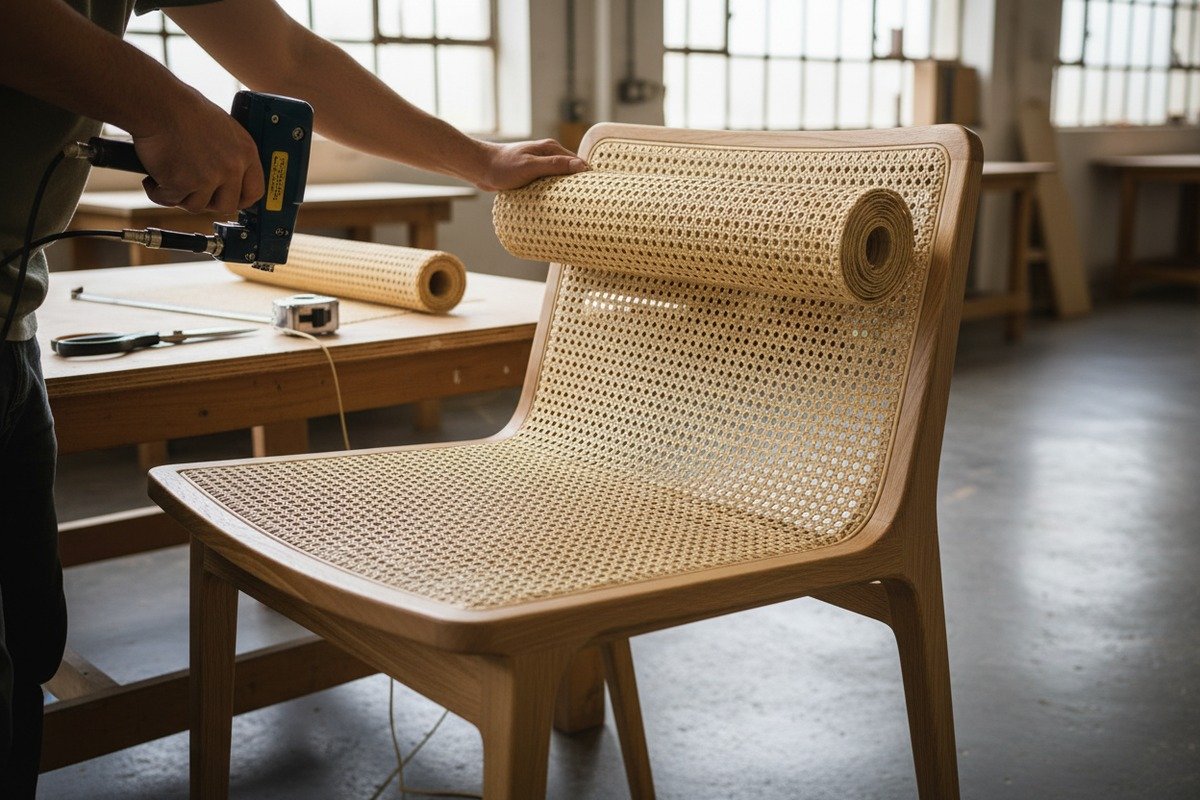
One of the most overlooked cost savings in our industry sits right inside the roll dimensions. We worked with a furniture factory in Australia that was ordering standard 24-inch-wide rolls and cutting them down to 20 inches for their chair panels. That meant 4 inches of waste on every single cut — roughly 17% of the material going straight to the scrap bin.
Yes, most established rattan manufacturers offer custom roll widths and lengths. By specifying dimensions that match your project needs — such as exact panel widths or seat dimensions — you can eliminate 10–20% material waste, reduce trimming labor, and lower your overall cost per finished piece.
Why Standard Rolls Create Waste
Standard rattan webbing rolls come in common widths: 18 inches, 24 inches, 36 inches, and sometimes 39.5 inches. Lengths are typically 15 meters or 30 meters. These dimensions work well for general-purpose buyers. But furniture production is not general-purpose.
If your chair seat panel needs a 21-inch width, a 24-inch roll wastes 3 inches per cut. Over 500 chairs, that's 125 feet of wasted webbing — roughly 2.5 extra rolls you paid for but threw away.
How Custom Dimensions Work
At our processing facility, we can adjust roll widths in increments as small as half an inch. Custom lengths are even easier — we simply cut the roll at your specified meter mark. Here's what to consider when requesting custom dimensions:
Matching Rolls to Your Cut List
Before placing an order, create a cut list for your production run. Map out every piece you need:
- Seat panels: width × depth
- Back panels: width × height
- Decorative inserts: exact dimensions
- Door panels or cabinet fronts: frame opening measurements
Then work backward. Choose a roll width that divides evenly into your cut dimensions with minimal offcut. For example, if you need 10-inch-wide strips, order 20-inch rolls — you get two strips per cut with zero waste.
Custom Order Considerations
| Factor | Standard Rolls | Custom Rolls |
|---|---|---|
| Lead Time | Immediate / 3–5 days | 7–15 days production |
| MOQ | Often 1 roll (15m) | Typically 10–30 rolls per spec |
| Width Options | Fixed: 18", 24", 36" | Flexible: 11.5" to 39.5" in 0.5" steps |
| Length Options | Fixed: 15m or 30m | Custom: 5m to 50m+ |
| Waste Reduction | Average 10–20% waste | Near-zero if planned correctly |
| Unit Price | Standard pricing | May be 3–5% higher per roll, but net savings from waste reduction |
The slight premium on custom rolls — usually 3–5% — is almost always offset by the material you don't throw away. For production runs of 200+ pieces, the math strongly favors custom dimensions.
Ordering by the Inch for Small Projects
Some suppliers, especially US-based retailers like HH Perkins, sell rattan webbing by the inch. This works for small-batch restoration or DIY projects. At 10 feet or more, you start unlocking volume discounts. At 120 inches (10 feet), some suppliers offer automatic price breaks.
But for factory-scale production, ordering by the inch is not cost-effective. The per-unit price is 3–5x higher than bulk rolls. The value of by-the-inch purchasing is precision for small jobs — not economy for large ones.
Communicate Clearly With Your Supplier
When you request custom dimensions, provide:
- Exact width in inches or centimeters (specify which unit).
- Exact length in meters or feet.
- Weave pattern name (hexagonal, radio, octagonal, basketweave).
- Grade requirement (A, B, or off-spec).
- Quantity per specification.
- Intended use — this helps the factory recommend the best weave density.
Clear specs prevent miscommunication, reduce samples rounds, and speed up production. In our experience, orders with detailed specs ship 30% faster than vague requests that require back-and-forth clarification.
Bundle Custom Specs With Standard Rolls
Here's a pro tip from years of managing client orders: if you need custom widths for one product line but standard widths work for another, bundle them into one purchase order. The combined volume helps you hit better pricing tiers, and the standard rolls fill container space efficiently alongside your custom cuts.
Conclusion
Saving money on bulk rattan cane webbing comes down to four actions: source directly from manufacturers, match your material grade to your project, fill your shipping containers, and order custom dimensions that cut waste.
Footnotes
1. Explains the material discussed in the article. ↩︎
2. Replaced with an article detailing qualities of a reliable Indonesian rattan furniture manufacturer, including sustainable sourcing and certifications, which is highly relevant to rattan procurement. ↩︎
3. Provides an official overview of the Alibaba Group and its B2B operations. ↩︎
4. Defines the business model and role of a trading company. ↩︎
5. Replaced with a comprehensive article outlining the complete process of rattan furniture manufacturing, from raw material to finished product, directly addressing the concept of a processing facility. ↩︎
6. Explains the importance of Forest Stewardship Council certification for sustainable sourcing. ↩︎
7. Official source for information about the renowned China Import and Export Fair. ↩︎
8. Replaced with an article specifically explaining rattan grading and material quality, including the characteristics of Grade A (Premium) rattan, which is highly relevant to the anchor text. ↩︎
9. Explains the composition and properties of synthetic polyethylene rattan. ↩︎
10. Provides information on global shipping methods and logistics. ↩︎

 English
  Español de México
  العربية
  Deutsch
  Français
  Русский