
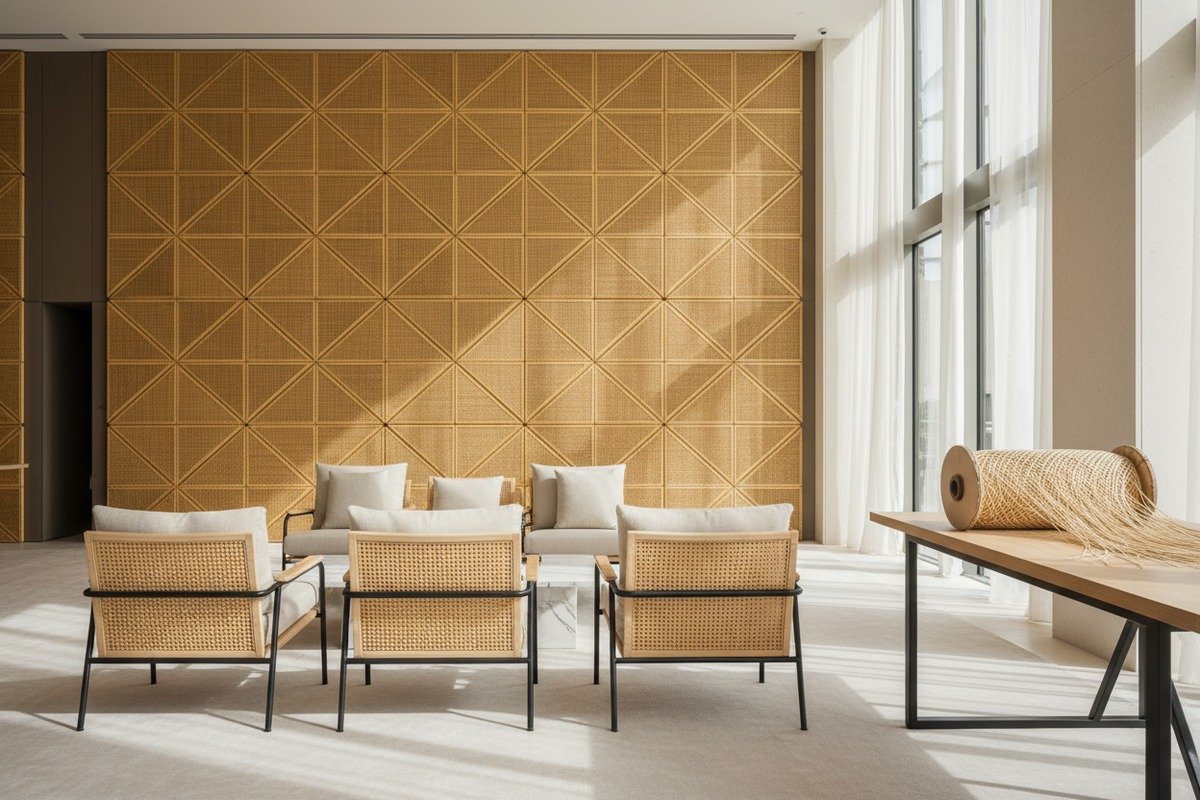
Designing commercial spaces that feel both warm and modern has never been more challenging — and the answer is surprisingly natural.
The latest rattan cane webbing trends in commercial space design include hexagonal open-mesh panels for wall accents, dense square basketweave for high-traffic seating, chevron synthetic matting for outdoor patios, and bleached cane webbing for minimalist hotel interiors. These trends are driven by a 6.7% CAGR market growth and 27% designer endorsement rates.
From boutique hotels to fast-casual restaurants, rattan webbing is reshaping how commercial spaces look and feel hexagonal open-mesh panels 1. Let’s break down exactly how this material is being used, what patterns are trending, and how you can source it at scale.
How can I incorporate the latest rattan cane webbing trends into my modern restaurant or hotel designs?
Every week, our sales team fields calls from hotel designers and restaurant owners asking the same question — how do we add texture without making the space feel cluttered or outdated chevron synthetic matting 2?
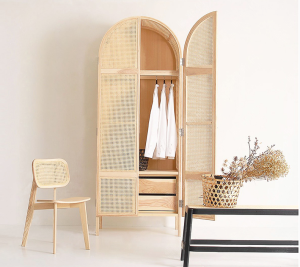
You can incorporate rattan cane webbing into modern restaurants and hotels by using it as cabinet panel inserts, chair seat surfaces, wall accent panels, room dividers, and headboard cladding. Pair it with black metal frames, glass tops, and matte finishes to keep the look contemporary and sophisticated.

Why Restaurants Are Embracing Rattan Webbing
Restaurants need materials that create atmosphere fast bleached cane webbing 3. Diners make snap judgments about a space in under five seconds. Rattan cane webbing offers instant warmth. It tells your guests the space is curated, thoughtful, and welcoming 6.7% CAGR market growth 4.
Here is what we see working best in restaurant projects right now. Bar front panels clad in natural hexagonal open-mesh weave create a focal point Grade A natural cane 5. Booth dividers with dense square basketweave 6 provide privacy without blocking sightlines. Ceiling-mounted woven panels add overhead texture in open dining rooms UV-resistant and anti-microbial transparent coatings 7.
The key is contrast. Rattan webbing on its own can lean too rustic. But when you pair it with industrial-style black steel frames or polished concrete floors, the effect is striking. One of our clients in Spain recently combined our natural radio weave panels with matte black cabinetry for a tapas bar. The result was modern, warm, and visually layered.
Hotel Applications That Work
Hotels present different challenges. Guests interact with surfaces daily. Headboards, wardrobe doors, and lobby screens must look great and withstand constant use.
Bleached rattan cane webbing is trending hard in boutique hotels. Its lighter, neutral tone fits Scandinavian and coastal design schemes perfectly. We have shipped bleached webbing rolls to projects in Australia and the Netherlands where designers use it as headboard inserts framed in light oak.
For lobby spaces, large-format woven wall panels create biophilic impact 8. They bring nature indoors, which studies show reduces stress. The woven structure also diffuses sound — a real benefit in echo-prone marble lobbies.
Practical Design Formulas
When we advise commercial designers, we share a simple ratio.
| Design Element | Percentage of Visual Weight | Example Materials |
|---|---|---|
| Neutral base | 60% | White walls, concrete, light wood |
| Rattan webbing texture | 30% | Wall panels, cabinet fronts, seating |
| Bold accent | 10% | Velvet cushions, greenery, brass hardware |
This 60-30-10 formula prevents webbing from overwhelming a space. It keeps things balanced and modern. This ratio works across restaurant, hotel, and co-working environments.
Another consideration is the weave pattern itself. Not all patterns suit all settings.
| Weave Pattern | Best Commercial Use | Visual Effect |
|---|---|---|
| Hexagonal open-mesh (radio weave) | Cabinet doors, light fixtures, dividers | Airy, delicate, mid-century |
| Dense square basketweave | Chair seats, bar fronts, wall cladding | Structured, substantial, durable |
| Chevron wave (synthetic) | Outdoor patios, semi-outdoor seating | Modern, geometric, weather-resistant |
| Diamond geometric motif | Feature walls, headboards, accent panels | Bold, artisanal, statement-making |
| Bleached natural cane | Minimalist interiors, spa areas, bedrooms | Calm, light, Scandinavian |
Use these pairings as starting points. Your specific space will dictate which pattern resonates best.
What specific rattan weave patterns are currently trending for my commercial furniture projects?
Our production floor in Foshan runs different weave patterns every week, and over the past year, clear favorites have emerged among commercial buyers ordering for furniture factories.
The most trending rattan weave patterns for commercial furniture in 2025–2026 are the classic hexagonal radio weave, dense closed basketweave, chevron wave synthetic weave, and intricate diamond geometric motifs. Bleached natural cane in open mesh is also surging for minimalist furniture lines targeting the European and Australian markets.
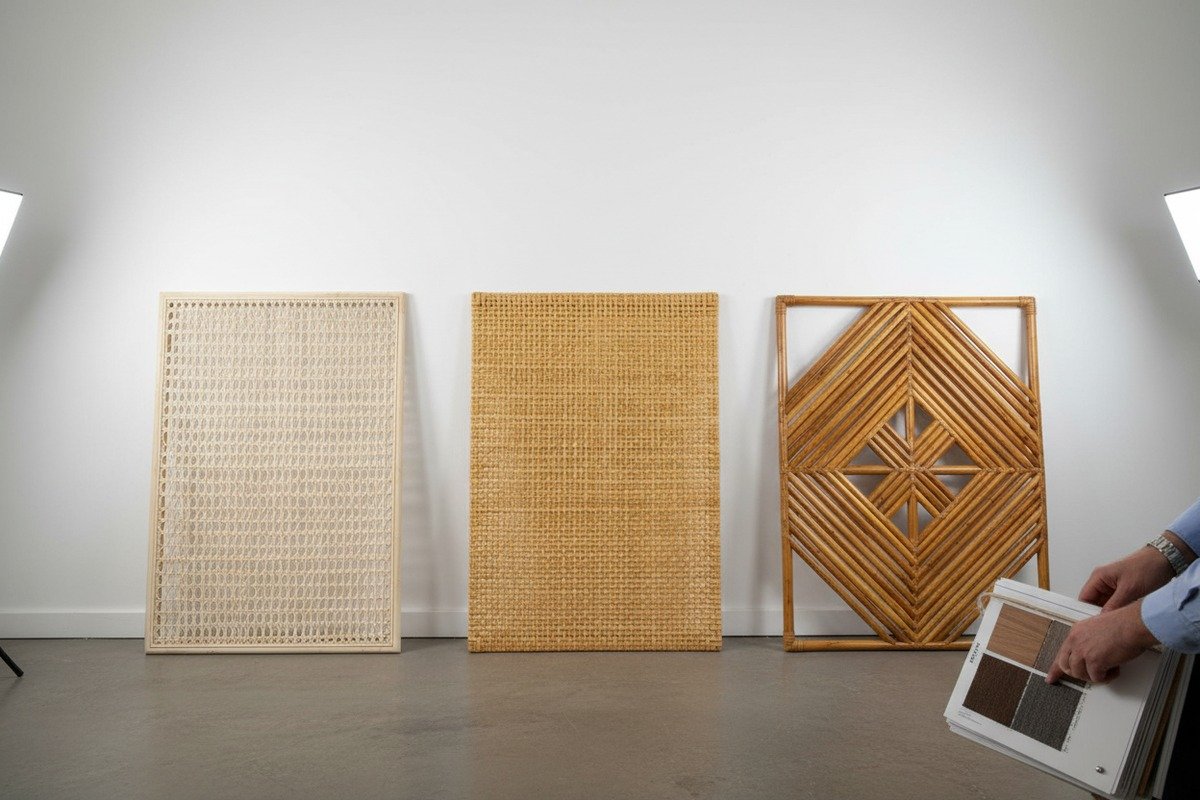
The Radio Weave Revival
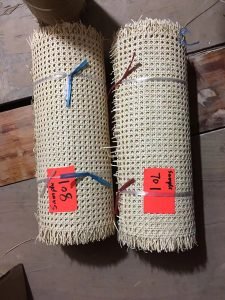
The hexagonal open-mesh pattern — often called "radio weave" because it was historically used on radio speaker covers — is the single most requested pattern we produce for commercial furniture. It is light, airy, and instantly recognizable. Designers love it for cabinet door panels, sideboard fronts, and the backs of dining chairs.
What makes it current is how it is being used. Instead of the traditional warm honey tones, many projects now request this weave in bleached or whitewashed finishes. This shifts the entire mood from vintage to contemporary.
Dense Basketweave for Heavy Use
For seating applications — bar stools, dining chairs, bench seats — the dense square basketweave dominates. It is tighter. It is stronger. It handles weight and friction better than open patterns.
From our testing and client feedback, dense basketweave lasts 40% longer than open weaves in high-traffic restaurant chairs. The tight construction resists sagging. When paired with a proper seat frame, it can handle years of commercial use.
Chevron and Geometric Patterns
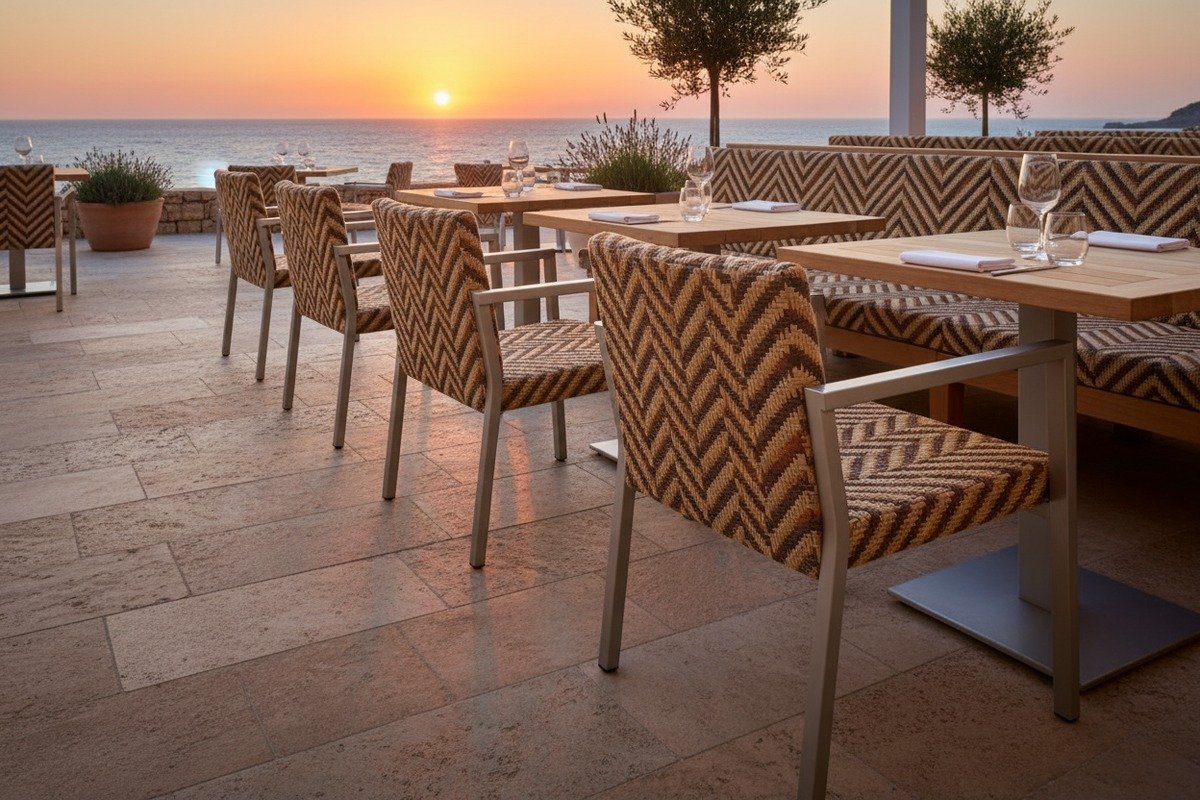
Synthetic rattan matting in chevron wave designs is a newer trend, driven by outdoor and semi-outdoor commercial spaces. Cafes with patios, resort pool decks, and rooftop bars all need weather-resistant woven textures. Synthetic rattan mimics the organic look while withstanding UV exposure, rain, and humidity.
The diamond geometric motif is bolder. It is showing up as feature panels on custom furniture for retail showrooms and boutique hotel lobbies. This pattern demands attention. It works best as a single statement piece rather than across an entire furniture collection.
Pattern Selection Guide
| Pattern | Durability Rating | Ideal Furniture Type | Market Demand Trend |
|---|---|---|---|
| Hexagonal radio weave | Medium | Cabinets, sideboards, chair backs | ↑ Strong and rising |
| Dense square basketweave | High | Chair seats, bar stools, benches | ↑ Steady and dominant |
| Chevron wave (synthetic) | Very High | Outdoor lounge chairs, patio sets | ↑ Fast growth |
| Diamond geometric | Medium | Feature headboards, accent tables | ↑ Niche but growing |
| Bleached open cane | Medium-Low | Minimalist shelving, light fixtures | ↑ Trending in EU/AU |
The 1stDibs 2025 designer survey 9 showed that 27% of professional designers ranked rattan and wicker as a top material trend. This is not a niche preference anymore. It is mainstream. And commercial furniture manufacturers who offer multiple weave options are winning more projects.
When we consult with our furniture factory clients, we often recommend stocking at least three core weave patterns — radio weave, dense basketweave, and one synthetic option. This covers most commercial project briefs.
How do I ensure the trendy rattan materials I source meet my high-traffic durability requirements?
One of the most common concerns we hear from procurement managers — especially those buying for restaurant chains or hotel groups — is this: "It looks great, but will it last?"
To ensure trendy rattan materials meet high-traffic durability requirements, specify Grade A natural cane with uniform strand thickness, request UV-resistant and anti-microbial transparent coatings, consider synthetic rattan for outdoor or wet areas, and demand pre-shipment stress testing and sample validation from your supplier before committing to bulk orders.
Natural vs. Synthetic: The Durability Debate
This is the most important decision in commercial rattan sourcing. Natural rattan cane webbing is beautiful. It has organic color variations, a warm matte texture, and an artisanal feel that synthetic cannot fully replicate. But it has limits.
Natural rattan can fray at edges under repeated friction. It absorbs moisture, which can lead to mold in humid environments. It can stain from food and drink spills if left untreated. These are real concerns for high-traffic commercial spaces.
Synthetic rattan — made from extruded plastic designed to mimic natural fibers — solves most durability issues. It resists UV, water, and staining. It holds color. It cleans easily. But it lacks the authentic texture and subtle imperfections that make natural rattan so appealing.
The solution many of our clients choose? A hybrid approach. Use natural rattan in low-contact, high-visibility areas like wall panels, ceiling accents, and display shelving. Use synthetic rattan for seating surfaces, outdoor furniture, and anywhere guests touch the material repeatedly.
Coatings and Treatments That Matter
In our Indonesia processing facility, we apply several treatments that dramatically extend the life of natural rattan webbing in commercial settings.
Specialized transparent coatings now exist that enhance resistance to spills, stains, and microbial growth. These coatings are critical for hospitality and healthcare commercial settings. They do not alter the natural look or feel of the material. But they create a barrier that makes cleaning easier and prevents degradation.
Here is what to ask your supplier about:
- UV-resistant coating: Prevents yellowing and brittleness from sunlight exposure.
- Anti-microbial treatment: Essential for food service and healthcare settings.
- Water-repellent finish: Slows moisture absorption and reduces mold risk.
- Edge sealing: Prevents fraying where the webbing meets the frame.
Quality Grading Checklist
Not all rattan is equal. When sourcing for commercial projects, insist on these specifications:
| Quality Factor | Grade A Standard | Red Flag |
|---|---|---|
| Strand thickness | Uniform, 2.5–3.5mm | Inconsistent widths, thin spots |
| Color consistency | Even tone across roll | Dark patches, discoloration |
| Flexibility | Bends without cracking | Brittle, snaps when flexed |
| Weave tension | Tight, uniform gaps | Loose strands, uneven spacing |
| Surface finish | Smooth, no splinters | Rough spots, visible fibers |
| Coating application | Even, no pooling | Sticky areas, missed spots |
When we ship samples to potential clients, we always include a testing protocol. Bend the material. Rub it. Spill water on it. Stretch it. A high-quality commercial-grade rattan webbing should handle all of this without visible damage.
Modular Panels for Easy Maintenance
One of the smartest trends in commercial rattan applications is the shift toward modular panels. Instead of permanently attaching webbing to furniture frames, designers now specify removable, interchangeable panels.
This approach has two benefits. First, if a panel gets damaged, you replace just that section — not the entire piece of furniture. Second, it allows for seasonal design updates. A restaurant can swap natural cane panels for bleached panels in summer, then switch to darker woven textures in winter.
We produce modular panels in standard commercial sizes that slide into aluminum or wood channel frames. The installation takes minutes. No special tools required.
Can I find a one-stop supplier to provide the latest rattan textures for my large-scale commercial builds?
Sourcing rattan for a single piece of furniture is simple. Sourcing it for a 200-room hotel or a 15-location restaurant chain is an entirely different challenge — and one our team handles regularly.
Yes, one-stop rattan suppliers exist that offer the full range of natural and synthetic weave patterns, custom sizing, protective coatings, and bulk logistics for large-scale commercial projects. The best suppliers operate their own processing facilities, maintain multiple partner factories, and provide consolidated shipping to reduce lead times and costs.
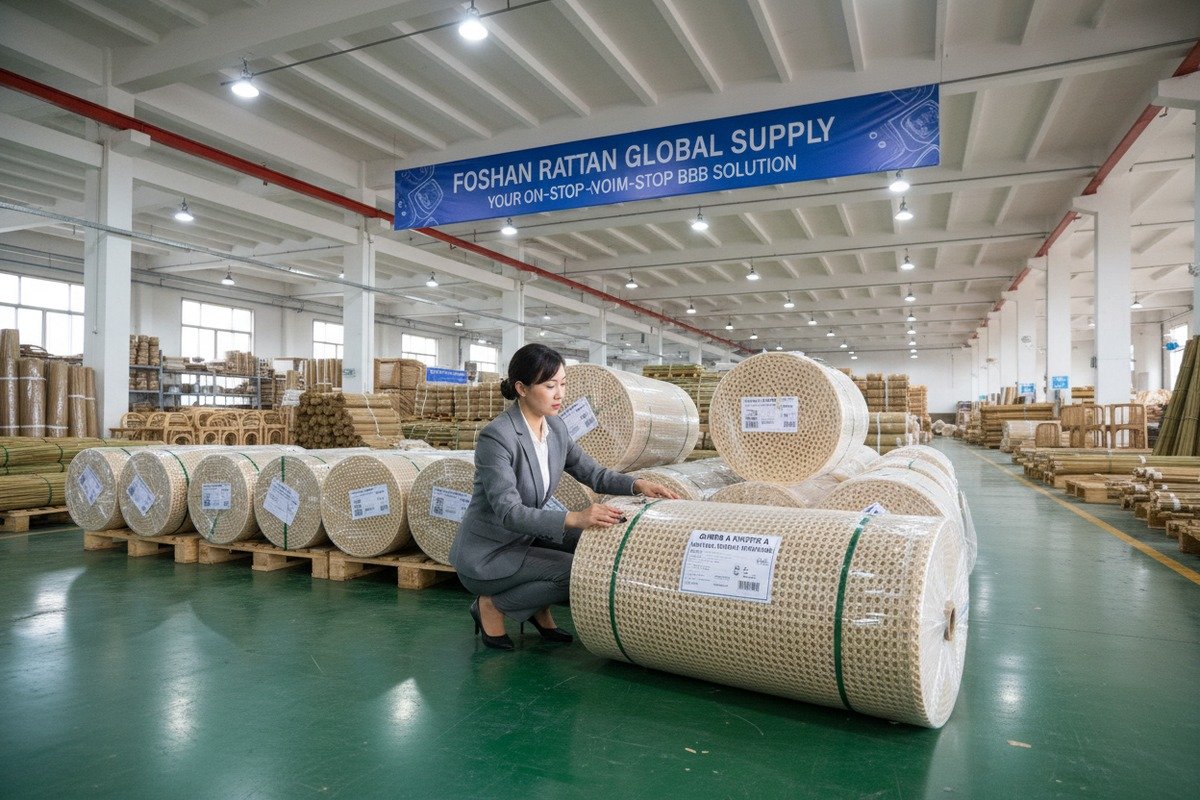
Why One-Stop Sourcing Matters for Commercial Projects
Large commercial builds demand consistency. When a hotel chain specifies rattan wall panels for all its properties, every panel must match. The color must be identical. The weave density must be uniform. The coating must be applied the same way every time.
Working with multiple small suppliers creates risk. Different batches from different workshops will never match perfectly. Lead times become unpredictable. Quality control gets fragmented. Communication multiplies.
A single supplier with integrated production capabilities solves these problems. From our facility in Nanhai, Foshan, we coordinate across three self-invested factories — including our own rattan processing plant in Indonesia — and over 30 partner factories. This structure lets us produce natural cane webbing, synthetic rattan matting, bleached cane panels, and finished woven products all under one quality control system.
What to Look for in a Rattan Wholesale Partner
When evaluating suppliers for large-scale commercial rattan needs, here are the factors that matter most:
Product range depth. Can they supply radio weave, basketweave, chevron, diamond patterns, and bleached variants? Do they offer both natural and synthetic options? A genuine one-stop supplier covers the full spectrum.
Processing capabilities. Do they process raw rattan themselves, or do they simply resell? Suppliers who own processing facilities — especially in rattan-producing regions like Indonesia — have more control over quality and pricing.
Custom sizing and cutting. Commercial projects rarely use standard dimensions. Your supplier must cut and prepare webbing to your exact specifications without excessive waste or upcharges.
Export experience. Shipping rattan internationally involves specific packaging requirements. The material is flexible, lightweight, but can be damaged by moisture during transit. Experienced suppliers use proper moisture barriers and reinforced packaging. We export regularly to the Netherlands, Spain, USA, Australia, Turkey, and over a dozen other countries. Each destination has different packaging and customs needs.
Sampling and testing. Before any large order, you need samples. Not one sample — multiple samples from the production run. A reliable supplier provides samples quickly, includes testing guidance, and welcomes factory audits.
Scaling Up Without Sacrificing Quality
The biggest fear procurement managers have about large orders is quality drop-off. The sample looks perfect. The first batch is great. But by the fifth or tenth shipment, quality slips.
This happens when suppliers outsource to workshops they do not control. It does not happen when the supplier owns the production chain. Our quality team inspects at three stages: raw material intake in Indonesia, weaving completion at partner factories, and final packaging before export from Foshan. Every roll is checked against the approved sample.
For commercial builds, we also offer dedicated production runs. Your order gets its own batch of raw material, its own weaving schedule, and its own quality inspection report. This ensures complete consistency across all deliveries, whether you need 500 meters or 50,000 meters.
The Cost Advantage of Consolidated Sourcing
Beyond quality, there is a clear cost advantage to one-stop sourcing. You negotiate one price. You pay one shipping bill. You clear one customs entry. Compare that to managing three or four suppliers, each with their own invoices, shipping schedules, and quality issues.
The rattan products market 10 is projected to grow at 6.7% CAGR through the decade. Demand is rising. Suppliers with integrated capacity and diverse product lines are better positioned to hold pricing stability even as raw material costs fluctuate.
Conclusion
Rattan cane webbing is no longer a decorative afterthought — it is a core material in commercial design. Choose the right patterns, source from a reliable one-stop supplier, and your commercial spaces will be both trendy and built to last.
Footnotes
1. Explains the characteristics and applications of hexagonal open-mesh rattan webbing. ↩︎
2. Provides an example of chevron synthetic matting suitable for indoor/outdoor use. ↩︎
3. Found an article directly comparing bleached and natural cane webbing. ↩︎
4. Confirms the projected compound annual growth rate for the rattan products market. ↩︎
5. Defines the characteristics and standards for Grade A premium natural rattan. ↩︎
6. Describes close weave rattan webbing suitable for furniture applications like chair caning. ↩︎
7. Explains the use of UV-resistant and water-repellent coatings for protecting rattan furniture. ↩︎
8. Explains the positive effects of biophilic design in commercial environments. ↩︎
9. Provides insights from the 1stDibs annual survey on interior design trends. ↩︎
10. Provides an overview of the global rattan products market trends and growth drivers. ↩︎
 English
  Español de México
  العربية
  Deutsch
  Français
  Русский