
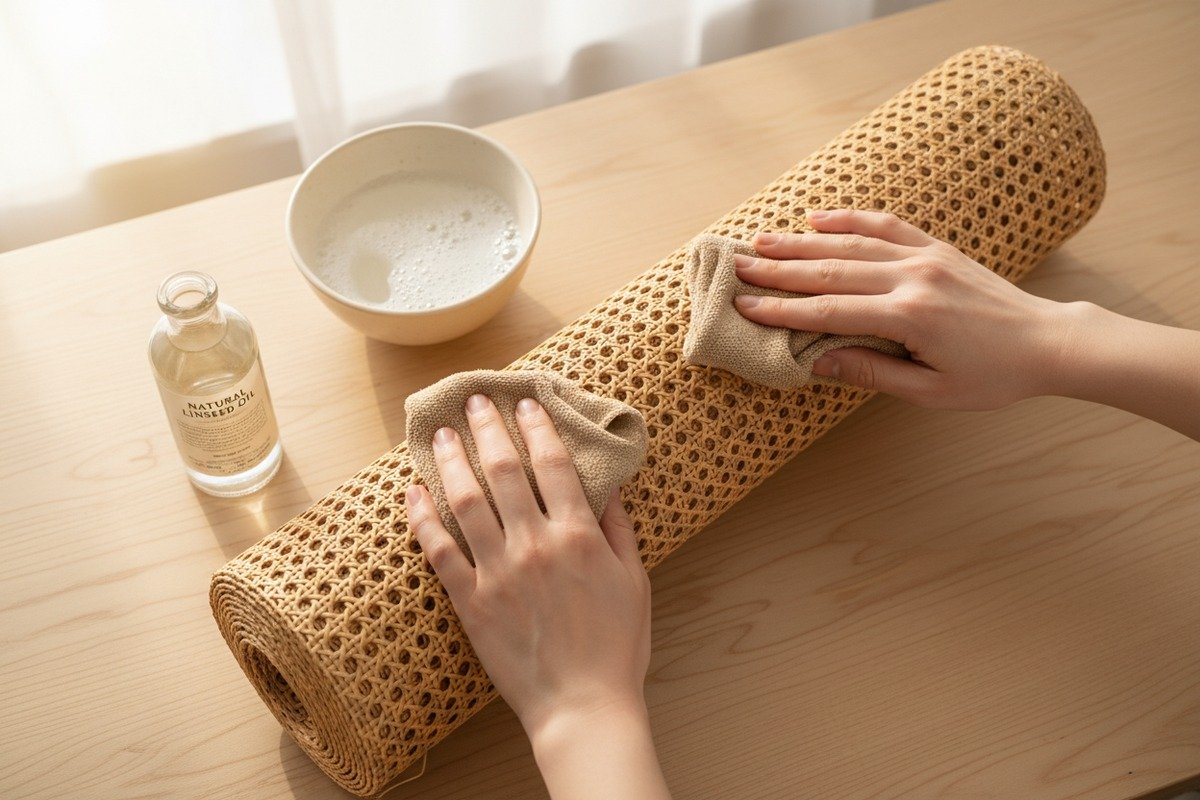
Cada semana, nuestro equipo de producción inspecciona miles de metros de rejilla de ratán natural 1 antes de enviarlos a fábricas de muebles de todo el mundo. Vemos de primera mano lo hermoso que es este material, y lo rápido que las manchas pueden arruinarlo si no se maneja correctamente.
Para eliminar de forma segura las manchas del mimbre de ratán natural, utilice un paño húmedo con jabón suave para platos para la suciedad cotidiana, una solución de vinagre y agua para el moho, y séquelo siempre a fondo después. Nunca empape el ratán, pruebe siempre los limpiadores en áreas ocultas primero y acondicione las fibras con aceite ligero mensualmente para evitar que se agrieten.
En esta guía, le guiaremos a través de métodos paso a paso para cada tipo de mancha común agentes de limpieza domésticos 2. Aprenderá qué limpiadores son seguros, cuáles pueden causar daños y cómo mantener su ratán con un aspecto fresco durante años. Empecemos por lo básico.
¿Cómo limpio de forma segura la suciedad cotidiana de mi rejilla de ratán natural?
El polvo, las migas y la suciedad superficial son los problemas más comunes de los que oímos hablar a nuestros clientes mayoristas y a sus clientes finales. Si se deja sola, esta suciedad cotidiana se adentra en el tejido y es mucho más difícil de eliminar más tarde.
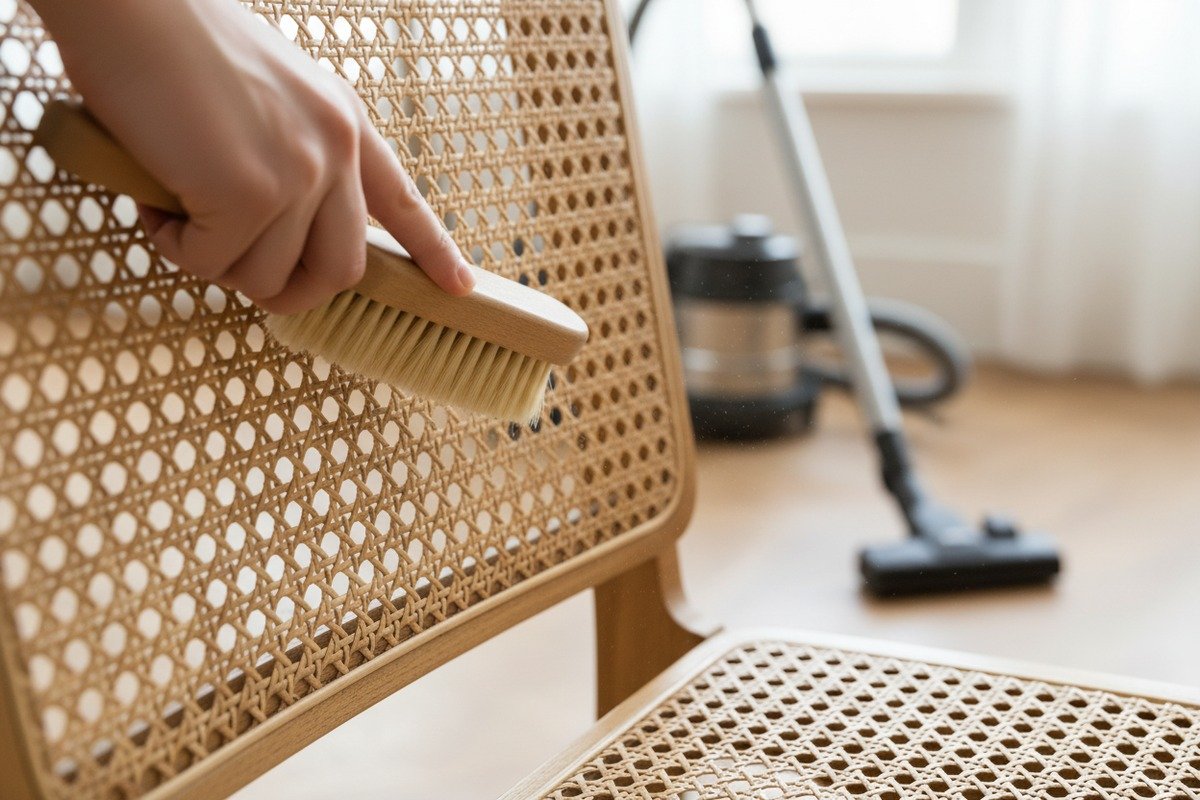
Limpie de forma segura la suciedad cotidiana del ratán natural y la caña tejida aspirando o desempolvando primero con un cepillo suave, luego limpiando suavemente con un paño húmedo bien escurrido y humedecido en agua tibia con unas gotas de jabón líquido suave para platos. Seque siempre completamente después para evitar deformaciones o moho.
Por qué la suciedad cotidiana importa más de lo que crees
El ratán natural es un material poroso 3. Sus fibras absorben la humedad y atrapan pequeñas partículas fácilmente. Cuando el polvo y los escombros permanecen en la superficie durante semanas, se mezclan con la humedad ambiental y forman una película sucia. Esta película opaca el tono dorado natural de la caña e incluso puede debilitar las fibras con el tiempo. La limpieza regular evita que esta acumulación se convierta en una mancha rebelde.
Las herramientas adecuadas para el trabajo
No necesita productos caros. Las herramientas sencillas funcionan mejor. Aquí tiene una referencia rápida:
| Herramienta | Propósito | Frequency |
|---|---|---|
| Cepillo de cerdas suaves o plumero | Elimine el polvo suelto y las migas de la superficie y las grietas | Semanalmente |
| Aspiradora con accesorio de cepillo (ajuste suave) | Extraiga los escombros atrapados en lo profundo del patrón de tejido | Semanalmente |
| Paño de microfibra 4 (húmedo, bien escurrido) | Limpie la suciedad superficial y la suciedad ligera | Semanal o según sea necesario |
| Cepillo de dientes viejo | Frote suavemente las grietas y esquinas de la trama | Mensual o según sea necesario |
| Toalla limpia y seca | Absorba la humedad restante después de la limpieza | Después de cada limpieza húmeda |
Proceso de limpieza paso a paso
Comience quitando los cojines o cualquier cubierta de tela. Use el cepillo suave o la aspiradora para repasar toda la superficie. Trabaje en la dirección de la trama. Preste especial atención a las esquinas y juntas donde se acumula el polvo.
A continuación, prepare una solución sencilla. Añada dos o tres gotas de jabón para platos suave 5 en dos tazas de agua tibia. Sumerja su paño de microfibra, luego escúrralo muy bien. El paño debe estar húmedo, no mojado. Limpie la superficie de ratán con pasadas suaves y uniformes.
Para las grietas, use el cepillo de dientes. Sumérjalo ligeramente en la solución y frote suavemente. No presione con fuerza. Las fibras de ratán pueden deshilacharse o astillarse con un fregado agresivo.
Después de limpiar, limpie con un paño húmedo limpio para eliminar los residuos de jabón. Luego, séquelo inmediatamente con una toalla. Si es posible, deje que la pieza se seque al aire cerca de una ventana abierta o un ventilador. Evite colocarla a la luz solar directa, ya que los rayos UV pueden hacer que el ratán se vuelva quebradizo y pierda color.
Una nota de nuestro piso de producción
Cuando preparamos los rollos de rejilla de ratán para su envío, siempre nos aseguramos de que estén limpios y secos. Hemos visto casos en los que los clientes almacenan su stock de ratán en almacenes húmedos sin desempolvar regularmente. En cuestión de meses, la superficie desarrolla una película gris opaca que es mucho más difícil de limpiar que el polvo fresco. La prevención es siempre más fácil que la restauración.
¿Cuál es la mejor manera de eliminar manchas líquidas difíciles de mis muebles de ratán?
A lo largo de años de suministro de rejilla de ratán a fabricantes de muebles en EE. UU., Europa y Oriente Medio, hemos recopilado comentarios detallados sobre qué métodos de limpieza realmente funcionan para las manchas difíciles, y cuáles causan más daño que bien.
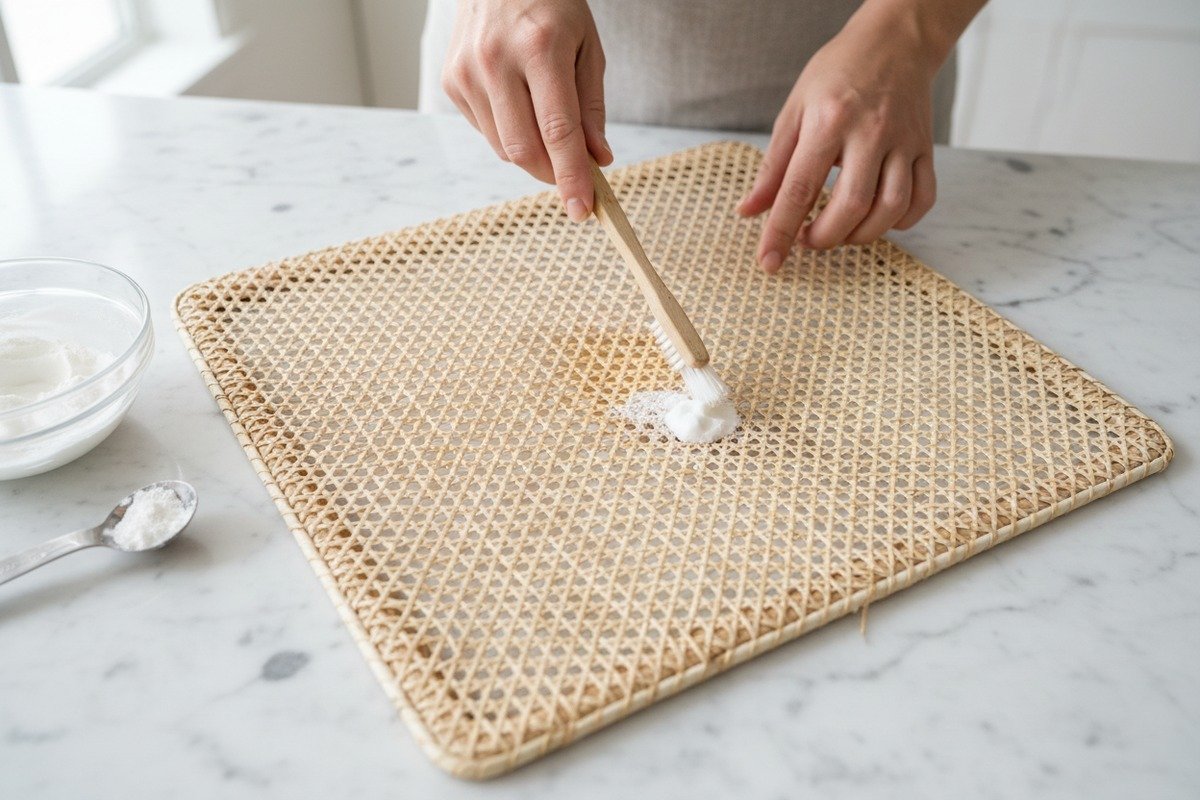
Para manchas líquidas persistentes en muebles de ratán, haga una pasta de bicarbonato de sodio y agua, aplíquela sobre la mancha, déjela reposar durante quince minutos, luego frote suavemente con un cepillo suave y limpie. Para manchas orgánicas más difíciles, use una solución de vinagre y agua a partes iguales o un limpiador a base de enzimas diseñado para fibras naturales.
Entendiendo por qué las manchas líquidas son complicadas
Cuando el café, el vino, el jugo o cualquier líquido de color se derrama sobre el ratán, se filtra en las fibras porosas casi de inmediato. La caña natural actúa como una esponja. Cuanto más tiempo permanezca el líquido, más profundo penetrará. Por eso la rapidez es importante. Si atrapas un derrame en los primeros minutos, un paño húmedo simple puede ser suficiente. Pero una vez que la mancha se fija, necesitas un enfoque más específico.
Métodos específicos para manchas
Las diferentes manchas responden a diferentes tratamientos. Aquí tienes una guía práctica:
| Tipo de Mancha | Solución recomendada | Método de aplicación | Notas importantes |
|---|---|---|---|
| Café o té | Pasta de bicarbonato de sodio 6 (3:1 bicarbonato de sodio a agua) | Aplica la pasta, espera 15 minutos, frota suavemente con un cepillo suave, limpia | Enjuaga el residuo con un paño húmedo, seca inmediatamente |
| Vino tinto o jugo | Vinagre blanco 7 y agua tibia (relación 1:1) | Seca con un paño empapado, presiona (no frotes), repite | Prueba primero en un área oculta; el olor a vinagre desaparece al secarse |
| Aceite o grasa | Maicena o bicarbonato de sodio | Espolvorear sobre la mancha, dejar absorber durante 30 minutos, cepillar | Puede necesitar dos aplicaciones para grasa pesada |
| Accidentes de mascotas | Limpiador a base de enzimas 8 para fibras naturales | Rociar, dejar reposar según las instrucciones del producto, secar con toalla | Evite los limpiadores a base de amoníaco; pueden decolorar el ratán |
| Tinta | Alcohol para frotar 9 en un bastoncillo de algodón | Aplicar con cuidado solo sobre la mancha, secar con un paño limpio | Usar con moderación; el alcohol puede resecar las fibras |
El método del bicarbonato de sodio en detalle
Este es nuestro método más recomendado para manchas rebeldes generales. Mezcle tres partes de bicarbonato de sodio con una parte de agua para formar una pasta espesa. Extiéndala sobre la mancha con los dedos o un paño suave. Déjela reposar durante unos quince minutos. El bicarbonato de sodio extrae la humedad y la decoloración de las fibras.
Después de quince minutos, use un cepillo de cerdas suaves para frotar suavemente el área. Trabaje en pequeños círculos. Limpie la pasta con un paño limpio y húmedo. Seque el área completamente con una toalla, luego déjela secar al aire por completo.
Cuándo usar vinagre
Una mezcla uno a uno de vinagre blanco y agua tibia es excelente para manchas orgánicas como alimentos, bebidas y decoloración leve. El vinagre es ligeramente ácido, lo que ayuda a descomponer los compuestos orgánicos sin dañar las fibras naturales del ratán. Siempre pruebe primero en un lugar discreto. Algunos acabados de ratán pueden reaccionar a la acidez.
Vapor: Una opción cautelosa
Para suciedad profundamente incrustada y seca que resiste todos los métodos suaves, una vaporera de mano sostenida a una distancia segura puede ayudar a aflojar la suciedad. Pero tenga mucho cuidado. Sostenga la vaporera a una distancia de al menos ocho a diez pulgadas de la superficie. Aplique vapor solo por unos segundos a la vez. Inmediatamente seque con una toalla seca. El exceso de vapor puede deformar la malla de caña. Solo recomendamos esto como último recurso antes de la intervención profesional.
¿Puedo usar productos de limpieza domésticos en mis materiales de ratán natural sin causar daños?
Esta es una de las preguntas más frecuentes que recibimos de nuestros clientes de fábricas de muebles y sus compradores. La respuesta no es un simple sí o no. Depende completamente del agente de limpieza que elija y de cómo lo aplique.
Puede usar agentes de limpieza domésticos suaves como jabón para platos diluido, vinagre blanco y bicarbonato de sodio en ratán natural sin causar daños. Sin embargo, evite productos químicos agresivos como lejía sin diluir, amoníaco o detergentes en polvo abrasivos, ya que estos pueden debilitar, decolorar o resecar las fibras de caña naturales de forma permanente.
La regla de oro: siempre pruebe primero
Antes de aplicar cualquier limpiador a la malla de caña de su ratán, pruébelo en un área oculta. La parte inferior del asiento de una silla o la parte posterior de un panel funcionan bien. Aplique una pequeña cantidad, espere diez minutos y verifique si hay decoloración, ablandamiento o alguna reacción adversa. Este simple paso puede evitarle arruinar una pieza entera.
Agentes de limpieza seguros vs. inseguros
El pasillo de productos de limpieza puede ser abrumador. Aquí hay un desglose claro:
| Agente de limpieza | ¿Seguro para el ratán? | Notas |
|---|---|---|
| Jabón suave para platos (unas gotas en agua) | Sí | Limpiador diario más recomendado; enjuague bien los residuos |
| Vinagre blanco (diluido 1:1 con agua) | Sí | Ideal para manchas orgánicas y moho leve; pruebe primero |
| Pasta de bicarbonato de sodio | Sí | Potente eliminador de manchas; suave con las fibras |
| Jabón de aceite Murphy (diluido) | Sí | Limpia y acondiciona ligeramente; popular entre los restauradores |
| Peróxido de hidrógeno (3%, aplicado con bastoncillo de algodón) | Sí, con precaución | Tratamiento localizado para moho; puede aclarar el color si se usa en exceso |
| Aceite de limón o aceite mineral | Sí | Para acondicionar, no para limpiar; aplique finamente |
| Lejía sin diluir | No | Debilita las fibras, causa decoloración, daña los marcos de madera |
| Limpiadores a base de amoníaco | No | Demasiado agresivo; puede amarillear o resecar el ratán natural |
| Tide en polvo o detergentes abrasivos | No | Las partículas abrasivas rayan y dañan la superficie del tejido |
| Abrillantador de muebles con silicona | No | Crea una película pegajosa que atrae más polvo y suciedad |
El debate sobre la lejía
Este es un tema donde las opiniones chocan. Algunas guías de limpieza recomiendan una solución de lejía diluida —una taza de lejía por galón de agua— para el moho severo en ratán. Y es cierto que la lejía mata el moho de manera efectiva. Sin embargo, por nuestra experiencia procesando y acabando miles de piezas de ratán, aconsejamos encarecidamente precaución.
La lejía es un potente oxidante. Incluso diluida, puede debilitar la estructura de celulosa 10 de las fibras de ratán natural. Con el tiempo, esto provoca fragilidad y agrietamiento. También puede causar decoloración desigual, especialmente en piezas con acabado de laca o barniz. Si la solución de lejía gotea sobre un marco de madera, puede dejar marcas blancas permanentes.
Recomendamos probar primero con vinagre o peróxido de hidrógeno. Estas son alternativas más suaves que manejan la mayoría de los casos de moho de manera efectiva. Reserve la lejía solo para moho severo y generalizado, y si debe usarla, use guantes, asegure una buena ventilación, aplique con un bastoncillo de algodón o un cepillo pequeño solo en el área afectada y enjuague bien.
Tendencias Ecológicas en el Cuidado del Ratán
Hay un claro cambio entre nuestros clientes hacia limpiadores naturales a base de plantas. Las soluciones de vinagre y agua, el bicarbonato de sodio y los aceites derivados de plantas como el aceite de limón se han convertido en las recomendaciones estándar. Esto se alinea con las tendencias de sostenibilidad más amplias en el mobiliario del hogar. Muchos consumidores finales, especialmente en Europa y EE. UU., buscan activamente métodos de limpieza no tóxicos que sean seguros para niños y mascotas. Apoyamos esta dirección. Los limpiadores naturales no solo son más seguros para el ratán, sino que son más seguros para todos en el hogar.
¿Qué pasa con el Jabón de Aceite Murphy?
El Jabón de Aceite Murphy, diluido según las instrucciones del paquete, es un excelente producto multifuncional para el ratán. Limpia y acondiciona ligeramente en un solo paso. Muchos restauradores de muebles profesionales lo usan como su limpiador de referencia. Solo asegúrese de escurrir bien el paño y secar el ratán después. Es una buena opción para sesiones de limpieza profunda trimestrales.
¿Cómo trato las manchas de moho o mildiú en mi tejido de ratán?
El moho y el mildiú son problemas que nos tomamos en serio en nuestras fábricas. Con instalaciones de producción tanto en Foshan, China, como en Indonesia, dos regiones con alta humedad, nuestro equipo ha desarrollado métodos prácticos y probados para prevenir y tratar el moho en el ratán natural.
Trate el moho o el mildiú en la rejilla de ratán aplicando una solución de partes iguales de vinagre blanco y agua tibia con un cepillo suave, frotando suavemente, luego limpiando y secando completamente en un área bien ventilada. Para casos severos, use peróxido de hidrógeno diluido o, como último recurso, una solución de lejía muy diluida con guantes protectores.
Por qué Crece el Moho en el Ratán
El ratán natural es un material orgánico hecho de fibras de palma. Contiene celulosa, que es una fuente de alimento para las esporas de moho. Cuando el ratán se expone a alta humedad, superior al 60%, y a una mala circulación de aire, el moho puede colonizar la superficie en cuestión de días. El patrón de tejido apretado del tejido de caña lo hace especialmente vulnerable porque la humedad queda atrapada entre las fibras entrelazadas.
Hemos visto que esto sucede durante los contenedores de envío que permanecen en puertos tropicales durante períodos prolongados. También lo hemos visto en trasteros sin ventilación adecuada. Comprender la causa le ayuda a prevenirlo.
Eliminación de Moho Paso a Paso
Aquí está el proceso que recomendamos, en orden de suavidad:
Paso 1: Mueva la pieza al exterior o a un área bien ventilada. Las esporas de moho se vuelven transportadas por el aire durante la limpieza. Trabaje al aire libre o cerca de una ventana abierta. Use una mascarilla antipolvo básica si es sensible.
Paso 2: Cepille el moho suelto. Use un cepillo seco de cerdas suaves. Trabaje con cuidado. Deseche el material cepillado inmediatamente para evitar la propagación de esporas.
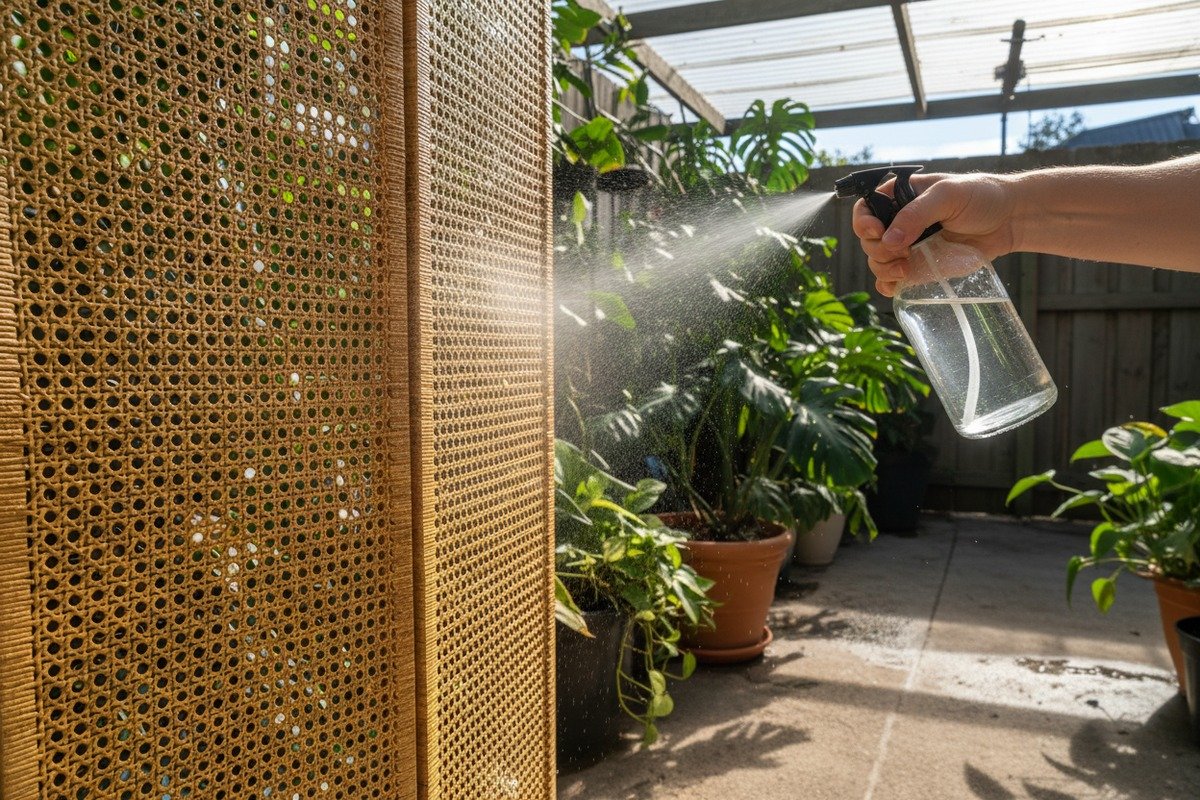
Paso 3: Aplique la solución de vinagre. Mezcle partes iguales de vinagre blanco y agua tibia en una botella rociadora o un tazón. Sumerja un cepillo suave o un paño en la solución. Aplíquela a las áreas afectadas. Frote suavemente en la dirección del tejido.
Paso 4: Limpie y enjuague. Use un paño limpio y húmedo para limpiar la solución de vinagre y el moho desprendido. Repita si es necesario.
Paso 5: Seque completamente. Este es el paso más crítico. Use una toalla limpia y seca para absorber la mayor cantidad de humedad posible. Luego, deje que la pieza se seque al aire en un lugar cálido y bien ventilado. Un ventilador acelera este proceso. Algunas guías recomiendan una breve exposición al sol para matar las esporas restantes; treinta minutos a la sombra son suficientes. Evite el sol directo prolongado.
Para moho severo: Las opciones más fuertes
Si el vinagre solo no funciona, pruebe con peróxido de hidrógeno (concentración del 3%). Sumerja un hisopo de algodón o un Q-tip en él y aplíquelo directamente sobre las manchas de moho. Deje que burbujee durante cinco minutos, luego limpie. Esto es efectivo para parches localizados.
Para moho generalizado y profundamente incrustado, puede ser necesaria una solución de lejía diluida. Use una taza de lejía por galón de agua. Aplique con un cepillo pequeño solo en las áreas afectadas. Use guantes de goma y asegúrese de que la habitación esté bien ventilada. Enjuague bien con un paño húmedo y seque inmediatamente. Como discutimos anteriormente, la lejía debe ser su último recurso debido a su potencial para debilitar las fibras de ratán.
La prevención es la mejor estrategia
Después de tratar el moho, concéntrese en la prevención. Aquí hay pasos prácticos:
- Mantenga la humedad interior por debajo del 55% utilizando un deshumidificador si vive en un clima húmedo.
- Asegure una buena circulación de aire alrededor de los muebles de ratán. No los empuje directamente contra las paredes.
- Acondicione el ratán mensualmente con una capa fina de aceite de limón o aceite mineral. Esto crea una barrera ligera contra la absorción de humedad.
- Desempolve semanalmente. El moho se alimenta del polvo y los residuos orgánicos de la superficie.
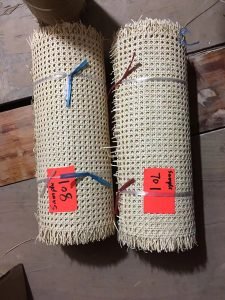
- Almacene los rollos de cincha de ratán sin usar en un lugar seco y fresco con paquetes de gel de sílice para absorber el exceso de humedad.
Acondicionamiento después del tratamiento contra el moho
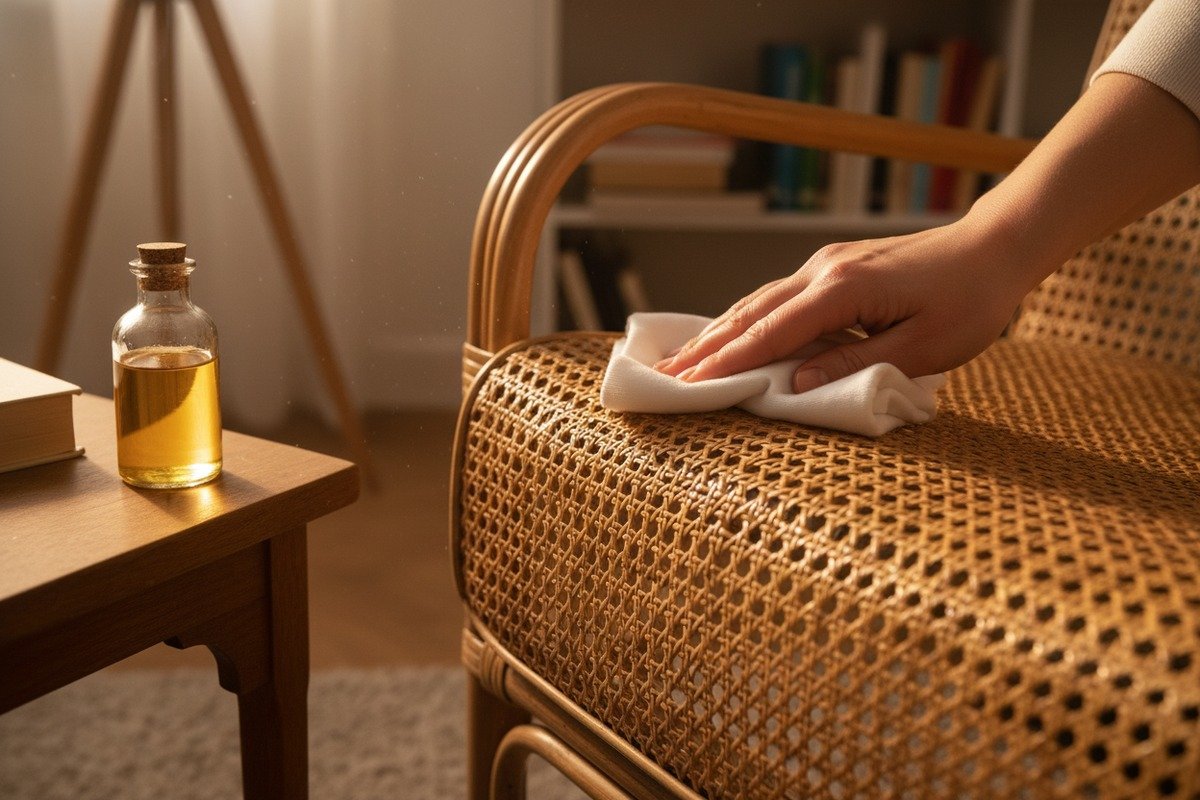
La limpieza del moho elimina los aceites naturales de las fibras de ratán. Una vez que la pieza esté completamente seca, aplique una capa fina de aceite mineral o aceite de limón con un paño suave. Limpie en la dirección del tejido. Deje que el aceite se absorba durante quince minutos a unas pocas horas, luego elimine el exceso con un paño limpio y seco. Esto restaura la flexibilidad y ayuda a prevenir futuras grietas o fragilidad.
Algunos de nuestros clientes prefieren el aceite de linaza hervido por su brillo cálido y rico. Funciona bien, pero aplíquelo con mucha moderación. El exceso de aceite de linaza puede oscurecer el ratán con el tiempo y sentirse grasoso si no se limpia adecuadamente. Sugerimos aplicar aceite de linaza solo en la parte inferior o en áreas menos visibles hasta que se sienta cómodo con los resultados.
Un calendario de mantenimiento
La constancia es clave. Aquí hay un horario simple que compartimos con nuestros socios mayoristas:
| Task | Frequency | Propósito |
|---|---|---|
| Desempolvado o aspirado | Semanalmente | Previene la acumulación de suciedad y esporas |
| Limpieza de manchas | Según sea necesario | Evita que las manchas se fijen |
| Limpieza profunda (jabón suave o jabón de aceite Murphy) | Trimestralmente | Elimina la suciedad incrustada |
| Acondicionamiento con aceite (limón, mineral o aceite de linaza) | Mensualmente | Mantiene las fibras flexibles, previene el agrietamiento |
| Inspección de moho | Mensual (más a menudo en climas húmedos) | Detecta el moho temprano antes de que se propague |
| Verificación de humedad (nivel de la habitación) | Continuo | Mantener por debajo del 55% para una salud óptima del ratán |
Seguir este programa extenderá drásticamente la vida útil y la apariencia de su tejido de ratán natural.
Conclusión
El tejido de ratán natural es un material hermoso y atemporal que recompensa un cuidado suave y constante. Limpie con soluciones suaves, seque completamente cada vez, acondicione mensualmente y aborde el moho temprano. Su ratán se mantendrá hermoso durante años.
Notas al pie
1. Proporciona una visión general del tejido de ratán como material. ↩︎
2. Reemplazó HTTP 404 con una guía autorizada del Environmental Working Group (EWG) sobre productos de limpieza saludables, que es muy relevante para los agentes de limpieza domésticos. ↩︎
3. Explica la definición y las características de los materiales porosos. ↩︎
4. Describe cómo los paños de microfibra limpian eficazmente las superficies. ↩︎
5. Se reemplazó HTTP 404 con una sección autorizada de Wikipedia sobre agentes lavavajillas, que cubre la categoría más amplia de jabones y detergentes para platos. ↩︎
6. Explica las propiedades de limpieza y los usos del bicarbonato de sodio. ↩︎
7. Detalla las propiedades ácidas y las diversas aplicaciones de limpieza del vinagre blanco. ↩︎
8. Explica el mecanismo biológico de los limpiadores enzimáticos para descomponer las manchas orgánicas. ↩︎
9. Describe las propiedades disolventes del alcohol isopropílico para la eliminación de tinta. ↩︎
10. Describe la estructura química fundamental de la celulosa en las fibras vegetales. ↩︎

 English
  Español de México
  العربية
  Deutsch
  Français
  Русский