MATERIALS FOR FURNITURE MAKERS

Rattan Webbing for
Media Cabinet Doors

Create a woven front for your next TV console or AV cabinet. Choose natural rattan, PVC or paper cane webbing to suit the look, colour and construction of your furniture collection.
✓ Three materials: natural rattan, PVC & paper
✓ Open patterns, colours & roll formats
✓ Samples for your door prototype
For cabinet manufacturers, furniture brands and design teams.
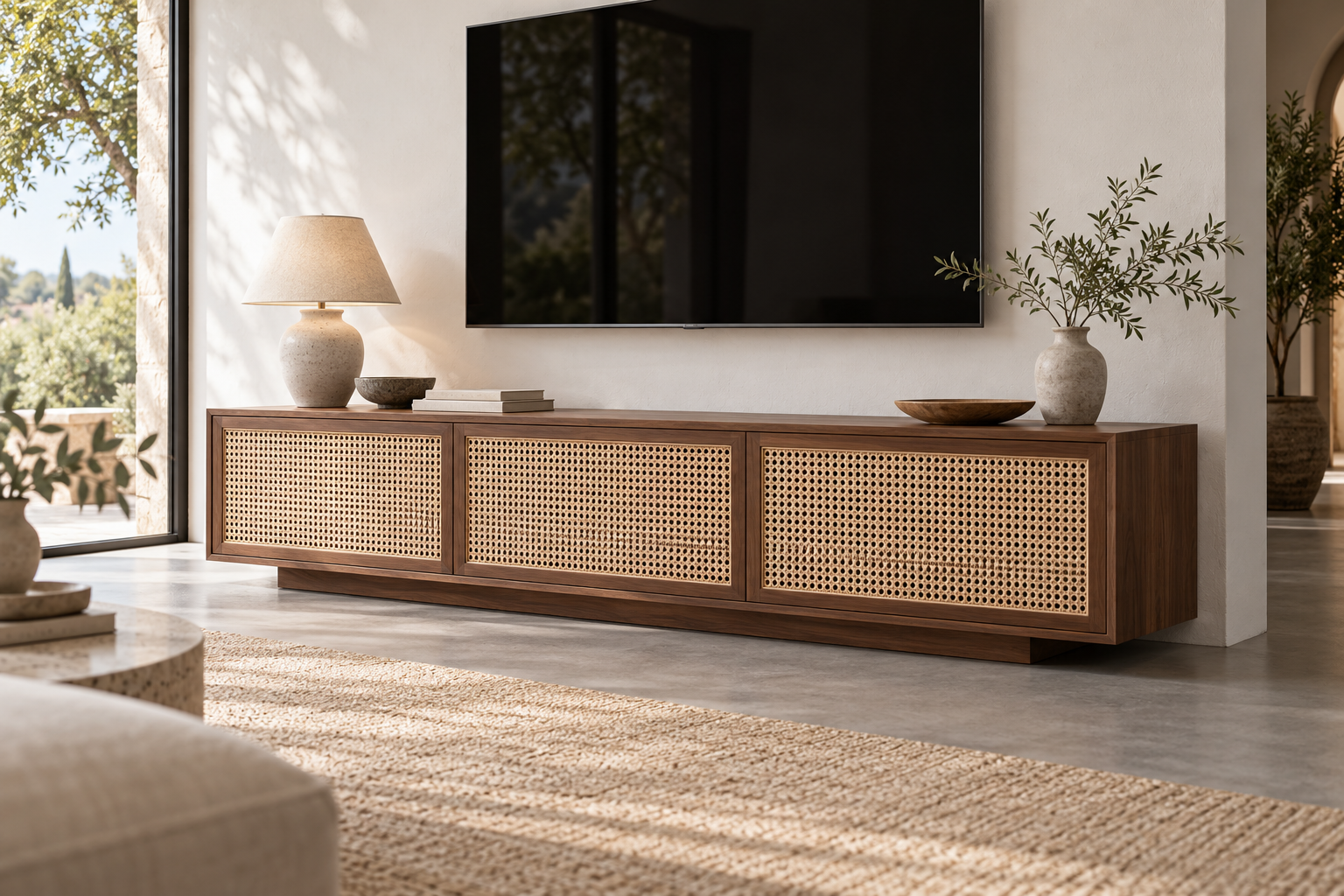
AI application concept showing natural cane doors in a walnut media console
AI application concept

TV CONSOLE DOORS

AV CABINET FRONTS

NATURAL RATTAN · PVC · PAPER

B2B MATERIAL SUPPLY

01 / THREE MATERIALS. YOUR DESIGN DIRECTION.

Natural rattan, PVC or paper.
Choose the weave for your collection.

The woven look is only the starting point. Compare the character of natural cane, the colour options of PVC and the regular texture of paper webbing for your cabinet door design.

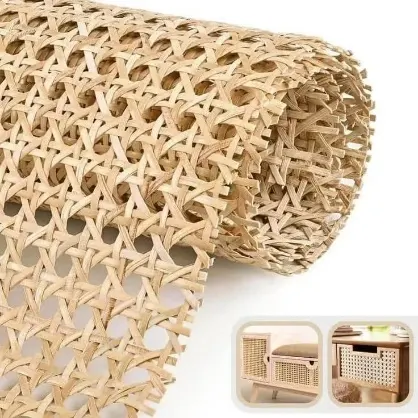
01 / NATURAL RATTAN

Authentic cane. Natural character.

Made from natural rattan strands, cane webbing brings visible plant texture and individual strand variation to cabinet doors. Pair it with oak, walnut or other wood finishes for a warm furniture front.
Choose it for: furniture collections that put genuine natural materials at the centre of the design.
Compare: pattern · grade · natural or bleached finish
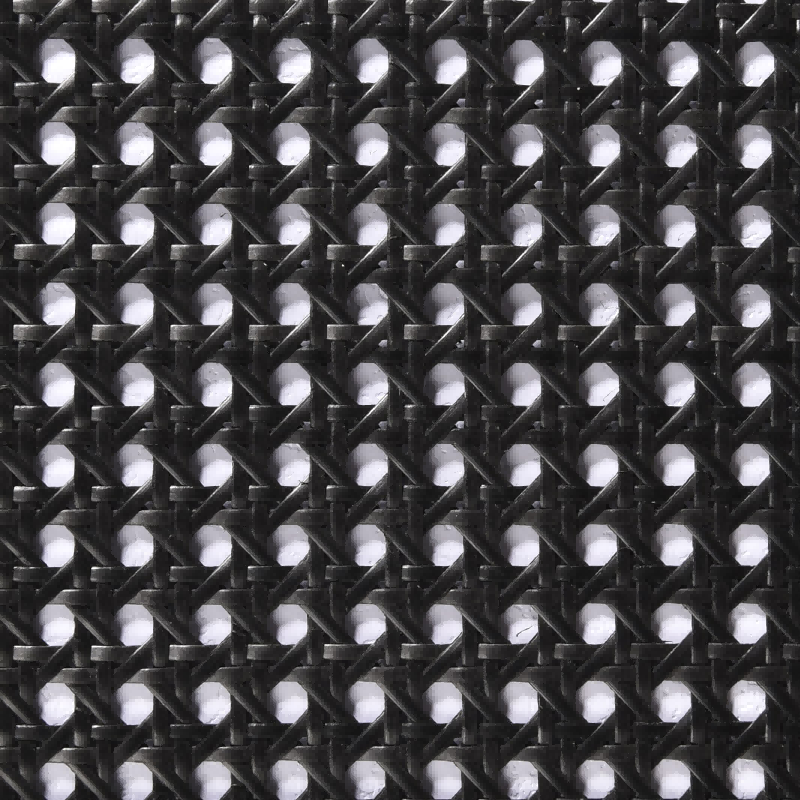
02 / PVC product photograph

02 / PVC

Woven texture. More colour directions.

PVC cane webbing offers a synthetic route to the woven look. Explore black, brown, natural-look and other available colours to coordinate door inserts with painted cabinets, dark joinery or wood-effect finishes.
Choose it for: furniture ranges where matching the colour, pattern and surface appearance is a key part of the brief.
Compare: colour · surface sheen · pattern · cut-edge sample
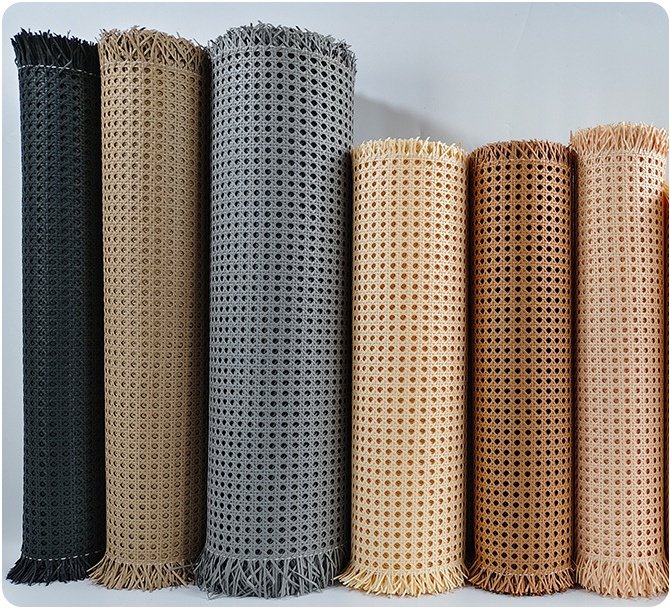
03 / PAPER product photograph

03 / PAPER

A regular weave. A softer surface.

Paper cane webbing is woven from rolled paper strands, with fibre-reinforced and non-fibre constructions to review. Its regular woven surface offers another material direction for framed cabinet inserts in dry interiors.
Choose it for: decorative indoor cabinet fronts with a coordinated colour and a defined woven texture.
Compare: with or without fibre core · pattern · colour
Black and brown are colour choices within PVC, not separate material families. Paper webbing is paper-based; it is not natural rattan or PVC. Photographs: Seafan product website. Final patterns, colours and construction are confirmed against physical samples.

02 / DESIGN AROUND THE EQUIPMENT

More than a decorative cabinet front.

01

An open weave for a ventilation-led design

Introduce an open woven surface into your cabinet door design. Plan the complete airflow route through the base, shelves and rear of the cabinet alongside the front insert.
An open weave alone does not establish cooling performance.

02

Develop remote-friendly cabinet doors

If your brief calls for infrared control behind a closed door, evaluate the selected weave with the actual receiver position, remote distance and viewing angles.
Confirm compatibility on the finished door prototype.

03

Conceal the equipment. Keep the texture.

Balance how much equipment remains visible with your preferred woven appearance. Compare samples over the same cabinet opening before choosing a pattern.
Backing layers change the finished panel and need separate evaluation.
AI media console application concept
AI application concept

03 / WHERE THE MATERIAL FITS

Woven fronts for the next furniture collection.

TV consoles & media units

Choose natural rattan, PVC or paper webbing for framed cabinet doors. Match the material, pattern and colour to your storage layout, furniture finish and indoor use conditions.

AV cabinets & custom joinery

Develop a material brief around the actual equipment, rear openings, cable access and removable door details.

Speaker & amplifier grille development

Explore woven visual treatments through a separate sample programme. Acoustic response, mounting tension and vibration must be assessed for the intended speaker.
DEVELOPMENT APPLICATION · TEST BEFORE SPECIFYING

APPLICATION STORIES / 01

From TV console doors
to a complete media wall.

See where cane webbing fits in living-room furniture. Compare natural rattan, PVC and paper inserts around your cabinet style, equipment layout and target finish.
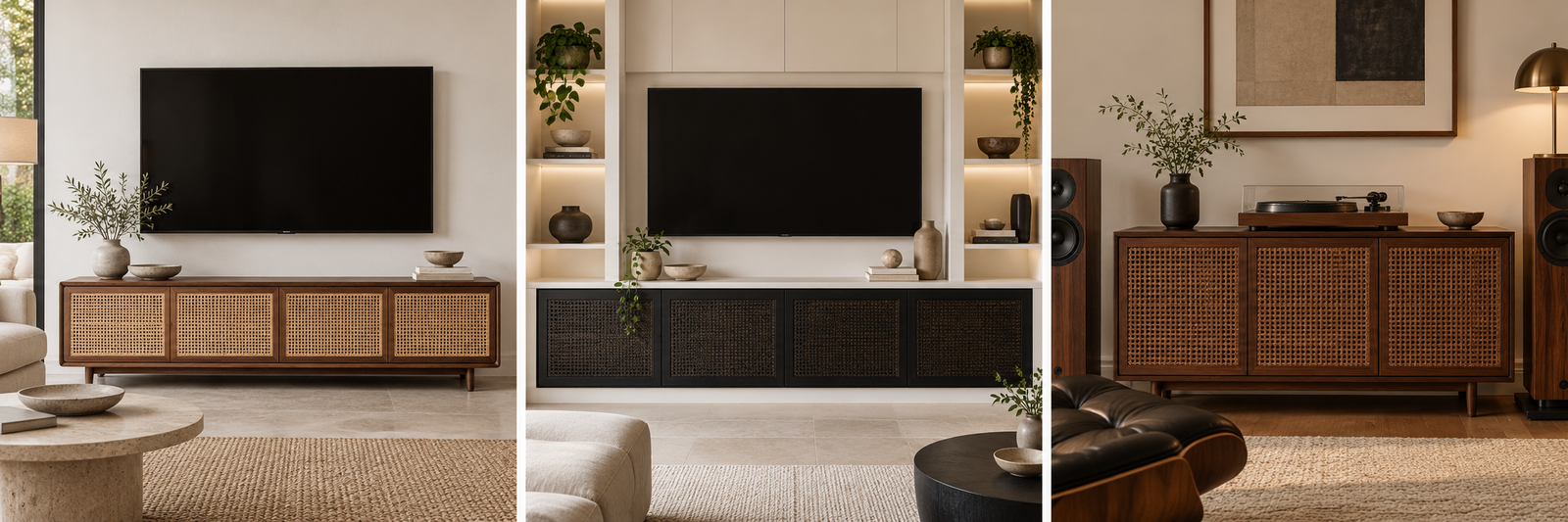
AI application concepts: Cane webbing for TV stand doors, Rattan inserts for media wall cabinet doors, Woven fronts for AV cabinets
AI application concept

LIVING ROOM / TV CONSOLE

Cane webbing for TV stand doors

Use natural cane inserts in framed doors to bring a warm woven surface to a low TV console. The furniture can conceal everyday media equipment while keeping its front visually lighter than a solid panel.
Material direction: choose natural rattan for genuine cane character, PVC for its colour options, or paper for a regular woven texture in dry interiors. Compare each sample against your wood finish.
For your sample request: door opening, frame detail, wood finish and required roll quantity.

BESPOKE JOINERY / MEDIA WALL

Rattan inserts for media wall cabinet doors

Add framed woven inserts to the lower cabinets of a fitted media wall. Black PVC webbing can coordinate with dark joinery or contrast with pale cabinetry while giving a repeated texture across the furniture run.
Material direction: compare black and brown PVC samples for colour, sheen and repeat alignment across adjacent doors.
For your sample request: elevation drawing, panel widths, fixing method and target colour.

HOME LISTENING / AV STORAGE

Woven fronts for AV cabinets

Specify woven door material for a listening-room cabinet housing compatible AV equipment. Compare natural rattan, brown PVC or paper webbing with the cabinet finish, then design the rear openings, shelves and cable access as one complete enclosure.
Material direction: compare open patterns for your ventilation-led and remote-friendly cabinet design; validate both on the assembled prototype.
For your sample request: equipment list, enclosure drawing, receiver position and ventilation brief.
All three scenes are AI application concepts. They show possible material placement, not installed client projects or tested cabinet performance. Device placement must follow the equipment manufacturer’s instructions.

APPLICATION STORIES / 02

A woven face for speakers,
amplifiers & stereo furniture.

Explore radio-weave and cane-look grille concepts with your audio development team. Start with the visual direction, then qualify the material for the actual speaker system.
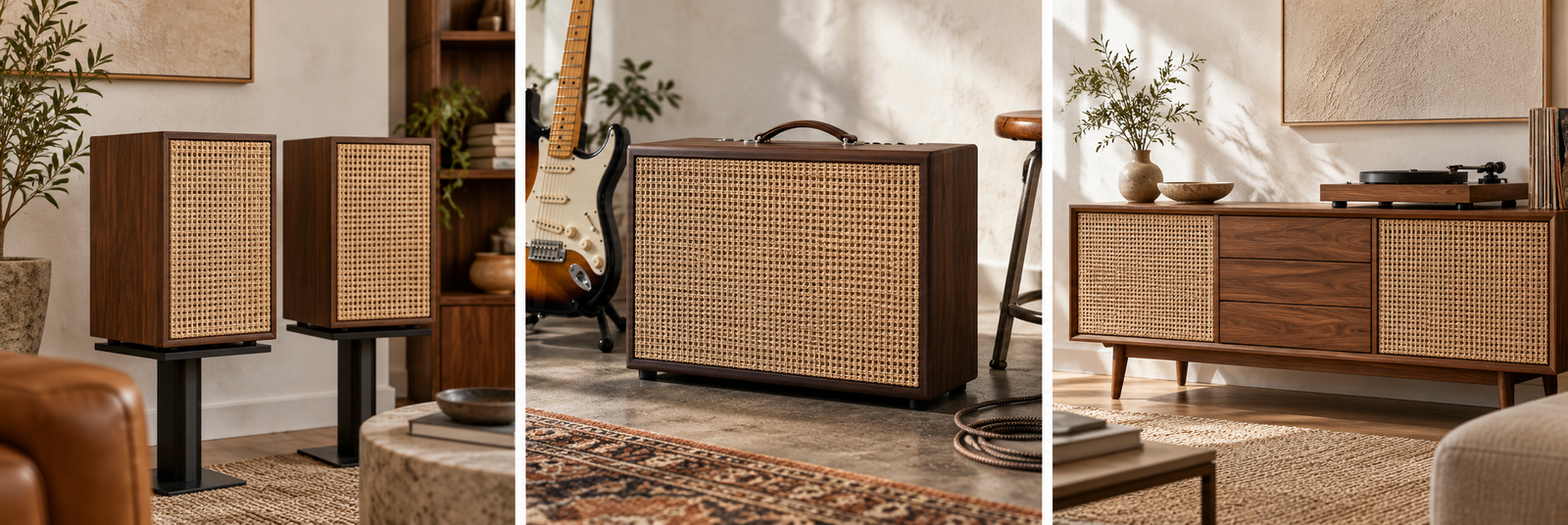
AI application concepts: Cane speaker grille development, Cane-look guitar amp grille material, Radio weave for stereo console fronts
AI application concept

HI-FI / BOOKSHELF SPEAKERS

Cane speaker grille development

Give a compact speaker a woven front that complements a wooden enclosure. Compare suitable natural rattan, PVC and paper weave samples on a separate grille frame, using the intended driver layout and fixing detail. Select each material through testing for that speaker design.
Development brief: specify the visible pattern, colour, frame size and clearance to the driver. Compare the final grille’s acoustic response and vibration behaviour before approval.
Use location: front grille of a bookshelf or compact Hi-Fi speaker.

MUSIC STUDIO / GUITAR AMPLIFIER

Cane-look guitar amp grille material

Explore a vintage woven appearance for a boutique amplifier or speaker cabinet. Match the grille colour and pattern scale to the cabinet covering, piping and hardware for a coherent product design.
Development brief: compare the candidate webbing with your specified guitar amp grill cloth. Review acoustic behaviour, mounting tension, driver clearance and the intended operating environment.
Use location: decorative front grille on an amplifier’s speaker enclosure.

RETRO AUDIO / STEREO CONSOLE

Radio weave for stereo console fronts

Bring a woven visual detail to retro-inspired stereo furniture or a restoration concept. Use matching grille panels on the speaker compartments to coordinate the front with the surrounding timber.
Development brief: share a reference photo, pattern direction and grille dimensions. Compare suitable natural rattan, PVC or paper constructions; confirm the proposed replacement meets the original system’s acoustic and mounting requirements.
Use location: speaker compartment fronts in a stereo console or radiogram.
AI concepts for material development. “Cane weave” can describe a grille’s appearance rather than its composition. Decorative furniture webbing is not automatically a substitute for tested speaker grille cloth; confirm material identity and finished-system performance.

04 / SAMPLE FIRST. SPECIFY WITH CONFIDENCE.

Three questions before
the design goes into production.

Does the door suit the enclosure?

Evaluate weave openness, panel size, frame retention and cabinet openings together. Follow each device manufacturer’s clearance and placement instructions.

Does the remote work in position?

Test infrared control through the assembled door at your required distance and angles. Bluetooth, RF and Wi-Fi are separate compatibility questions.

Does the grille suit the sound?

For audio applications, compare measurements with and without the finished grille. Include the backing, mounting system and operating level in the evaluation.

05 / COMPARE BEFORE YOU SPECIFY

Three materials.
One clear project brief.

Start with the look and construction you need. Then confirm the selected weave, dimensions, colour and order quantity against a physical sample.
Specification
Natural rattan
PVC
Paper
Material
Natural rattan strands
PVC synthetic strands
Rolled paper strands; with or without a fibre core
Design direction
Genuine cane texture and natural variation
Woven appearance with a choice of colours
Regular woven texture and a relatively soft surface
Patterns to discuss
Open cane / square weave
Open weave and other available patterns
Open / radio / dense weave; select for the application
Finish / colour
Natural / bleached
Black, brown, natural-look and other available colours
Yellow, black, white and brown options; confirm selected item
Listed common widths
18″ / 20″ / 24″ / 30″ / 32″ / 36″
18″ / 20″ / 24″ / 30″ / 32″ / 36″ / 48″
18″ / 20″ / 24″ / 30″ / 32″ / 36″
Roll length
50 ft / 15.24 m listed
15 m / 30 m listed
Confirm available length by selected construction
Installation brief
Confirm preparation, fixing and natural variation
Confirm fixing, surface finish and cut-edge detail
Confirm core construction, fixing and dry indoor conditions
Thickness / open area
Measured and confirmed for the selected item. A dense weave is not interchangeable with an open weave.
MOQ / lead time
Quoted against the material, pattern, colour and quantity.
IR / thermal / acoustic performance
Validate the selected material in the finished cabinet or grille; the three materials do not share a universal performance rating.
Widths are listed on Seafan’s general product pages; availability depends on the selected item. This page focuses on indoor applications. Paper webbing is for dry interiors, and outdoor suitability must not be assumed for PVC or natural rattan.

06 / FROM IDEA TO MATERIAL APPROVAL

A clear sample-to-order process.

1

Share your brief

Send your application, door dimensions, frame detail, colour target and estimated quantity.

2

Compare samples

Confirm suitable material options, sample availability, sample charges and delivery arrangements.

3

Build a prototype

Review appearance, mounting and any required thermal, remote-control or acoustic tests.

4

Approve the order

Agree the material specification, acceptance criteria, packaging, price and delivery schedule.

07 / BUYER QUESTIONS

Before you choose your webbing.

It is a woven material used as an insert in a framed cabinet door. Three material options are available: natural rattan for genuine cane character, PVC for a synthetic woven finish, and paper webbing made from rolled paper strands. The webbing is a furniture component, not a complete ventilation or electronics system.

Some open-weave door designs may allow infrared commands to reach the receiver. Performance depends on the weave, backing, receiver location, distance and angle. Test the actual assembled door and device. We do not state a universal IR transmission percentage.

No material insert alone can guarantee this. Follow the exact device manual, provide the required clearances and ventilation, and validate the enclosure. Do not place a device in a cabinet if its manufacturer’s placement requirements cannot be met.

Woven cane can be explored for decorative speaker fronts, but it is not automatically equivalent to acoustically tested grille cloth. Validate the finished grille’s frequency response, mounting and vibration behaviour before specifying it for a speaker or amplifier.

Choose natural rattan when genuine cane texture and natural variation are part of the design. Review PVC when the project calls for a synthetic woven finish and specific colour options. Consider paper webbing for a regular woven surface in dry indoor decorative panels, confirming whether a fibre core is needed. Compare physical samples for appearance, fixing and intended use; no material is automatically best for every cabinet.

Paper webbing can be considered for framed decorative cabinet inserts in dry interiors. Confirm the weave, fibre-core construction, mounting and exposure conditions. For electronics or speaker compartments, assess the final panel with the complete cabinet or audio system; paper construction alone does not establish ventilation, IR or acoustic performance.

Colour, pattern and width requests can be reviewed against the selected material and quantity. Pre-tensioned or ready-framed panels require a separate feasibility review; they are not offered here as a confirmed standard product.

The method depends on the material and frame. Share the groove, retaining strip, edge allowance or other fixing detail. Test retention, flatness and appearance on a prototype; natural rattan, PVC and paper may require different preparation and fixing methods. Do not apply natural cane soaking instructions to PVC or paper without confirming the selected material’s instructions.

Send the material or reference photo, colour, required width, door dimensions, estimated roll quantity and delivery country. We will confirm the available specification, sample arrangements, MOQ and lead time before quotation.

08 / LET’S BUILD YOUR MATERIAL BRIEF

Your next media cabinet
starts with a sample.

Tell us what you are developing. Compare natural rattan, PVC and paper samples for your cabinet door or grille prototype.
Seafan supplies woven materials for furniture and interior applications. Our family’s cane webbing production roots date back to 1995.
You can send photos or drawings by email to su********@*****63.com.