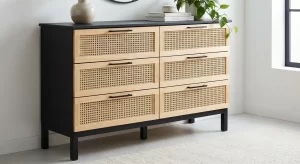
Where Are the Main Production Hubs for Sourcing Rattan Cane Webbing?
The main production hubs for sourcing rattan cane webbing are Indonesia, China, and Vietnam. Indonesia supplies the highest-quality raw rattan material. Chin…
Rattan cane webbing is popular for furniture manufacturing because it combines exceptional sustainability, lightweight durability, natural aesthetic appeal, …
You visually assess natural rattan cane webbing grade by examining five key factors: strip uniformity and thickness consistency, color tone and natural luste…
Rattan cane webbing is produced through a structured process that includes harvesting raw rattan, stripping it into uniform strands, treating it with soaking…
Custom natural rattan cane webbing typically requires 4 to 12 weeks of lead time, covering raw material sourcing from Indonesia, multi-stage production inclu…
Natural rattan cane webbing comes from tropical palm vines and offers authentic aesthetics, breathability, and biodegradability ideal for indoor furniture, w…
Building long-term partnerships with premium rattan cane webbing suppliers requires verifying quality consistency, negotiating transparent pricing, choosing …
The MOQ for custom natural rattan cane webbing typically ranges from 1 roll (15 meters) for standard items to 50–100 rolls or more for fully customized speci…
Yes, OEM private labeling and custom packaging are fully available for rattan cane webbing. Reputable suppliers offer branded labels, custom roll sizes, tail…
OEMs communicate customization requirements for natural rattan cane webbing through detailed specification sheets, CAD drawings, physical samples, and multi-…
Yes, natural rattan cane webbing can be custom dyed. Its porous, fibrous structure absorbs stains, paints, and dyes effectively. Oil-based stains offer the m…
Rattan cane webbing wholesalers provide samples through small swatches or sample packs, typically cut from production offcuts in sizes ranging from 6×6 to 12…
Yes, natural rattan cane webbing can be customized with different weaving patterns. Manufacturers offer options including open hexagonal weave, close weave s…
There is no universal standard MOQ for bulk rattan cane webbing. Most natural rattan suppliers set their MOQ at one full 15-meter roll, while synthetic PE we…
Yes, natural rattan cane webbing can be customized to specific widths. Professional manufacturers like our Seafan Rattan facility produce bespoke rolls tailo…
Yes, rattan cane webbing is available in custom non-standard sizes. Suppliers can produce tailored widths from 35 cm to 180 cm and adjusted lengths in both n…
When buying natural rattan cane webbing online, confirm Grade A quality indicators, exact roll dimensions, competitive bulk pricing, and export-grade packagi…
The most common packaging methods for bulk rattan cane webbing imports are roll packing and bulk bag packing. Standard rolls are wrapped in moisture-resistan…
The ideal storage conditions for rattan cane webbing are 60–70°F (15–21°C) and 40–60% relative humidity. Keep the material in a cool, dry, well-ventilated in…
Properly treated natural rattan cane webbing shows a consistent light tan color, feels supple without brittleness, has moisture content below 12%, resists mo…
When shipping rattan cane webbing long-distance, you must consider secure multi-layer packaging, moisture and mold prevention, the right balance between sea …
To choose natural rattan cane webbing for furniture restoration, assess the material’s quality grade, select a weave pattern that matches the original design…
To properly store rattan cane webbing rolls, keep them in a cool, dry space at 60–75°F and 40–60% relative humidity, roll them loosely around sturdy tubes, w…
To balance quality and cost when sourcing natural rattan cane webbing, buyers should verify material grades through samples, negotiate bulk pricing directly …
Under normal indoor use, high-quality natural rattan cane webbing typically lasts 10 to 20 years or more with proper maintenance. Synthetic rattan webbing ca…
Peak and off-peak seasons create significant swings in natural rattan cane webbing pricing and lead times. During high-demand months, prices can rise 30–60% …
Yes, you can paint or stain rattan cane webbing for custom furniture. Spray painting offers fast, even coverage for opaque color, while oil-based staining pr…
There is no universal standard MOQ for natural rattan cane webbing. Requirements range from 1 roll on platforms like Alibaba and Etsy to 500+ rolls for facto…
To prevent mold and pests in rattan cane webbing, you need to control humidity between 40–60%, apply protective oil or sealant coatings, ensure proper air ci…
To fix warped rattan cane webbing caused by moisture, lightly mist the underside with warm water, reshape the material by applying even pressure or weight, a…
Your One Stop Rattan Supplier
The main production hubs for sourcing rattan cane webbing are Indonesia, China, and Vietnam. Indonesia supplies the highest-quality raw rattan material. Chin…
Rattan cane webbing is popular for furniture manufacturing because it combines exceptional sustainability, lightweight durability, natural aesthetic appeal, …
You visually assess natural rattan cane webbing grade by examining five key factors: strip uniformity and thickness consistency, color tone and natural luste…
Rattan cane webbing is produced through a structured process that includes harvesting raw rattan, stripping it into uniform strands, treating it with soaking…
Custom natural rattan cane webbing typically requires 4 to 12 weeks of lead time, covering raw material sourcing from Indonesia, multi-stage production inclu…
Natural rattan cane webbing comes from tropical palm vines and offers authentic aesthetics, breathability, and biodegradability ideal for indoor furniture, w…
Building long-term partnerships with premium rattan cane webbing suppliers requires verifying quality consistency, negotiating transparent pricing, choosing …
The MOQ for custom natural rattan cane webbing typically ranges from 1 roll (15 meters) for standard items to 50–100 rolls or more for fully customized speci…
Yes, OEM private labeling and custom packaging are fully available for rattan cane webbing. Reputable suppliers offer branded labels, custom roll sizes, tail…
OEMs communicate customization requirements for natural rattan cane webbing through detailed specification sheets, CAD drawings, physical samples, and multi-…
Yes, natural rattan cane webbing can be custom dyed. Its porous, fibrous structure absorbs stains, paints, and dyes effectively. Oil-based stains offer the m…
Rattan cane webbing wholesalers provide samples through small swatches or sample packs, typically cut from production offcuts in sizes ranging from 6×6 to 12…
Yes, natural rattan cane webbing can be customized with different weaving patterns. Manufacturers offer options including open hexagonal weave, close weave s…
There is no universal standard MOQ for bulk rattan cane webbing. Most natural rattan suppliers set their MOQ at one full 15-meter roll, while synthetic PE we…
Yes, natural rattan cane webbing can be customized to specific widths. Professional manufacturers like our Seafan Rattan facility produce bespoke rolls tailo…
Yes, rattan cane webbing is available in custom non-standard sizes. Suppliers can produce tailored widths from 35 cm to 180 cm and adjusted lengths in both n…
When buying natural rattan cane webbing online, confirm Grade A quality indicators, exact roll dimensions, competitive bulk pricing, and export-grade packagi…
The most common packaging methods for bulk rattan cane webbing imports are roll packing and bulk bag packing. Standard rolls are wrapped in moisture-resistan…
The ideal storage conditions for rattan cane webbing are 60–70°F (15–21°C) and 40–60% relative humidity. Keep the material in a cool, dry, well-ventilated in…
Properly treated natural rattan cane webbing shows a consistent light tan color, feels supple without brittleness, has moisture content below 12%, resists mo…
When shipping rattan cane webbing long-distance, you must consider secure multi-layer packaging, moisture and mold prevention, the right balance between sea …
To choose natural rattan cane webbing for furniture restoration, assess the material’s quality grade, select a weave pattern that matches the original design…
To properly store rattan cane webbing rolls, keep them in a cool, dry space at 60–75°F and 40–60% relative humidity, roll them loosely around sturdy tubes, w…
To balance quality and cost when sourcing natural rattan cane webbing, buyers should verify material grades through samples, negotiate bulk pricing directly …
Under normal indoor use, high-quality natural rattan cane webbing typically lasts 10 to 20 years or more with proper maintenance. Synthetic rattan webbing ca…
Peak and off-peak seasons create significant swings in natural rattan cane webbing pricing and lead times. During high-demand months, prices can rise 30–60% …
Yes, you can paint or stain rattan cane webbing for custom furniture. Spray painting offers fast, even coverage for opaque color, while oil-based staining pr…
There is no universal standard MOQ for natural rattan cane webbing. Requirements range from 1 roll on platforms like Alibaba and Etsy to 500+ rolls for facto…
To prevent mold and pests in rattan cane webbing, you need to control humidity between 40–60%, apply protective oil or sealant coatings, ensure proper air ci…
To fix warped rattan cane webbing caused by moisture, lightly mist the underside with warm water, reshape the material by applying even pressure or weight, a…
Your One Stop Rattan Supplier